
Ideal cucumber seedlings |
Beginner gardeners often wonder: why complicate life and grow cucumber seedlings if you can sow seeds directly into open ground or a greenhouse?
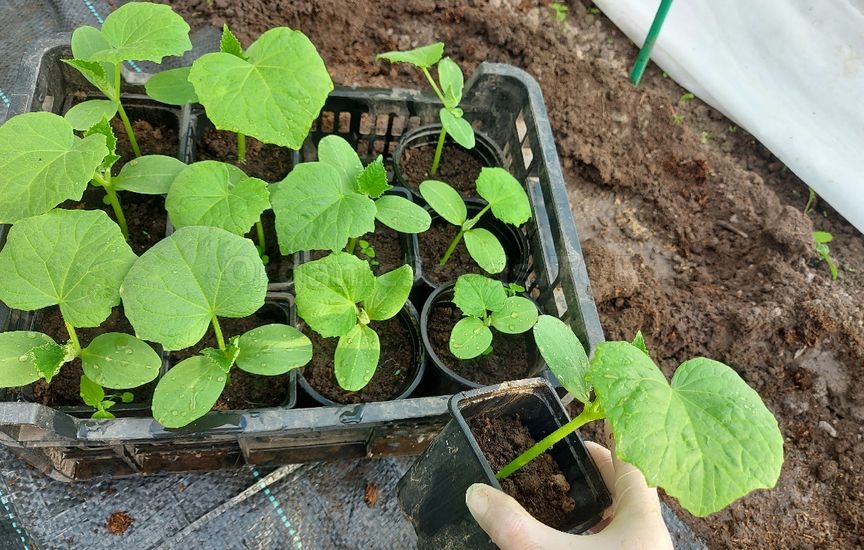 Preparing cucumber seeds for sowingAfter choosing varieties, we move on to seed preparation. Modern seeds are often sold already treated. They may be colored in bright colors – this indicates that the seeds have been disinfected and growth stimulants have been applied to their surface. Treated seeds do not require additional manipulations – they can be sown immediately. Such seeds must be sown dry, so as not to wash off the protective layer of fungicides and stimulants.
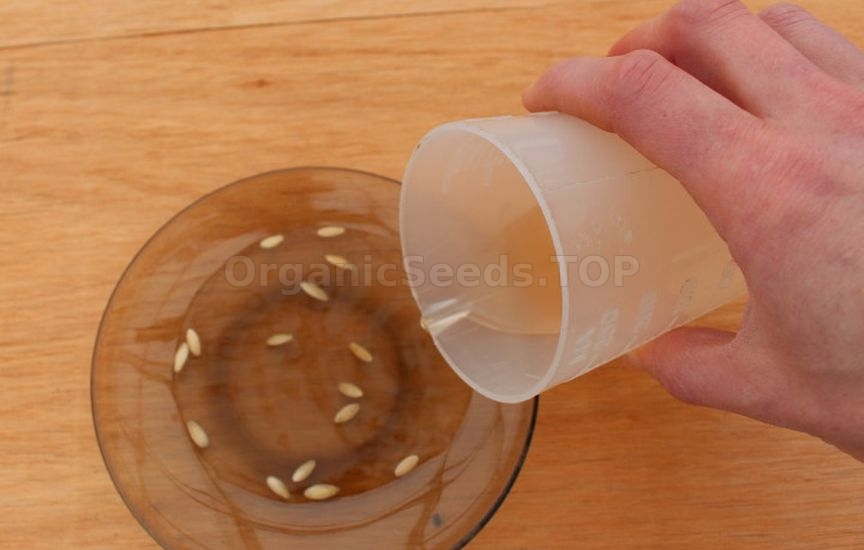 If you use your own seeds or purchased but untreated ones, it is recommended to carry out several pre-sowing procedures. First, select full-weight seeds, i.e. calibrate them. To do this, place them in a saline solution (1 tbsp salt per glass of water), stir and leave for 5-10 minutes. It is better to discard the floating seeds – they are unlikely to germinate or will produce weak plants. Rinse the seeds that have sunk to the bottom with clean water. The next step is treatment with biological preparations. Prepare a solution of a biological fungicide based on Bacillus subtilis (Fitosporin-M, etc.) for soaking. Use soft settled water at a temperature of 22-25°C. Soak the seeds in the solution for 30-60 minutes, as indicated in the instructions. After soaking, the seeds can be sown immediately. If you want to speed up germination, place them after disinfection in a warm place for germination, wrapping them in a damp cotton cloth. Cucumber seeds usually germinate quickly: tiny white "tails" appear within a few days after soaking. To prevent them from growing too long and sprouting through the fabric, inspect the seeds daily. Also make sure the cloth remains moist. As soon as the seeds begin to sprout, proceed to sowing. Sowing dates and preparation of containers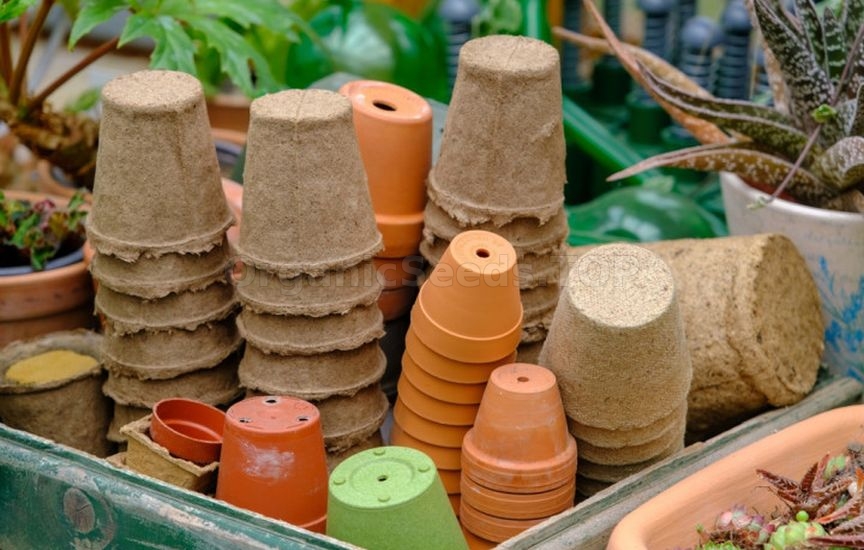 Cucumbers grow rapidly. If seedlings are kept on the windowsill too long, they begin to suffer, stretch, roots intertwine into a tight lump, and after transplanting such a plant gets sick for a long time. Therefore, it is important to correctly calculate the sowing dates to obtain stocky, strong seedlings. From sowing to planting in a permanent place takes an average of 20-30 days. Considering that cucumbers are afraid of even slight frosts, they are planted in open ground when the threat of return frosts has passed, the soil warms up to 15-16°C, daytime air to 18-20°C, and at night the thermometer does not drop below 16°C. Usually in the middle zone this is late May – early June. Therefore, sowing for seedlings is carried out in late April – early May. When growing cucumbers in a greenhouse, they can be planted in a permanent place already in late April. In this case, sowing seeds for seedlings is done in late March or early April. Cucumbers belong to crops whose seedlings poorly tolerate transplanting, so the best option for them is individual containers. The optimal volume of a container for cucumber seedlings is 300-500 ml. These can be peat or plastic pots, disposable cups, collapsible trays with large cells. For beginners, transparent plastic cups are well suited: through the walls you can see how the roots develop and easily assess the need for watering. If you use improvised plastic containers, be sure to make drainage holes in the bottom to drain excess moisture. This will help prevent root rot. After that, wash and disinfect all containers well. Soil for cucumber seedlings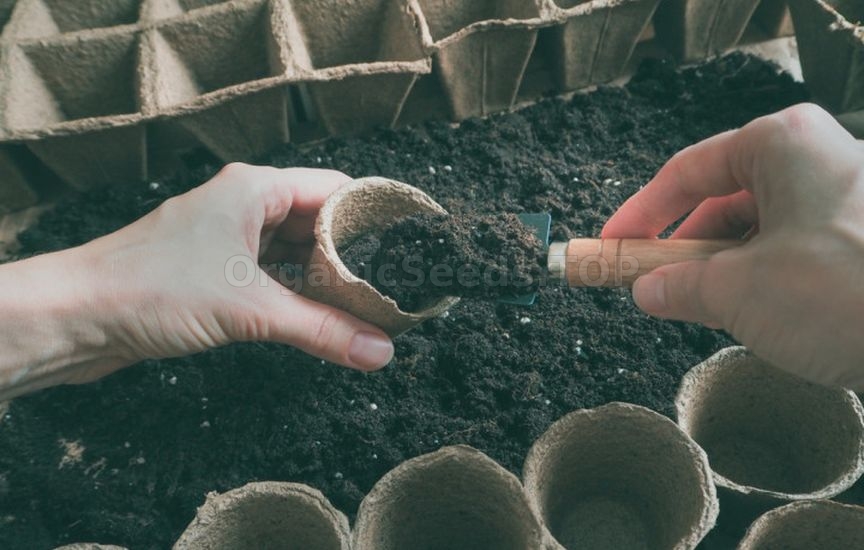 Soil for cucumbers should be light, nutritious and neutral in acidity (pH should be within 6.2-6.8). You can use purchased substrate for vegetable seedlings or prepare the mixture yourself. Different options are possible:
Self-prepared soil mixture must be disinfected before use. To do this, it can be calcined in the oven at 70-80°C for 30 minutes or steamed in the microwave for 10-15 minutes. Then the disinfected soil must be populated with beneficial microorganisms that will protect the roots of delicate seedlings. To do this, water it with a solution of a biofungicide based on Bacillus subtilis and Trichoderma (Fitosporin-M, etc.). To allow beneficial bacteria to colonize the substrate, soil preparation should be done in advance, 2-3 weeks before sowing. Pour a layer of drainage (e.g. expanded clay or perlite) at the bottom of each container, then soil, not filling to the edge by 1-1.5 cm. Slightly compact the soil with a spoon so that there are no voids. Water with warm water. Now everything is ready for sowing seeds. Sowing and caring for seedlings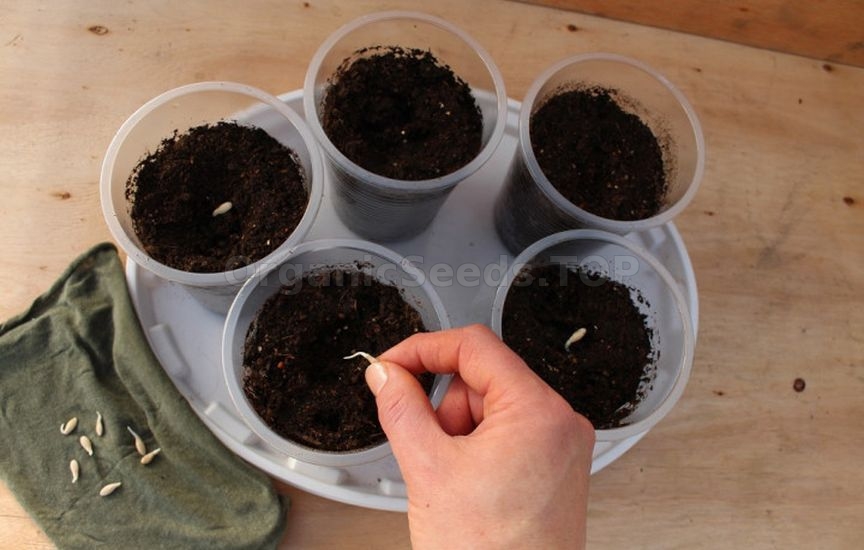 The sowing process requires accuracy. In the center of each pot make a hole about 1-1.5 cm deep. Carefully place the seeds into moist soil. Cover them with loose soil and lightly compact. To prevent the soil from drying out, cover the crops with transparent film or glass. Do not cover hermetically, as germinating seeds need air. Then place the containers in a warm place. The optimal temperature for cucumber seed germination is 24-25°C. Under such conditions, the first "loops" will appear on the 3rd-5th day. As soon as the first sprout appears, remove the cover and slightly lower the temperature. The optimal air temperature for growing cucumber seedlings is 20-22°C during the day and 17-18°C at night. Sharp temperature fluctuations and drafts are fatal for young plants, so make sure that cold air from the window does not blow on the seedlings. At this stage, it is also very important to provide cucumber seedlings with sufficient lighting, otherwise the plants will stretch. The optimal length of daylight for seedlings is 12-14 hours. If natural light is insufficient, use additional lighting (LED lamps, fluorescent lamps or special phytolamps), placing them at a height of 15-20 cm above the plants. Watering seedlings also requires special attention. Cucumber is a moisture-loving plant, but the soil should be only moderately moist, not waterlogged. Water only when the soil has completely dried 1 cm deep. Use settled water at room temperature for watering. Pour carefully along the edge of the cup, trying not to get on the stem and leaves. The ideal method is bottom watering: pour water into the tray, and the soil will absorb as much as needed. This stimulates roots to grow deeper and downward. As for fertilizing, when using quality soil in the first two weeks they are usually not required. If you see that the leaves are pale, you can carry out a one-time feeding with a complex mineral fertilizer with a predominance of nitrogen and phosphorus at half the dose recommended by the manufacturer. One common problem when growing cucumber seedlings is stem elongation. To avoid this, provide plants with sufficient lighting and do not allow overheating. If the seedlings still begin to stretch, reduce the temperature and increase the intensity of lighting. You can also slightly hill the plants after watering, sprinkling the lower part of the stem with soil. Hardening seedlings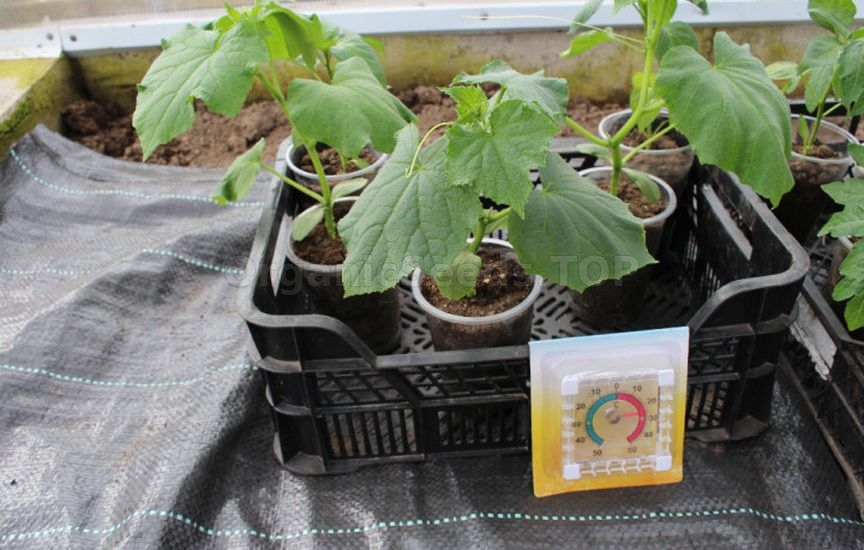 7-10 days before the intended planting in the ground, start hardening the seedlings. First take them out to the balcony or veranda for 2-3 hours a day, then gradually increase the time outdoors. The temperature during hardening should not drop below 15°C. A few days before planting, seedlings can be left outdoors overnight if the temperature does not drop below 12°C. Two days before planting, it is useful to spray the seedlings with a solution of Epin-Extra. This is an anti-stress preparation that will help plants quickly activate immune protection and more easily take root in a new place after transplanting. Also during this period reduce watering, but do not allow wilting. Slightly dried seedlings become more resilient and less fragile. By the time of planting in the ground, cucumber seedlings should have 3-4 true leaves, a strong stem 3-4 mm thick and a well-developed root system. The age of seedlings should not exceed 30 days, otherwise they will take root worse. You may need:Cucumbers seedsVegetable seedsOrganic fertilizers |
|
|