
What to do in the garden and vegetable patch in March |
In March, nature gradually awakens from its winter sleep, and along with it, gardeners tired of endless rest begin their active work in the garden and vegetable patch. The health of the garden and the future harvest directly depend on their March efforts.
 Before starting work in the garden and vegetable patch, clean the area of debris that may have accumulated over the winter: branches, old leaves, remnants of mulch. All organic residues not infected with diseases can be sent to compost, the rest should be taken out of the area or burned. If the soil is still frozen, try not to walk on the beds and under the trees to avoid compacting the soil. March work in the gardenThe garden at the beginning of spring needs your attention more than other places on the plot. It is recommended to start the new season with care for garden plants.
Inspection of the garden and treatment of frost cracks 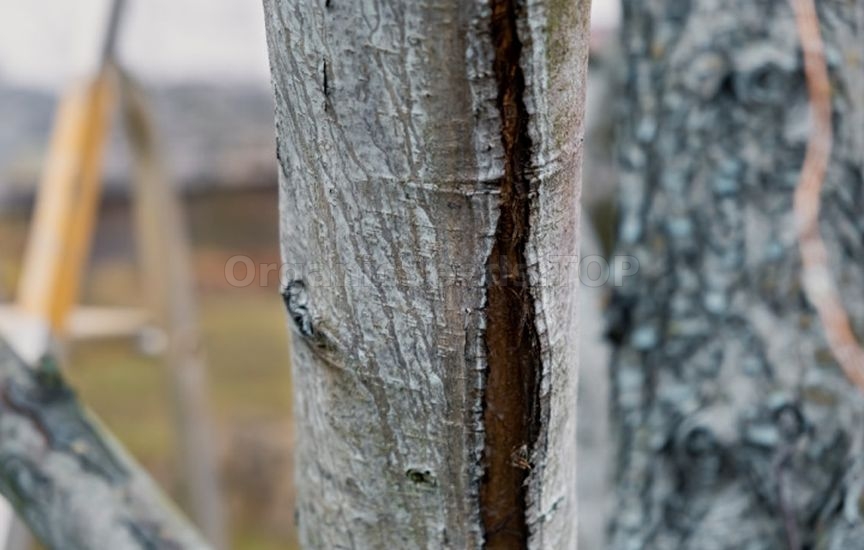 To see the consequences of wintering, carefully inspect all trees and shrubs. Pay special attention to the trunks and skeletal branches of trees. Often after winter, frost cracks appear on them — cracks caused by sharp fluctuations in daytime and nighttime temperatures. Such damage becomes a gateway for infections and pests. In addition, after the start of sap flow, sap will leak through such wounds, which can seriously weaken or kill the tree. As soon as the weather allows (the thermometer rises above zero and reaches 4–5°C), start treating frost cracks. Clean all detected damage with a sharp knife down to healthy tissue, then treat the wound with 3% Bordeaux mixture, 3% copper sulfate, or industrial fungicides. Then cover the crack with a healing agent or a mixture of clay with manure in a 6:4 ratio. After treatment, wrap the frost crack with burlap, garden bandage, or other breathable material and tighten with wire to hold the edges of the wound together. This treatment will help prevent further tissue destruction. Pruning fruit trees and shrubs 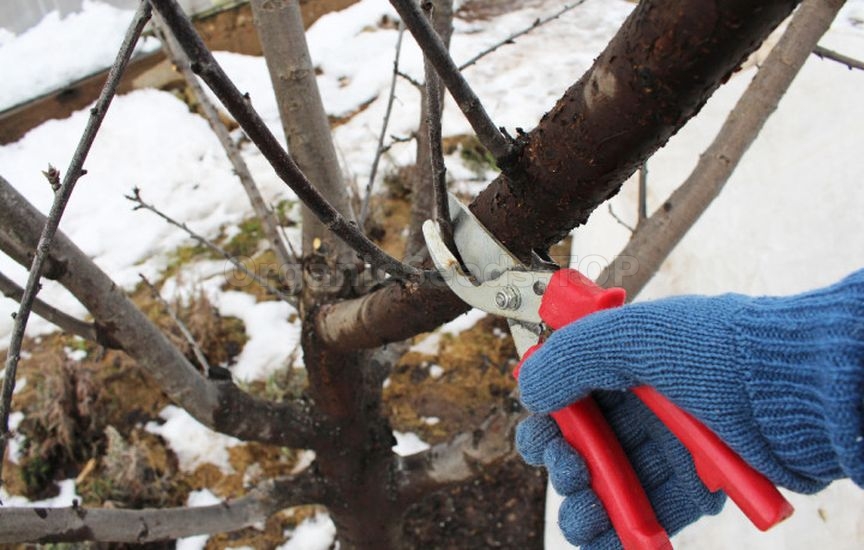 One of the most important March tasks in the garden is pruning trees. It should be done after stable positive temperatures are established, but before sap flow begins. Arm yourself with a sharp pruner and garden saw. First, remove all broken, dry, and diseased branches. Carefully examine the crown: cut out shoots growing inward and thickening it. This will improve access of sunlight and air to the remaining branches. Old trees can undergo rejuvenating pruning by removing part of the old skeletal branches. Berry bushes (currants, gooseberries, raspberries) also need pruning. It is carried out, if the weather permits, at the end of the month. In currants and gooseberries, remove all old, unproductive branches, leaving young, strong shoots. In raspberries, cut or break off at the root all shoots that bore fruit last year, leaving 5–7 of the strongest young stems per bush. Large cuts must be treated with disinfectant to avoid fungal infections. Protection from the sun 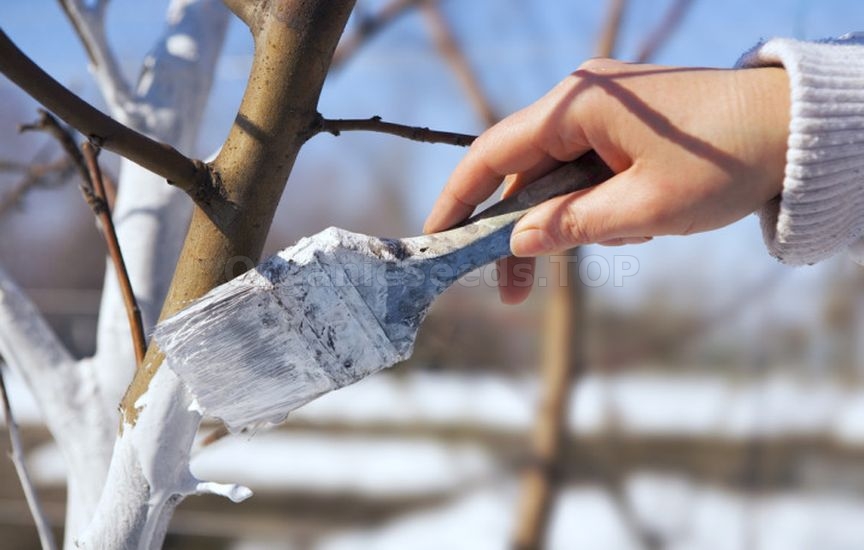 The main danger for trees at the end of winter and beginning of spring is not so much frost as bright sun. It can cause sunburn and bark cracks. To avoid such problems, whitewash trunks and skeletal branches with special garden whitewash at the beginning of March or wrap them with light breathable material. Whitewashing not only protects the bark from burns and frost cracks but also helps restrain premature awakening of trees, which is very important in case of return frosts. If buying ready-made whitewash is not possible, you can prepare the solution yourself. You will need:
Choose a dry day with a temperature not lower than 5°C for the work. It is best to start in the morning so that the layer of whitewash dries by evening. Pay special attention to young trees with thin bark.
Control of garden diseases and pests 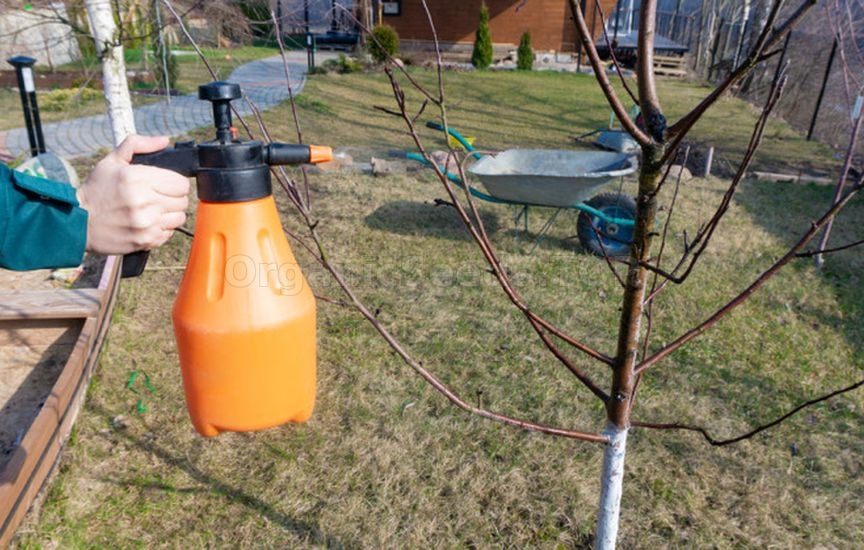 March is the ideal time for eradication treatment of the garden against diseases and pests. At the very beginning of March, walk through the garden and remove mummified fruits and possible egg clutches of ringed and gypsy moths, goldtail, hawthorn, and other insects. If you notice thick, swollen buds on currants or gooseberries, resembling small cabbage heads, know that bud mites have settled in them. Such buds must be collected manually. Then scrape off peeling bark from trees with a stiff brush, having previously spread film under the tree. Take all debris out of the garden and burn it. Then, when the average daily temperature rises to 5°C (but before bud swelling), treat the garden against diseases. For the first spring treatment, copper sulfate (3% solution), Bordeaux mixture (3% solution), copper oxychloride-based products (HOM, etc.), and urea (carbamide) are most often used. They effectively destroy overwintering spores of fungi and bacteria. Treat not only trees and shrubs but also the soil under them, where pathogens may overwinter. About two weeks after treatment against diseases, when the air temperature is not lower than 5–6°C, treat trees and shrubs against overwintering pests — scale insects, false scale insects, mites, etc. For this, it is advisable to use petroleum oil-based products. After snow melts, inspect the bark of young trees: check if mice or hares have gnawed it. If the damage is minor, it can be covered with special garden putty. Severely damaged areas of bark should be carefully cleaned, disinfected, and only then covered. Place traps for mice near trees. Remove any plant residues from the garden that may serve as shelter for rodents. Work in the vegetable patchThere is less work in the vegetable patch in March than in the garden, but there is still something to do.
Preparing the greenhouse 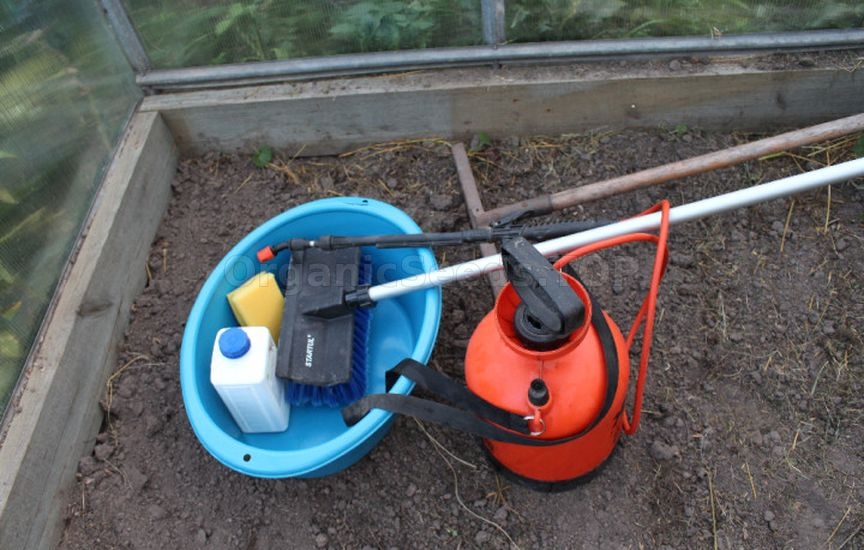 First of all, while there is still snow on the beds, put the greenhouse in order. Remove remnants of last year’s plants and old mulch, take out stakes, twine, and other devices for growing vegetables. Wash the freed greenhouse thoroughly. For washing the covering (film, glass, or polycarbonate) and frame, you can use a solution of laundry soap, oxygen bleach, or liquid mustard soap used for plant treatment. If plants in the greenhouse were heavily diseased last year, it is better to use industrial disinfectants for washing. Apply the working solution to the walls and frame of the greenhouse and wait 30–40 minutes, then wash with a soft brush or sponge and rinse with water from a hose. 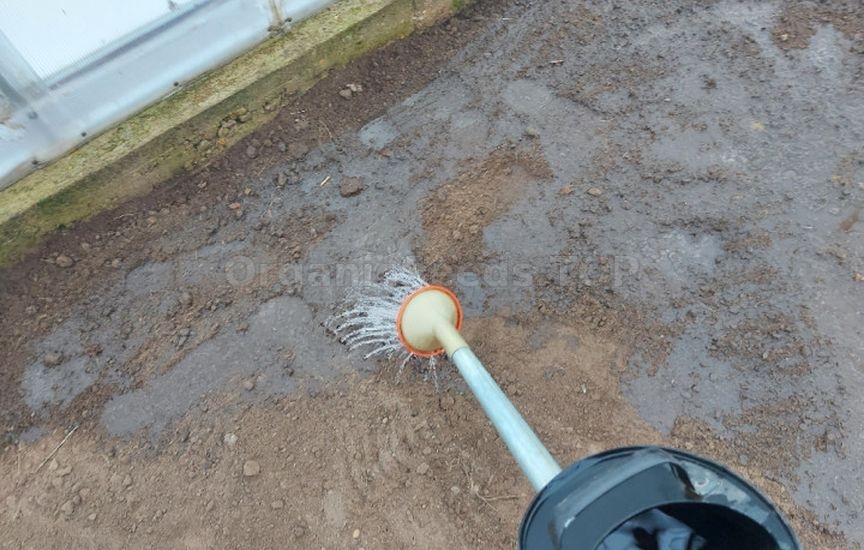 Soil treatment can be carried out in different ways.
The most effective but also the most labor-intensive method of improving greenhouse soil is complete replacement of the top layer. Remove 15–25 cm of soil and take it out of the greenhouse. Instead, lay the same amount of new fertile soil. If the weather is warm at the time of greenhouse treatment, then 7–10 days after disinfection, populate the soil with beneficial microorganisms. For greenhouse soil treatment, products such as Fitosporin-M. The living microorganisms in these products suppress phytopathogens and improve soil health. To prepare the greenhouse for early sowing, warm the soil by covering the beds with film. At the end of the month, you can plant the first crops: radish, spinach, lettuce, Chinese cabbage, dill, carrot. These plants are not afraid of slight frosts and grow quickly. Preparing the beds 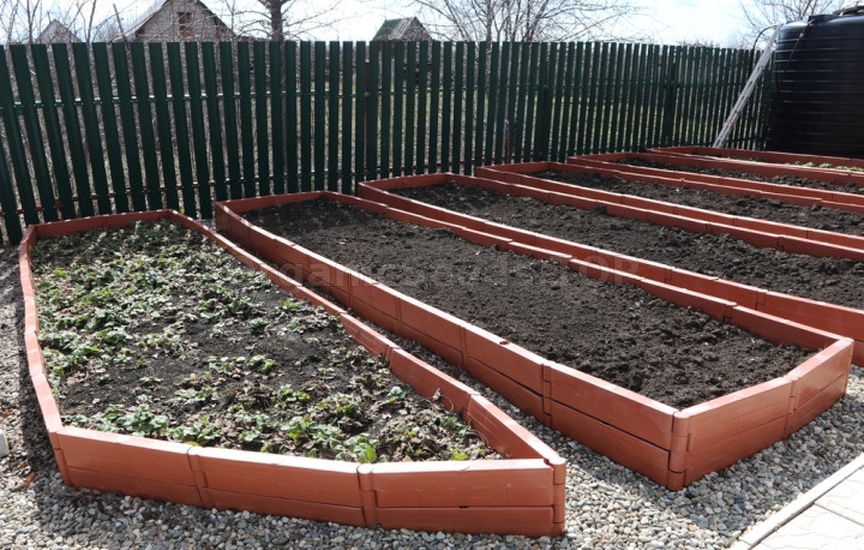 At the beginning of March, the soil is still cold, but this is no reason to leave the beds unattended. As soon as the snow melts and the soil dries slightly, clear the vegetable patch of last year’s plant residues and apply compost or rotted manure, spreading it over the surface in a 3–5 cm layer. Deep digging in spring is better avoided to preserve soil structure and moisture. It is enough to loosen the top layer with a fork or flat cutter. Then cover the beds with black film or agrofiber. This will speed up soil warming, which is especially important for early sowing. Sowing cold-resistant crops At the end of March, if the weather permits, you can start sowing cold-resistant crops directly in open ground. These are radish, onion-nigella, carrot, parsley, dill, lettuce, parsnip, peas. Before sowing, seeds should preferably be treated with growth stimulants and tested for germination. Beds with sowings are better covered with nonwoven material, creating mini-greenhouses, which will speed up germination and protect against possible frosts. Sowing seedlings 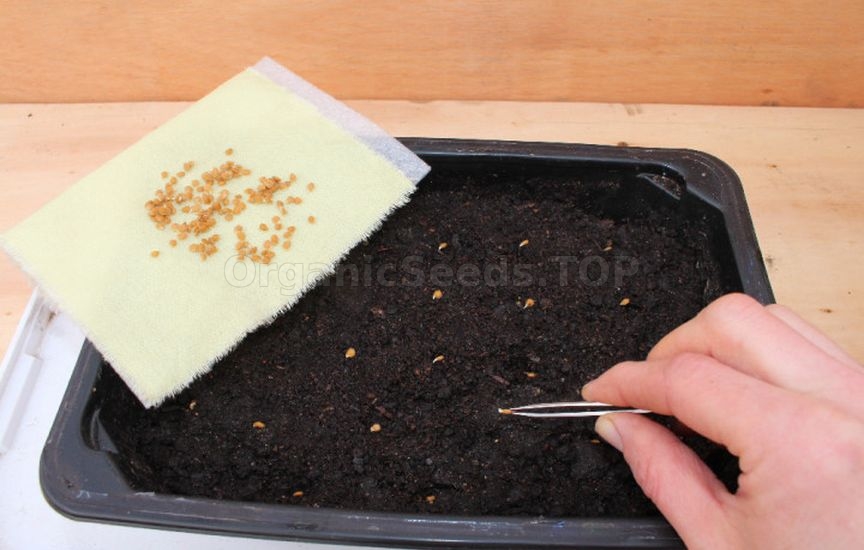 March is an active time for growing seedlings. In the first half of the month, peppers and eggplants continue to be sown if you did not do this in February. After March 8–10, the ideal time for sowing tomatoes arrives. Root and stalk celery, leek, and basil are also sown for seedlings. At the end of March, you can sow white cabbage (early and medium-ripening), kohlrabi, broccoli, and cauliflower for seedlings. Before sowing, be sure to prepare the seeds: soak them in a solution of biofungicide and growth stimulator. The soil mixture for seedlings should be loose, nutritious, and able to retain moisture well. Use seedling containers or trays to provide plants with comfortable growing conditions. Pay attention to lighting. In early March, the daylight hours are still not long enough, so arrange additional lighting for seedlings with fluorescent lamps or special phytolamps. Seedling care 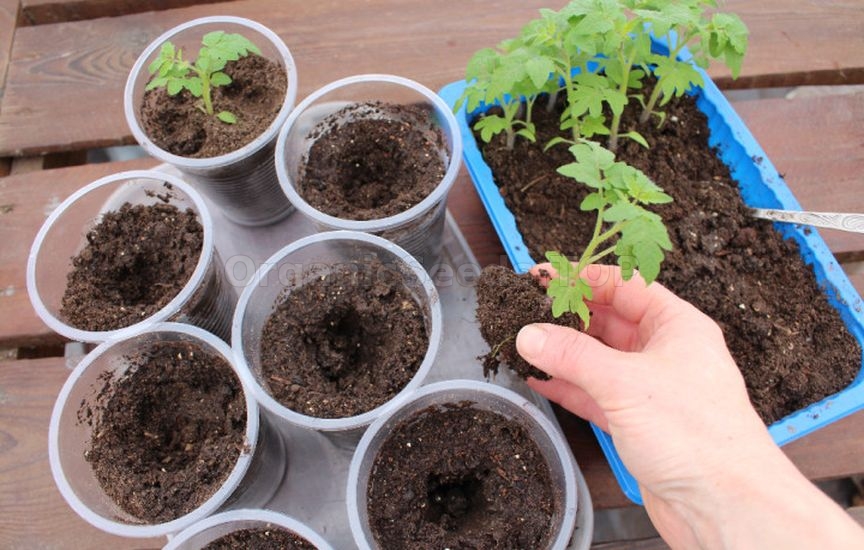 Seedlings sown in February require special attention. As they grow, carry out pricking out — transplanting seedlings sown in common containers into separate pots. This procedure stimulates the development of a strong root system. Usually, pricking out is done after two true leaves appear on the plants. Do not delay this, as seedlings will stretch and their roots will intertwine. After pricking out, the plants should be shaded from direct sunlight for a couple of days. Control the temperature: during the day it should be within 18–22°C, at night – 16–18°C. Water moderately, avoiding both drying out and overwatering of the soil. Two weeks after pricking out, you can start feeding the seedlings with weak solutions of complex fertilizers according to the instructions. In addition to all the above work, do not forget to carry out a revision of garden tools in March: sharpen tools, check the integrity of hoses and watering cans. Moreover, now is the best time to draw up a plan for future plantings, observing crop rotation rules — very soon there will be no time for this. You may need:Tools and suppliesVegetable seedsFlower seedsHerb seedsOrganic fertilizers |
|
|