
What to add to the soil for seedlings so that they grow strong and healthy |
Experienced gardeners know that the health of seedlings directly depends on the quality of the soil. It should be nutritious, moisture-retentive and loose, with neutral acidity and a microflora favorable for plant development.
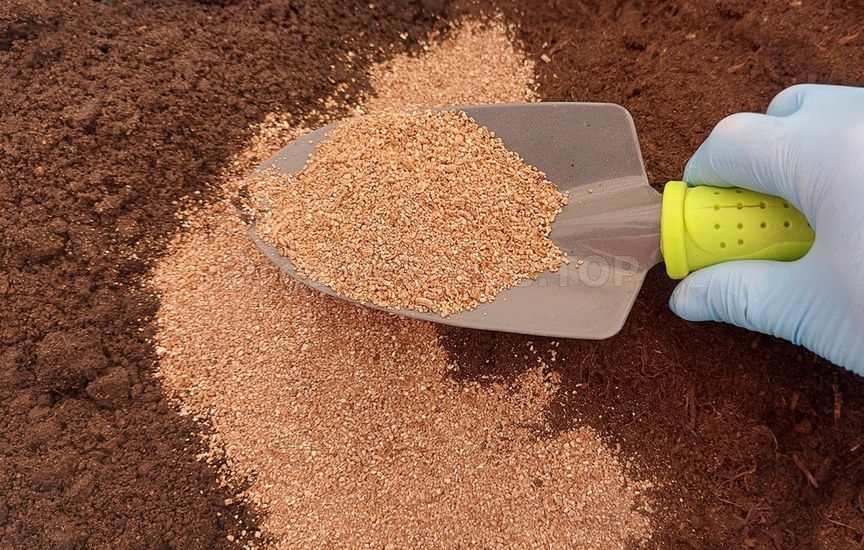 Most of the soils for seedlings on sale are deoxidized high-moor peat with a loosener and mineral fertilizers. Peat has excellent porosity and contains phenolic compounds that prevent the development of root and basal rot. Therefore, peat substrate is excellent for growing seedlings at the initial stage, before picking. However, peat itself does not contain enough nutrients that are needed for already grown plants, and all mineral substances must be applied during feeding. And this does not always work effectively. Therefore, when picking, it is advisable to transplant seedlings into more nutritious soil. If you plan to grow seedlings without picking, it is better to immediately prepare a high-quality soil mixture, which includes organic and mineral fertilizers, as well as loosening agents, or soil improvers. So, what can be added to peat soil to get a high-quality substrate for growing any seedlings? Organic fertilizers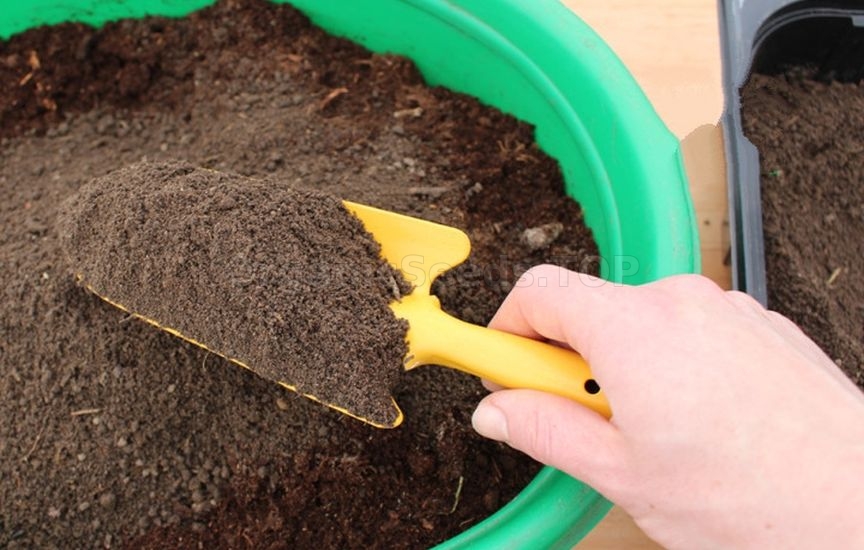 Organic fertilizers (mature compost, humus, vermicompost, sapropel) do not act as quickly as mineral ones, but this is their advantage: plants will consume the necessary nutrients gradually, as they mineralize and enter the soil solution. Compost and manure humus are the most affordable organic fertilizers obtained as a result of the decomposition of plant residues and excrement of farm animals. Any organic matter must be composted for a long time, until it reaches the stage of a homogeneous loose substrate. And only after that the fertilizer can be added to the soil for growing seedlings. To speed up the composting process, manure and compost should be regularly moistened and EM preparations should be applied. Vermicompost, or worm compost, is a product of organic matter processed by compost worms. This is an effective and absolutely safe organic fertilizer, which in nutritional value is much higher than humus and ordinary mixed compost. Vermicompost contains a full set of macro- and microelements, as well as plant hormones and antibiotics, enzymes, humic acids and a large number of beneficial microorganisms. The application of vermicompost stimulates biochemical processes in the soil and improves its structure. 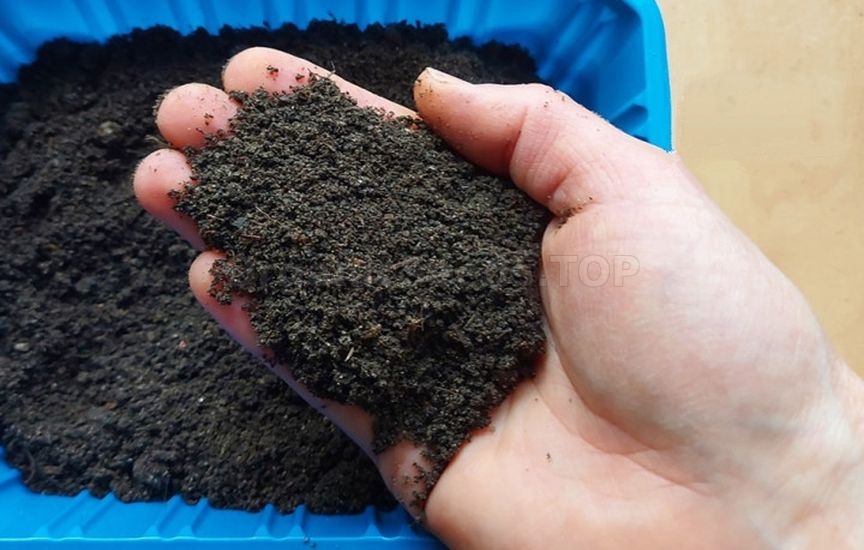 Sapropel is multilayer deposits that accumulate at the bottom of freshwater bodies. They are formed from dead aquatic plants, remains of living organisms and soil. Sapropel is rich in mineral substances, amino acids and enzymes. In addition, it contains humic substances capable of stimulating plant growth. If you use organic fertilizers from your site, they need to be steamed in the microwave for 15 minutes or kept in the oven for 20-30 minutes at a temperature of 90-100°C to get rid of insect pests, pathogenic microflora and weed seeds. How much organic fertilizer should be added to peat soil? It all depends on how you will grow seedlings. For example, for sowing tomatoes that will be grown with picking, it is enough to add about 20% vermicompost or 30% compost to the peat soil. If seedlings are grown immediately in separate containers (for example, peppers, eggplants, cucumbers), then the amount of organic fertilizers is increased to 35-40%. You can add several types of organic matter to the soil at the same time: for example, 10% sapropel and 20% compost or humus. Seedlings of pumpkin crops respond especially well to the application of organic fertilizers. Mineral and bacterial fertilizers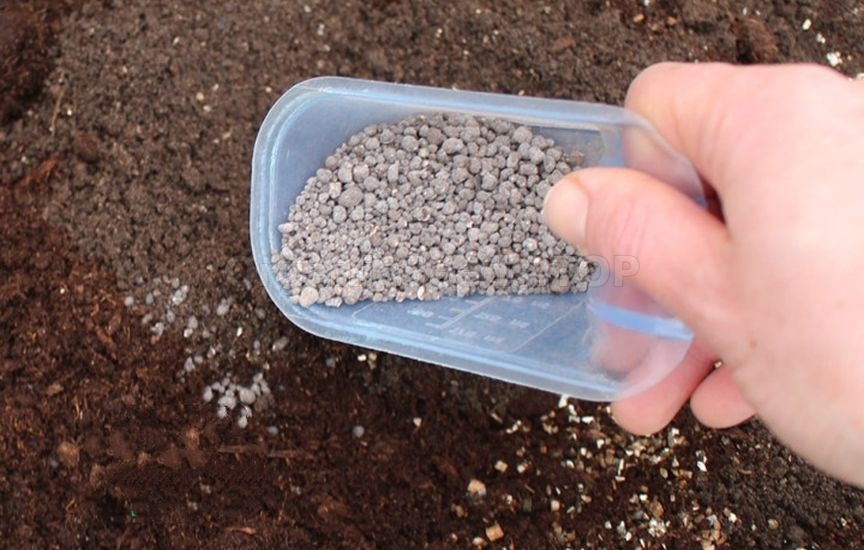 If you use purchased peat soil as a base, it usually contains a full set of mineral fertilizers. The amount of all macro- and microelements should be indicated on the package. But if you see that there are not enough mineral substances, or you bought peat or coconut substrate without fertilizers, then you must add a long-acting mineral complex. Wood ash can also be used as fertilizer. The choice of fertilizer, application rates depend on the needs of plants and the composition of the soil mixture. For example, when growing cabbage seedlings in peat substrate mixed with humus or compost, you can add a glass of wood ash, which will be an excellent prevention of clubroot. For eggplants, peppers, root and stalk celery, it is better to choose granular mineral fertilizers that are designed for the gradual release of nutrients over several months. In addition, do not forget that beneficial soil bacteria improve plant nutrition, as they convert certain macro- and microelements into a bioavailable form. Therefore, it is useful to add bacterial fertilizers to the soil for seedlings, which include nitrogen-fixing, phosphate-mobilizing and silicate bacteria. For pre-sowing soil treatment, it is also advisable to use biological preparations based on Bacillus subtilis, Trichoderma and other beneficial microorganisms (Trichodermin, Fitosporin-AS, etc.). The application of bacterial fertilizers, EM preparations and biological fungicides into the soil allows creating a favorable microflora in the soil, strengthening plant immunity and protecting them from diseases. Soil loosening agents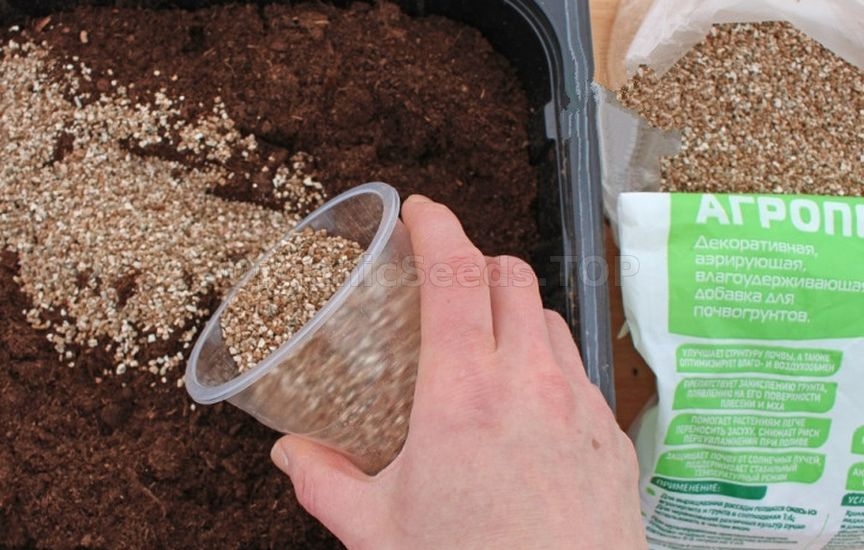 When adding a loosening agent (vermiculite, perlite, diatomite, zeolite or sand) to the soil, the substrate is moistened faster and more evenly, does not cake, retains moisture and nutrients better. In loose soil, plant roots receive enough oxygen, pathogenic microflora develops less often. Therefore, the use of loosening agents allows creating the most favorable conditions for plant development. Vermiculite is a type of layered mica. When heated, it expands into a unique microporous and lightweight material. Expanded vermiculite has a very high water absorption coefficient – up to 500% (100 g of this material absorbs about 500 ml of water) and instantly absorbs moisture and dissolved mineral substances, and then gradually, as needed, gives them to plants. As a result, they can be watered less often and less attention can be paid to feeding. Agroperlite is obtained by grinding and heat-treating acidic volcanic glass – perlite. Agroperlite absorbs moisture well, has low thermal conductivity, which makes its use relevant in hot weather. Mulching the soil surface with perlite protects plant roots from overheating. But it should be noted that agroperlite produces a lot of dust. Therefore, when working with dry material, you must wear a respirator or protective mask, as the smallest particles of perlite can enter the lungs and cause serious harm to health. For safety, perlite should be moistened before adding to the soil. 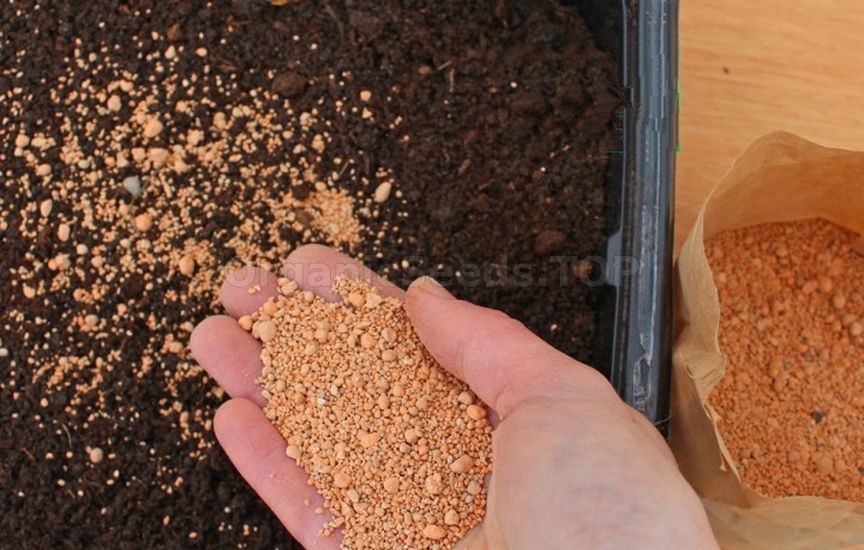 Diatomite is one of the most expensive and effective loosening agents. This is a mineral consisting of deposits of diatom shells. Diatomite has high porosity, moisture capacity, perfectly improves soil structure and suppresses the development of pathogenic microflora in the soil. Thanks to its absorbing properties, diatomite prevents the leaching of mineral substances from the soil. Diatomite is almost 85% composed of amorphous silicon, which is well absorbed by plant root systems. In addition to silicon, diatomite contains calcium, magnesium, boron and other important elements. Therefore, adding this material to the soil accelerates growth, root formation and flowering, increases the thickness of the leaf blade and its strength, increases plant stress resistance, stimulates the process of photosynthesis. Similar properties are possessed by the mineral zeolite. This is also an excellent soil improver that enriches the soil with useful microelements. But you need to be careful when choosing zeolite: you should buy only volcanic zeolite, not oceanic. Volcanic zeolite retains its shape when wet, while oceanic turns into clay and is not suitable for loosening the soil. Sand can also be added to the soil for seedlings to increase soil permeability. For seedling soil, it is best to use coarse river sand. Quarry sand contains various impurities: clay, dust, as well as mineral substances that can negatively affect plant development. How much loosening agent should be added to the soil for seedlings? On average, 15-20% is enough. But when growing seedlings in trays and small containers, where the soil dries quickly, the amount of loosening agent can be increased to 25-30%, using vermiculite or perlite. You can mix several types of loosening agents: for example, river sand and vermiculite, perlite and diatomite. If you approach the choice of all components wisely when preparing the soil, taking into account the conditions for growing seedlings and the needs of each crop, you can create a high-quality soil mixture where plants will receive full nutrition and develop harmoniously. You may need:Vegetables seedsFlower seedsOrganic fertilizers |
|
|