
What you shouldn’t do in a greenhouse in spring – main mistakes |
To ensure a greenhouse helps a gardener grow a good harvest, it is important to avoid a number of mistakes already at the beginning of the season. Some of them are minor, while others are so serious that they can lead to damage of the entire structure and the death of plants.
A high-quality greenhouse, installed in a suitable place, can delight you with harvests of vegetables and greens every year. And if it also has heating with additional lighting, you can get fresh vitamins regardless of the season. 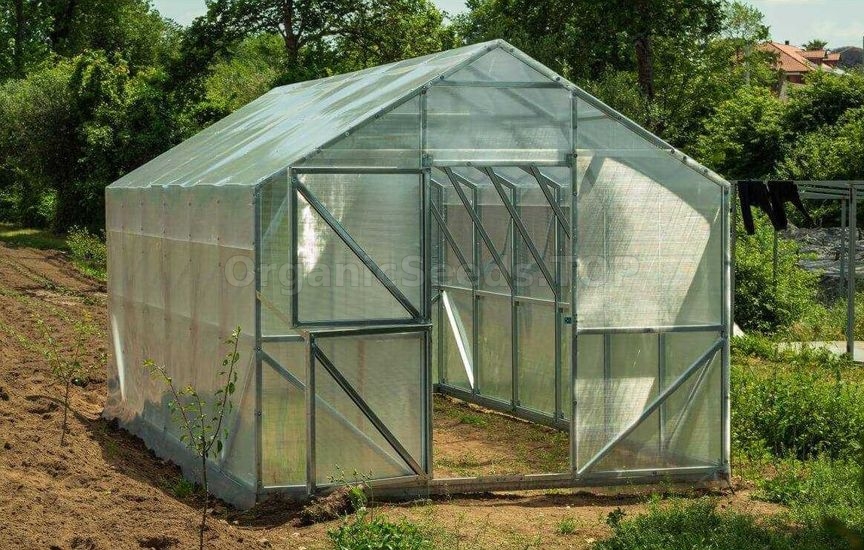 Even the simplest greenhouse needs care. And a gardener must follow certain rules, ignorance of which significantly reduces the lifespan of the structure and harms plantings. So, here is what you should NOT do in a greenhouse in spring. You cannot use aggressive disinfectants in the greenhouse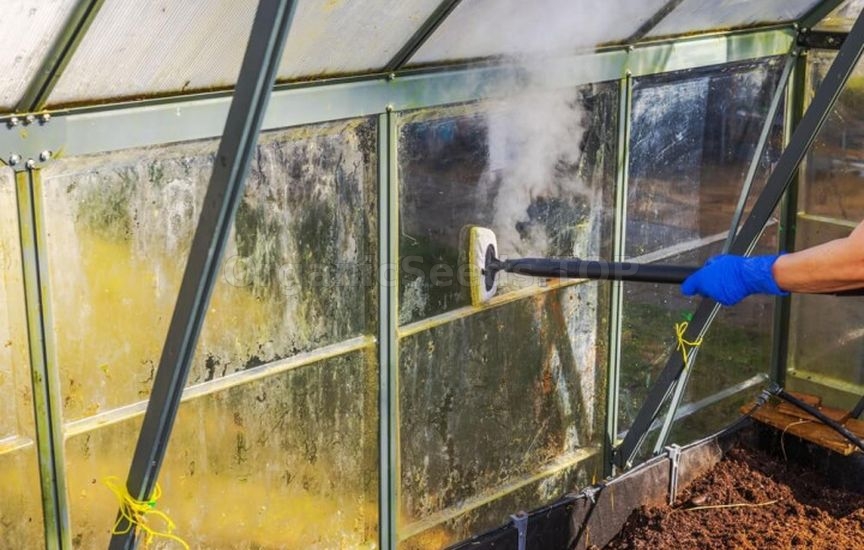 Disinfection of a greenhouse helps in the fight against plant diseases and pests. Work should be carried out in autumn after harvesting, so as not to allow phytopathogens, insects and mites to overwinter on the joints of the structure, covering, soil and other places. Washing and disinfection of the greenhouse can also be done in spring if there was no time at the end of the season. The main mistake often made by beginners is the use of agents that perfectly disinfect the greenhouse but at the same time harm it. These include, in particular, sulfur smoke bombs, which destroy metal. If you want to carry out such treatment, you must обязательно cover metal parts with epoxy paint or grease lubricant. Alternatively, you can use a tobacco smoke bomb that is safer for the structure. Another dangerous agent is chlorine lime. Its active use leads to clouding and destruction of polycarbonate covering. Also dangerous for polycarbonate are ammonia, iodine-containing solutions, aggressive alkalis (sodium hydroxide, potassium hydroxide, etc.). What should you use instead to wash the greenhouse? Here are a few great options:
Hard brushes and scrapers make polycarbonate more brittle, cloudy, and cause cracking of the covering.
You cannot apply fresh manure in the greenhouse in spring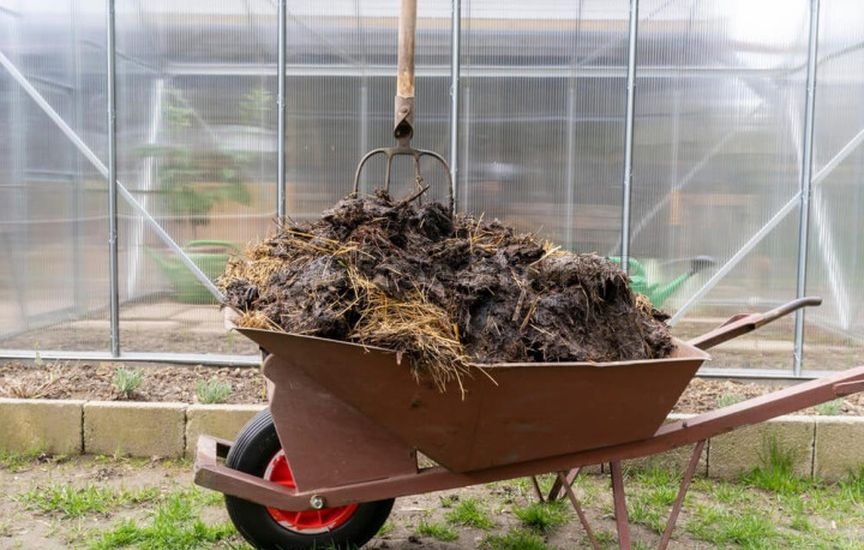 Manure is a valuable fertilizer for greenhouse crops. Thanks to it, the soil is enriched with almost all nutrients needed by plants, its structure improves, which in turn significantly increases yields. But there is an important nuance: for plants to be comfortable, it is better to use not fresh manure in spring, but well-rotted manure. Fresh manure quickly heats up the soil. If applied to beds shortly before planting seedlings, plant roots may get burned. Those plants that survive and produce a harvest will contain excess nitrates. In addition, fresh and even slightly rotted manure contains weed seeds, pests (especially mole crickets), fungal spores and pathogenic bacteria. Of course, you should not completely refuse manure. It can be incorporated into the soil in autumn, but not too abundantly, so that it has time to rot by spring. Another good option is to create raised beds in the greenhouse with added organic animal matter. You cannot plant seedlings in cold soil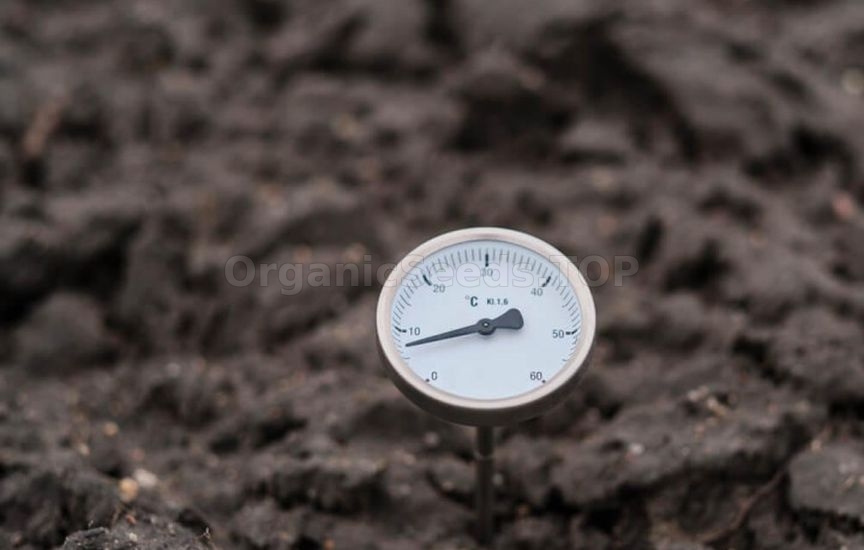 During the day, the temperature in the greenhouse may be quite comfortable even in March and early April, but this does not mean that the soil is already warmed up and ready for planting. If you rush and plant seedlings in such cold soil, plants will take root more poorly, their above-ground growth will slow down because roots cannot absorb nutrients. There is also a high risk of fungal diseases. You need to wait until the soil warms up to at least 16°C. To speed up the process:
You cannot leave last year’s tops and mulch in the greenhouse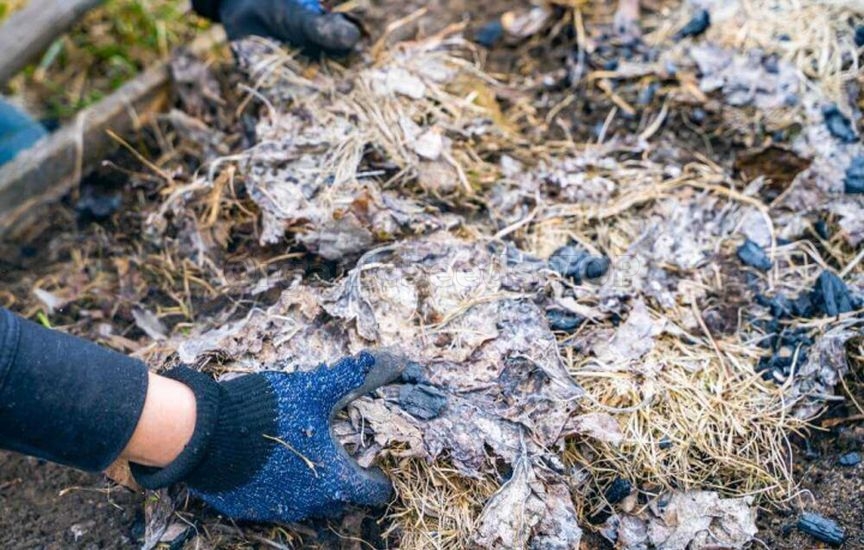 Organic residues are an excellent fertilizer. But in a greenhouse, all this dried tops with mummified fruits and old mulch become food for phytopathogens and dangerous insects. Therefore, it is better to remove all plant residues from beds in autumn and disinfect the greenhouse. If there was no time at the end of the season, the work should be done right now, before planting seedlings. Old mulch from the greenhouse without signs of disease can be added to compost, used to create warm beds, mulch trees and shrubs, or improve soil structure in the garden. Contaminated mulch is better to burn or bury outside the site. It is also necessary to inspect the beds and remove remnants of tying material, on which pathogens often overwinter. And of course, weeds that have already sprouted in the beds and attract pests must be removed. You cannot ignore replacing the top layer of soil in the greenhouse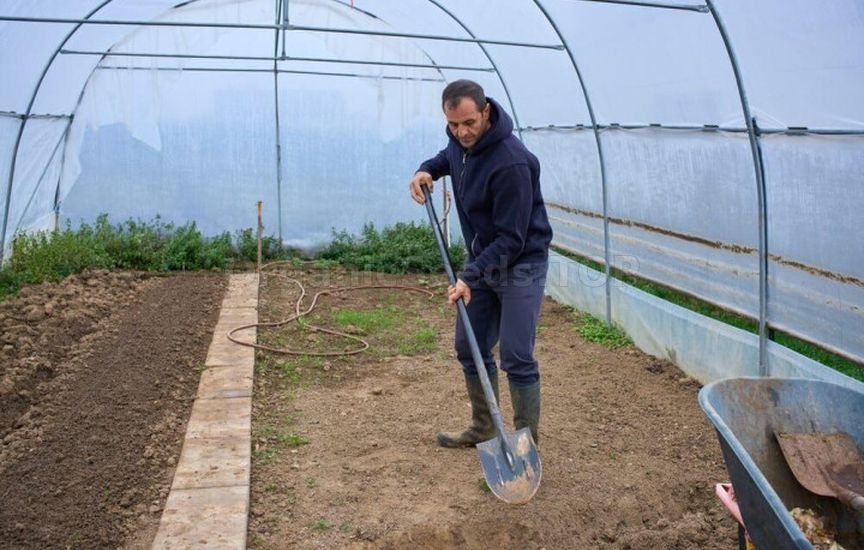 The top layer of soil in a greenhouse is recommended to be replaced every 2–3 years, especially if yields have started to decline. This will reduce the risk of plant diseases and pests and restore soil fertility. If necessary, the work can be done less often, but completely neglecting soil renewal leads to problems. In spring or autumn, remove soil to a depth of about 10–20 cm. Then fresh soil is added to the greenhouse and distributed with a shovel or rake. You can also immediately add compost, humus, vermicompost, and mineral fertilizers depending on the needs of the crops. It is useful to add soil from under legumes or cabbage to the greenhouse. If it is not possible to replace the soil in the greenhouse, you can sow green manure crops: in autumn after harvest or in spring before planting seedlings. This allows crop rotation and reduces infection levels. You cannot frequently disinfect soil with copper-containing preparations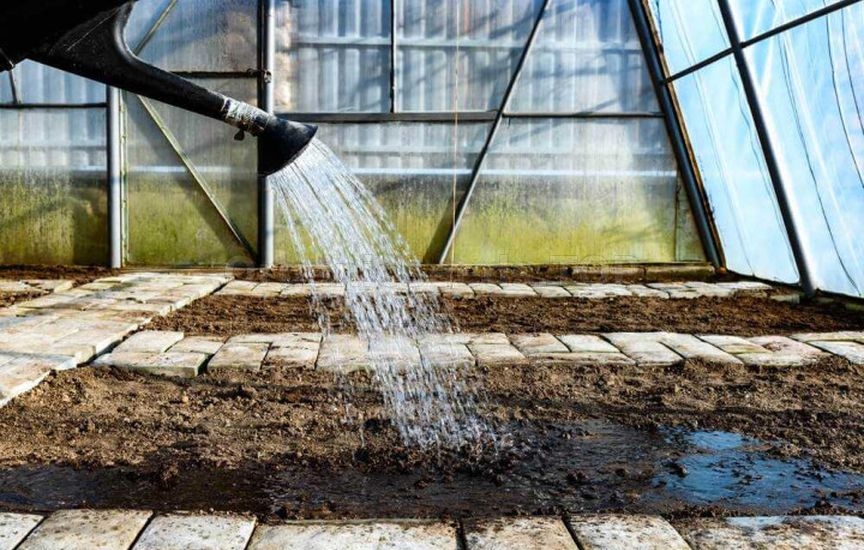 Copper sulfate and other copper-containing preparations work well against pathogenic microflora and some pests. If plants in the greenhouse were severely diseased, such treatment is necessary. However, it is important to remember that copper accumulates in the soil and destroys beneficial microorganisms. In such soil, plants develop worse and cannot absorb iron, which reduces yields. Even the safety of home-grown produce becomes questionable. Copper application to soil is allowed no more than once every 4–5 years. What should be used instead to treat the soil before planting seedlings? For prevention, you can use biological products based on Bacillus subtilis and Trichoderma, folk remedies such as mustard or garlic infusion. If plants were severely diseased last year, you can irrigate the soil with a 2–5% aqueous solution of iron sulfate (200–500 g per 10 L of water), a solution of peracetic acid (1 cup per 10 L of water), or treat the greenhouse with sulfur or tobacco smoke bombs. After chemical treatments, it is better to apply biological preparations to the beds no earlier than 7–10 days later. Taking care of the greenhouse and plants inside it may sometimes seem too complicated. But if you approach the work thoughtfully, you can easily avoid many problems. You may need:Tomato seedsPepper seedsRadish seedsCucumber seedsOrganic fertilizers |
|
|