
What to do with the greenhouse in November: cleaning, disinfection and preparation for the new season |
When the last tomatoes and peppers «left» the greenhouse, inside the closed structure there remained not only empty beds and garbage, but also a mass of problems (for example, pathogens of diseases and overwintering pests), which must be eliminated before the start of the new season.
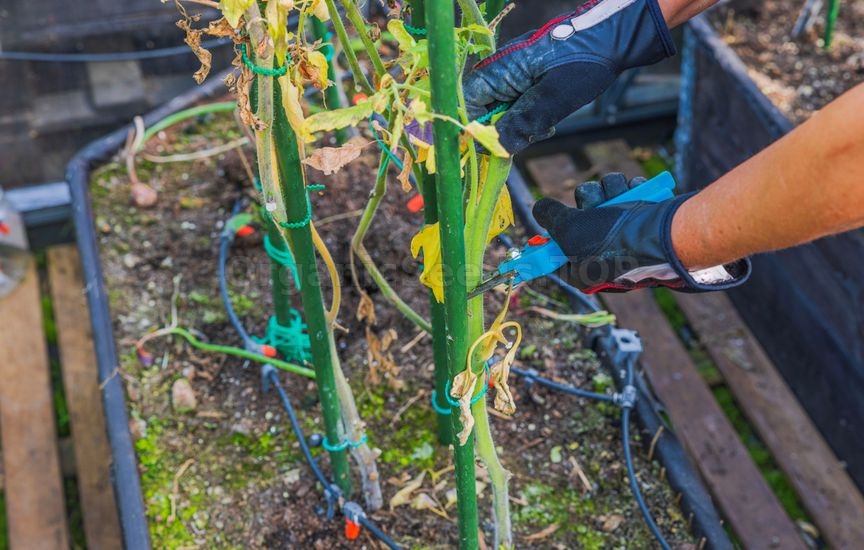 Late autumn is the best time to deal with their elimination and prepare the greenhouse for future plantings. The main work during this period is cleaning and disinfection of the structure, restoration of soil fertility and protection of the construction from snow. General cleaning of the greenhouseFirst of all, free the greenhouse from plants, weeds, fallen leaves and fruits left on the ground. You need to remove not only the above-ground part of the bushes, but also the roots: pathogens of root rots and other dangerous microorganisms can persist on them.
Pay special attention to the beds where tomatoes, cucumbers, peppers and eggplants grew. If during the summer the plants suffered from late blight, cladosporiosis, various spots or root rots, do not leave diseased tops in the greenhouse until spring. Pathogens of many diseases «wait out» the winter precisely on plant residues. 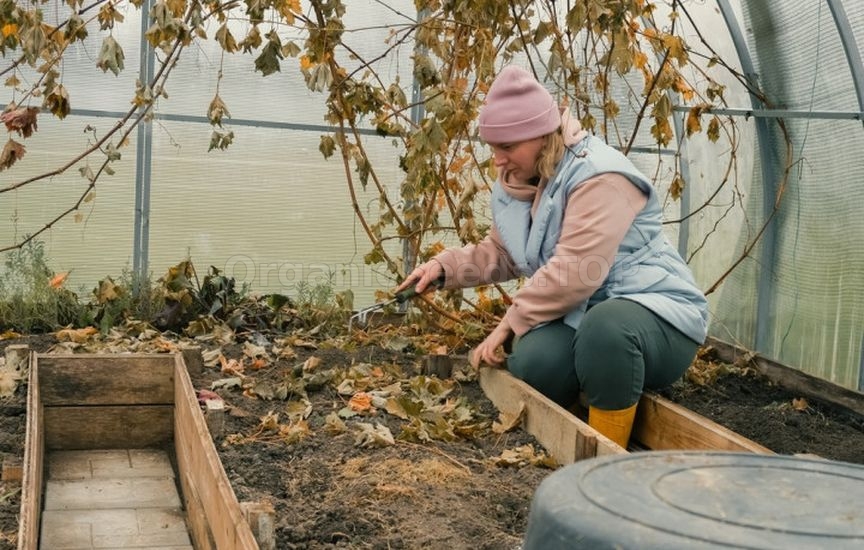 Tops, roots and other plant debris should be burned in a specially equipped place, observing fire safety rules. They should not be placed in a regular compost heap: with insufficient heating, pathogens of diseases can survive. But healthy tops can well be sent to compost. Along with the vegetation, all auxiliary materials used during the season must be taken out of the greenhouse. Twine, textile ties, plastic clips, pegs and wooden supports should be removed, washed in a strong solution of potassium permanganate or a disinfectant and dried. It is advisable not to leave old ropes made of natural materials for the next year, since a huge number of fungal spores persist in their fibers. Old mulch is also removed from the greenhouse, garbage is cleaned from the paths, all corners are cleaned, the edges of the beds are cleaned. Do not forget about seedling trays, empty pots and various tools: particles of soil, fungal spores and eggs of overwintering pests may also remain on them. Washing and disinfection of the greenhouse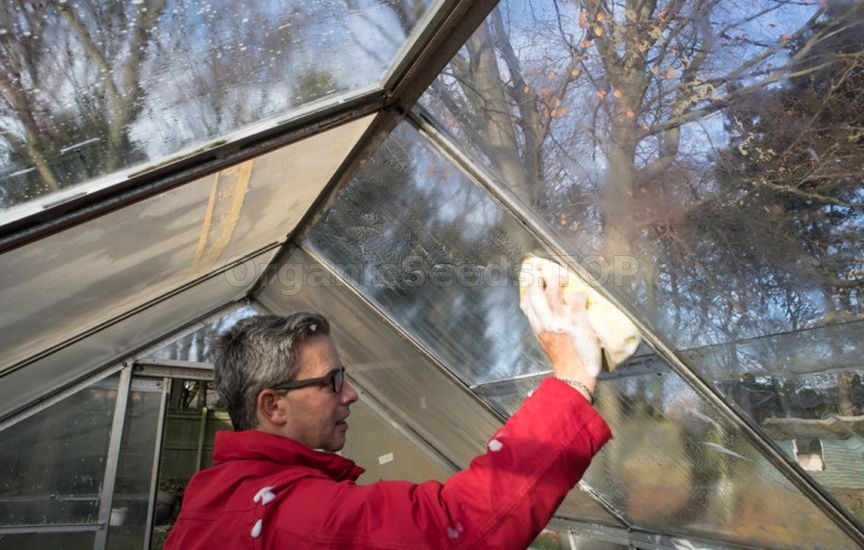 When the space is freed from garbage, you can proceed to the next stage — washing and disinfection of the greenhouse itself. It is more convenient to work from top to bottom: first clean the roof, upper parts of the walls and the frame from the inside, then the side surfaces, supports, doors and, lastly, the lower guides and paths. Over the summer, a layer of dust, dirt, remnants of shading solutions and other contaminants settle on polycarbonate or glass. This not only spoils the appearance, but also reduces the amount of light entering the plants. In spring, this will lead to a lack of sun for young seedlings. The choice of agent for washing and disinfecting the greenhouse depends on the condition of the plants. If the greenhouse crops were not sick with anything, you can get by with a neutral detergent. A solution of laundry or green soap, as well as oxygen bleach and other universal detergents, will do. Polycarbonate is easily damaged, so do not use metal brushes, abrasive powders and hard scrapers. They leave micro-scratches on the material, destroying the protective UV layer and making it brittle. Solvents and aggressive chemical compounds based on iodine and chlorine are also not suitable for such work. They can also damage the protective layer of plastic. Be careful with household products that are used for washing windows: they may contain substances incompatible with polycarbonate. First wash off the main dirt with water, then apply soap solution abundantly to all surfaces and leave it for 10-15 minutes. After that, wipe the roof, walls, frame with a soft sponge and rinse everything with clean water from a hose. Pay special attention when washing to the joints of the structure, grooves of profiles and places where polycarbonate sheets are connected. It is in these crevices that insect larvae and pathogen spores like to hide for wintering. Glass surfaces can be washed with the same soap solution as polycarbonate. On a wooden frame, clean the joints especially carefully, and on a metal one — the connection points where dirt and moisture accumulate. After finishing work, open the doors and vents so that the greenhouse dries well. After internal cleaning, be sure to put the greenhouse in order outside. First remove the earth, fallen leaves and plaque from the coating. After that, wash the external surfaces of the structure with water from a hose and a detergent solution. 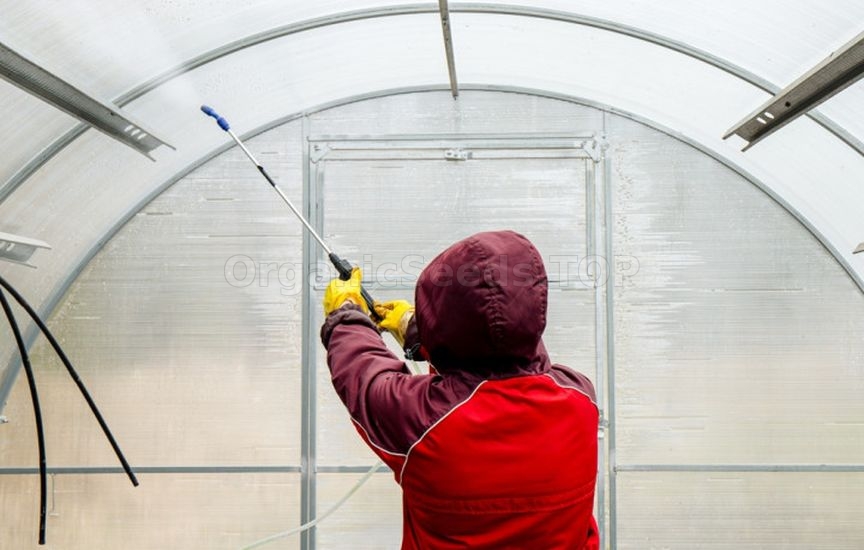 If in the outgoing season tomatoes were sick with late blight or cladosporiosis, cucumbers suffered from downy mildew, eggplants died from fusarium or viral infections, then for washing the greenhouse you should use agents that have a bactericidal, fungicidal and virucidal effect. Apply the working solution prepared according to the instructions to the frame and covering, leave for 30-40 minutes, remove contaminants with a sponge, rag or soft brush, and after that rinse thoroughly with water using a mini-washer or hose. To disinfect a wooden greenhouse, you can use a 3% copper sulfate solution, since copper destroys the spores of most fungal infections. All internal surfaces of the greenhouse are thoroughly sprayed with this composition. However, it should be borne in mind that treating the greenhouse with copper sulfate is recommended no more than once every three to four years, so that copper does not accumulate in the soil in excessive amounts. For a metal frame, choose compositions that do not cause corrosion. For this reason, it is not recommended to use a sulfur bomb, one of the most effective means for combating fungal diseases and harmful insects. Soil treatment and fertility restoration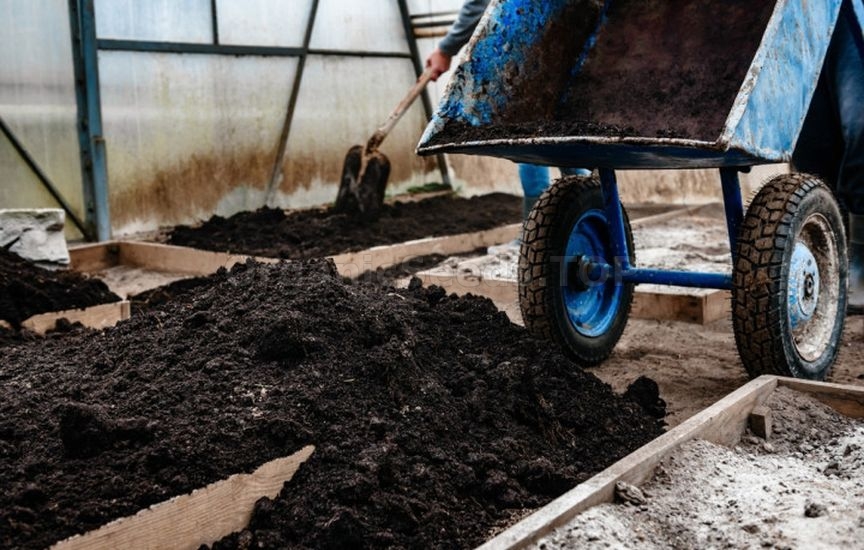 The quality of the soil in the greenhouse gradually deteriorates during the season. Firstly, plants consume a lot of nutrients in the process of growth and crop formation. Secondly, pathogens of diseases and overwintering stages of pests appear (and persist throughout the winter) in the upper soil layer. November is a suitable time to assess the condition of the soil in the greenhouse and start improving it. The ideal but most labor-intensive option for improving the soil is a complete replacement of the top layer. This technique is especially useful if the same crops are grown in the greenhouse year after year, there is a steady decrease in yield, the soil is severely depleted or dangerous soil pests and diseases have been identified. In such cases, part of the top layer (usually about 10-15 cm) is removed, and new soil is poured instead. Infected soil should not be transferred to other beds, especially if it is about nematodes or persistent soil infections. If it is not possible to replace the soil, it can be treated with a 2-5% iron sulfate solution (the concentration of the solution depends on the degree of contamination of the soil with pathogenic microorganisms) or a 2% peracetic acid solution. By the way, it can be purchased ready-made or made at home: to do this, mix 2 liters of vinegar and 400 ml of hydrogen peroxide, close with a lid and leave for 7-10 days in a dark place at room temperature. To treat the soil, dilute a glass of the preparation in 10 liters of water and treat the soil surface. If the weather is warm, the soil can be additionally treated with biofungicides based on Bacillus subtilis or Trichoderma (Fitosporin-AS) to populate with beneficial microorganisms. But if the cold has already begun, then it is better to postpone the treatment of soil with biological products to spring. To restore soil fertility, it is advisable to add mature compost or humus to the greenhouse in autumn. The amount is determined by the condition of the soil, but usually it is 5-6 kilograms per 1 square meter of area. Mineral fertilizers are better to select taking into account the composition of the soil and what crops you plan to grow in the greenhouse next year. Most often it is enough to add 20 grams of potassium sulfate and 30 grams of superphosphate per 1 square meter or a complex fertilizer marked «Autumn». Do not annually apply large doses of mineral fertilizers: an excess of individual elements can disrupt plant nutrition no less than their deficiency. The soil after applying fertilizers is shallowly dug or loosened with a flat cutter, leaving large clods of earth unbroken. During the winter, they will freeze, which will help reduce the number of harmful insects. Preparation of the greenhouse for winter loads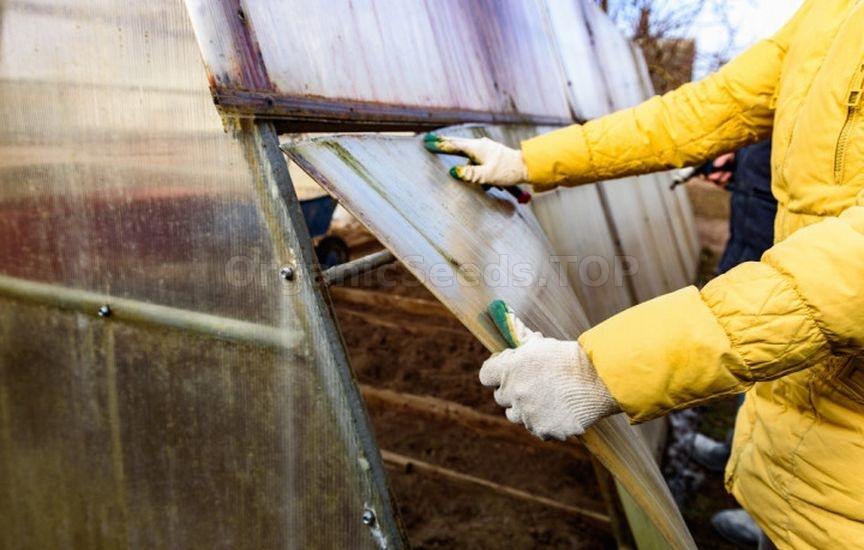 The final stage of preparing the greenhouse for winter is the inspection and protection of the structure from destruction. The main enemy of the greenhouse in winter is wet snow. Due to its huge weight, even the strongest metal profile can be deformed, and polycarbonate sheets under a thick snow layer will be crushed. On the metal frame, check the connections, bolts, screws and attachment points to the base. Tighten loose connections, and clean the appeared areas of rust, treat with anti-corrosion primer and paint. Wooden posts and bases must be checked for rot, cracks and loose connections. Be sure to replace damaged elements. For a polycarbonate greenhouse, check if there are cracks, holes, separated joints and poorly fixed sheets in the coating. When tightening the screws, do not pinch the sheets. Excessive pressure on the plastic can lead to damage around the fastening holes. It is better to repair small cracks and damage before frost, and replace severely damaged panels. Pay attention to the ends of the honeycomb panels: protective tapes must remain in place, otherwise dust and water can get inside. If necessary, seal these areas. It is also important to pay attention to the condition of the hardware. All vents, doors and automatic pistons of thermal drives must be prepared for winter. It is recommended to remove automatic openers for doors and vents, wash, lubricate with machine oil and take them for storage to a warm room, since winter frosts can damage the hydraulic cylinders. The doors and vents of the greenhouse are tightly closed for the winter and fixed with latches so that strong gusts of wind do not tear them off their hinges. After all work on preparing the greenhouse for winter, install wooden T-shaped supports inside the structure, which will help strengthen the frame. They are placed at intervals of 1.5 m, resting the lower part on strong wooden blocks or bricks so that the supports do not go into the soft unfrozen ground. Proper autumn preparation of the greenhouse will protect it from winter loads, reduce the risk of serious problems in the future season and allow you to get a rich harvest of healthy vegetables without unnecessary efforts. You may need:Vegetable seedsFlower seedsOrganic fertilizers |
|
|