
Poncirus trifolius: growing and care |
«Wild lemon», «thorny lemon», trifoliate – this fragrant citrus tree is called poncirus. This small but rather spectacular plant amazes with its beautiful and unique appearance at any time of the year. In early spring its bare branches are decorated with fragrant large flowers. In the hot summer season, against the background of dense and bright greenery, inedible but very beautiful bright orange fruits stand out. In the autumn months the foliage turns a sunny yellow shade. And in the cold winter frost the tree stands out against the snowy background with a pleasant light green color of the bark and large thorns on unusually curved branches.
Poncirus is a frost-resistant crop that grows in open ground in almost any climate. The decorative qualities of the plant distinguish it among other representatives of the flora. The airy crown of poncirus looks very beautiful regardless of the season. This elegant and fragrant tree looks great in garden plots of different sizes and in various compositional plantings. 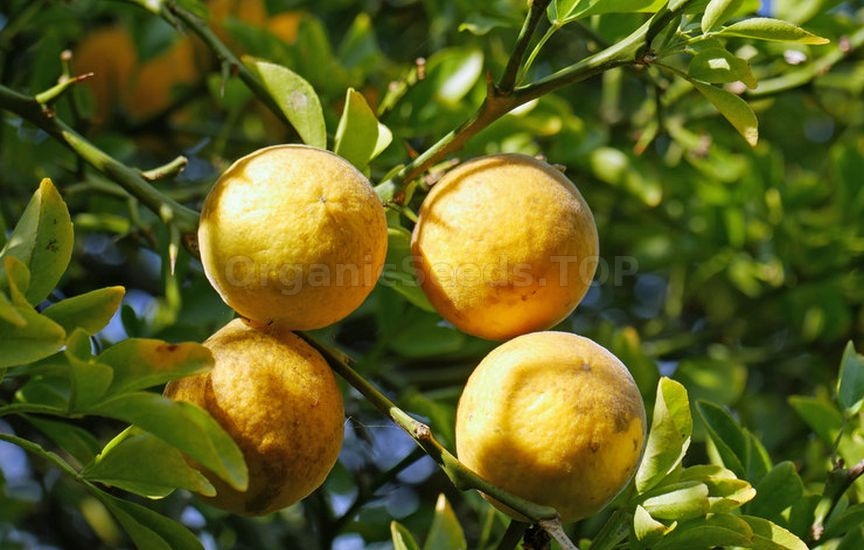 Trifoliate looks like a small multi-stemmed shrub with a tent-shaped crown and flattened branches with large thorns. In natural conditions the height of the plant can reach six meters, and in garden plots this figure is half as much. The foliage and bark of the plant have a light green or bright saturated green shade. Large long thorns (about 5 cm long) seem to hide in the axils of glossy yellow-green leaves. The color of the leaf mass changes with the arrival of autumn and acquires a pleasant lemon-yellow shade. The leaves of poncirus are trifoliate, the average length is from 8 to 10 cm. 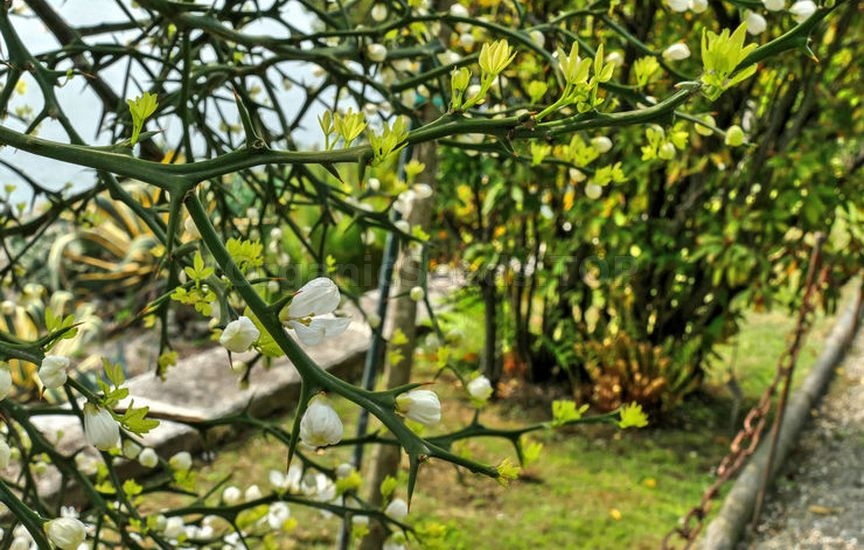 The sweet aroma of snow-white flowers emanates from the shrub for 1.5–2 months in April and May, when poncirus begins active flowering. Large solitary flowers (about 5 cm in diameter) appear on bare branches when the leaves have not yet had time to unfold and become a real decoration of the spring tree. In the near future fruit formation will begin and by early autumn bright yellow decorative oranges – pomerans – will appear. The fruits are covered with a hairy peel, the pulp has a bitter-oily taste. Their zest contains a large amount of useful substances, one of which is essential oil. This valuable component is used for aromatherapy sessions, for room fragrance, as well as in the perfume and cosmetic industry. In the first 3–4 years the young poncirus grows very slowly, does not bloom and does not bear fruit. Upon reaching this age, active development and accelerated growth (about 50 cm per year) of the shrub begins, as well as flowering and fruit formation. The tree is able to resist all types of fungal diseases. Rules of cultivation and care for poncirus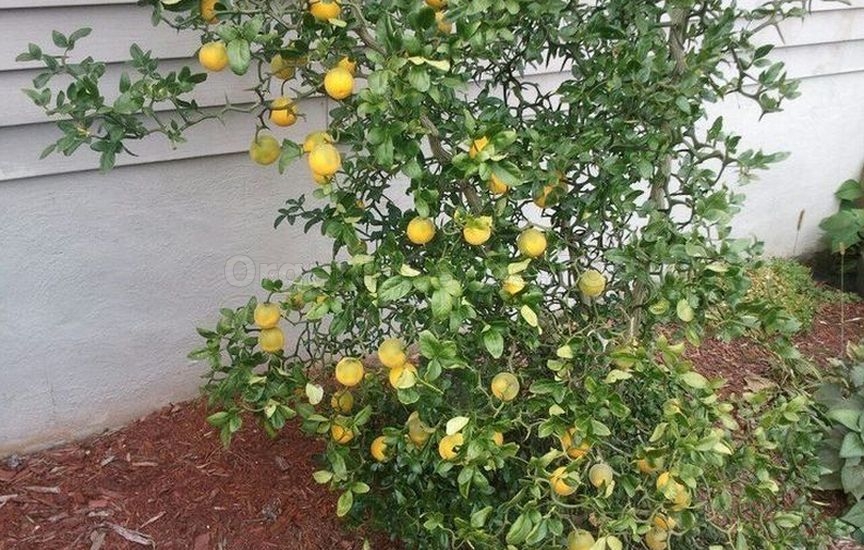 Choice of location and lighting requirements The place of cultivation should be open and sunny, without sharp gusts of wind. Full development and lush flowering of the light-loving shrub depends on the amount of bright light received. Soil and care for it It can grow on almost any soil, but prefers loose and moderately moist soil. The procedure of loosening the soil in the trunk circle is not carried out. Pruning It tolerates formative and sanitary pruning well. In early spring it is necessary to cut damaged and dried shoots. To form the height of the crown, one third of it is subject to pruning. Winter shelter 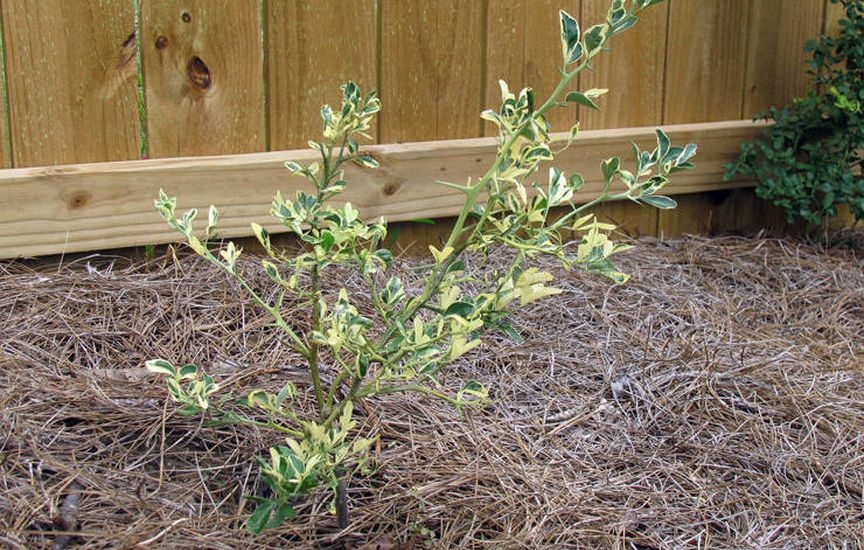 When growing wild lemon in conditions with a harsh winter climate, shelter is indispensable. As a covering material it is recommended to use nonwoven material and spruce branches. Transplanting Experienced gardeners do not advise disturbing the root system of trifoliate by transplanting, since the slightest injury to the roots will negatively affect the development of the crop. When planting a seedling it is recommended to dig a deep planting hole. Fertilizers and feeding Organic feeding is necessary only for mature crops and only in spring. They are applied to the soil together with watering. Watering The plant does not need regular watering, it has enough nutrition and moisture from the soil and precipitation. In prolonged dry and hot summer weather without rain watering will still be required – once every 7–10 days. Temperature regime The plant can be grown in any climate and at any temperature. Even severe frosts are not terrible for it. For example, a drop to 20–25 degrees of frost poncirus will survive even without additional shelter. Propagation of poncirus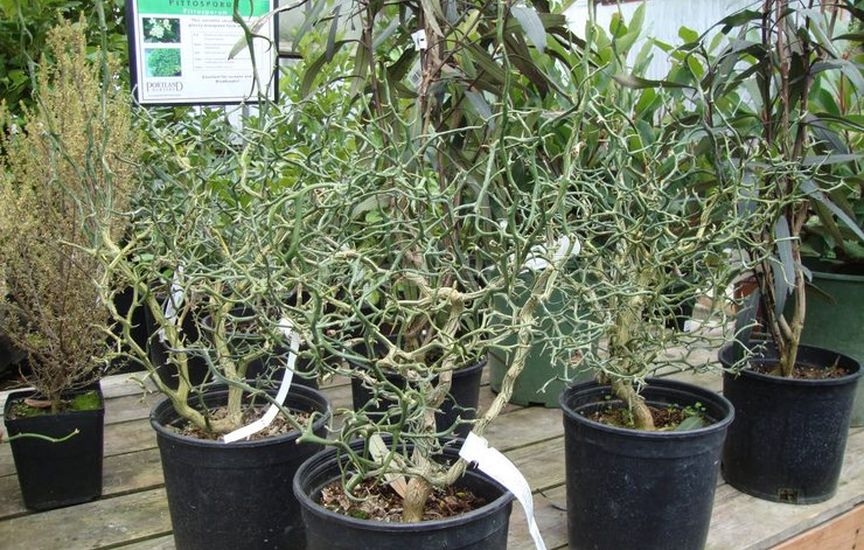 Propagation by seeds The seed method of propagation is considered ineffective due to low seed germination. It is important to note that dried planting material cannot be used for planting. Propagation by cuttings Cutting is the most reliable method, since cuttings quickly take root and adapt well in a new place. Poncirus in landscape design Poncirus is planted as a hedge, as well as a decorative ornament. Dense thorny fencing will protect against uninvited guests (for example, stray dogs) and will become a wonderful decoration in the garden and backyard. The citrus crop can be combined with various types of trees and shrubs. Its neighbors can be various coniferous and fruit plants, which will contrast with each other in shades and forms. You may need:Trifoliate orange seeds (Poncirus trifoliata)Deciduous tree seedsOrganic fertilizers |
|
|