
What to do with fallen leaves in the garden: remove, bury or leave? |
Every autumn under our feet there is a golden carpet of fallen leaves. Some summer residents consider it a real treasure, while others stubbornly call it ordinary garbage. And during this period, every plot owner faces the question: what to do with this good (or evil)?
 Where leaves must be removedIn nature, leaves fall to the ground every year and become part of the natural cycle of substances. Gradually they are destroyed by bacteria, earthworms and other soil organisms, and the elements contained in plant residues return to the soil. Therefore, fallen leaves by themselves are a quite useful material.
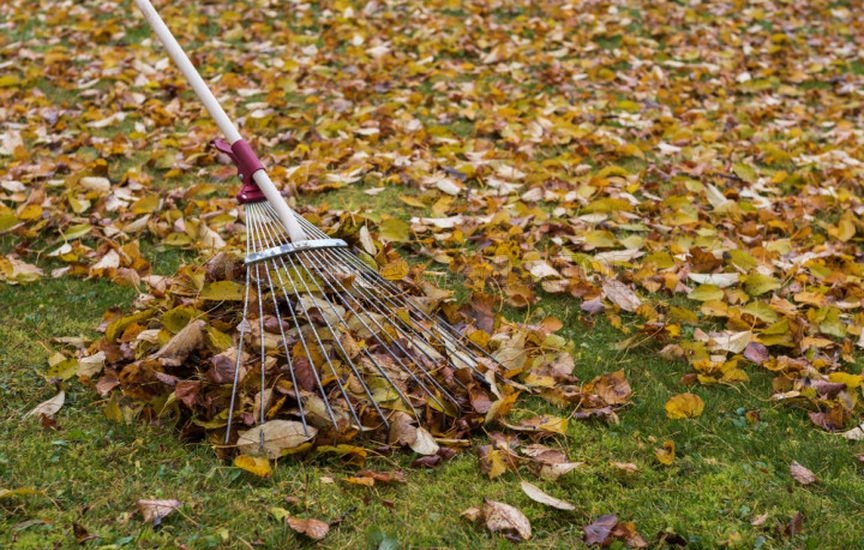 However, on the plot there are places where leaving leaf litter for the winter is strictly forbidden. First of all, this applies to well-kept green lawns. If you leave a large layer of leaves on the lawn, then under the influence of autumn rains and winter snow it will turn into a dense crust in a few months. This crust will completely block the access of oxygen and light to the lawn grass. As a result, in spring instead of friendly green shoots you will find bald spots on the lawn, traces of damping off and gray mold dangerous for grass. It is necessary to clean the lawn from falling leaves regularly, using a fan rake. Another zone of increased attention is garden paths, the blind area of the house and open terraces. Wet foliage makes hard surfaces extremely slippery, which increases the risk of injury when moving around the plot. In addition, clogging drainage ditches and gutters, leaves provoke water stagnation and the formation of ice. Special mention should be made of the leaves of fruit trees that suffered greatly from diseases and pests this season. If your apple tree was sick with scab, the pear suffered from rust, and the cherry fell off due to coccomycosis, their foliage cannot be left on the ground. Spores of pathogenic fungi will perfectly overwinter in leaf litter, and in spring they will be transferred by wind and raindrops to young budding buds. Therefore, such foliage must be carefully collected and disposed of in a safe way outside the plot. Or first carry out an eradicating treatment of the garden, and then collect the leaves in bags for composting. If trees in the garden are sick, then it is desirable to carry out an eradicating treatment of the garden before the end of leaf fall. For spraying adult trees and near-trunk circles, you can use a 5% solution of iron sulfate and a 7% solution of urea. Creating compost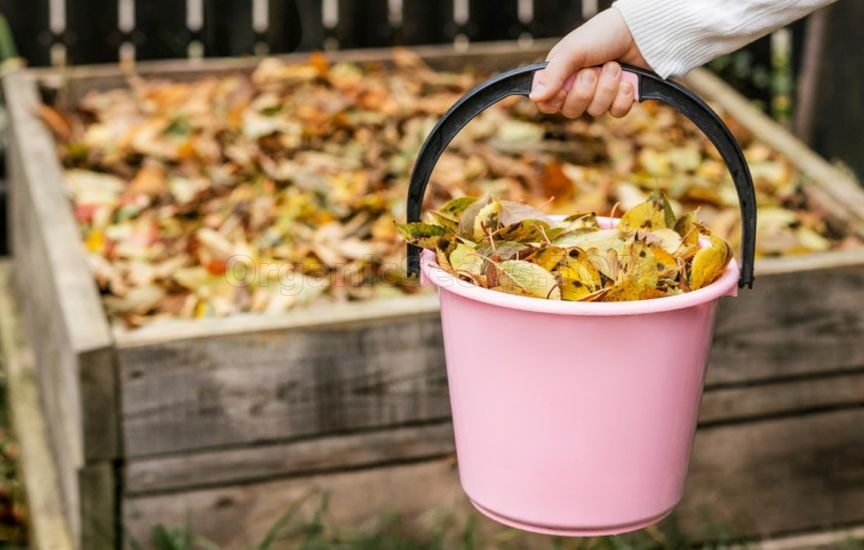 The most popular way to dispose of healthy leaf litter is making compost. Leaves are an excellent carbonaceous mass (it is also called the brown component), which serves as food for bacteria that decompose organic matter, and enriches it with macro- and microelements. To get high-quality fertilizer, leaf litter alone will not be enough, because it decomposes rather slowly. To speed up the process, leaves and other brown components must be interlayered with green (nitrogenous) materials: remnants of mowed grass, green manure, vegetable tops or kitchen waste. When creating a compost heap, coarse branches are laid at the bottom for drainage, and then layers of leaves and green mass alternate, moistening each layer with water or a solution of special biological preparations that include beneficial microorganisms. To keep the decomposition process active even in cool weather, the mass needs to be periodically turned, ensuring air flow. After about a year or two, such a mixture will turn into compost – a homogeneous, dark, loose substrate smelling of forest earth, which can be applied under any crops, used in preparing soil for planting, mulching and other garden work. Making leaf humus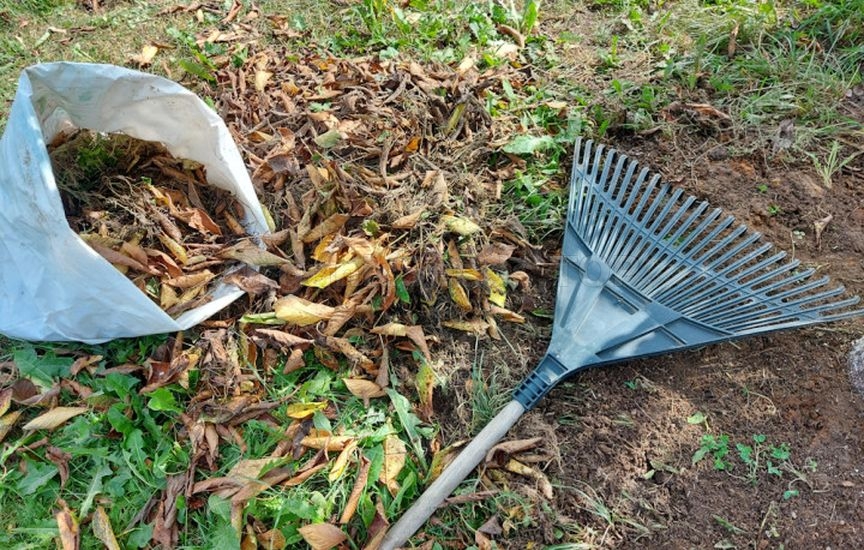 If you want to get clean soil with a special structure, try making leaf humus (leaf earth) from fallen leaves. This is a light loose mass that is ideal for improving the structure of heavy clay soils, and can also be used for growing home seedlings and indoor flowers. To prepare leaf humus, the collected litter is tightly packed into large plastic bags, having previously made several holes in them for ventilation. The leaves inside the bag need to be well moistened. To speed up the process, you can add a little ready-made mature compost or a solution of nitrogen fertilizer, such as urea. The bags are tied and left in the far corner of the garden. Leaves of birch, linden, maple and fruit trees will turn into delicate humus in a year and a half. To make the process go faster, thick and hard leaves (they decompose slower than small and thin ones) are desirable to pre-shred. Mulching beds and near-trunk circles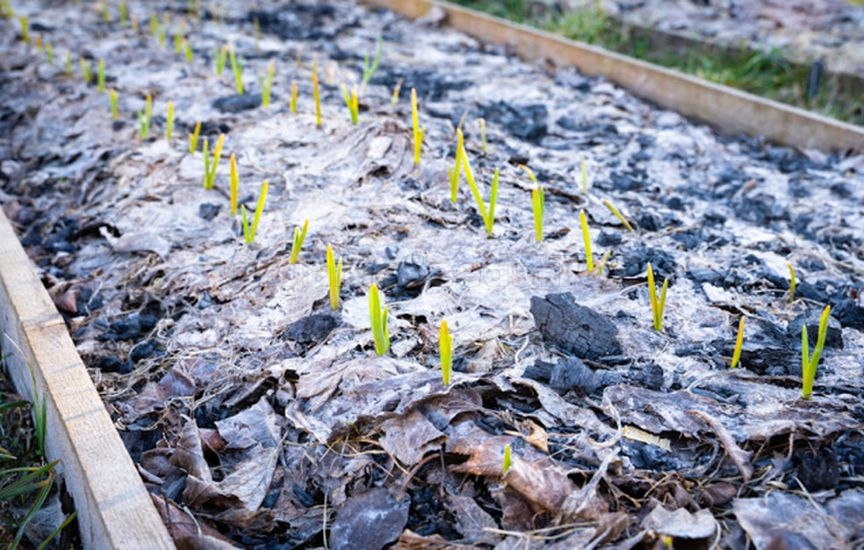 Another option is to use fallen leaves to cover the soil. Left on the soil surface, foliage in winter turns into an excellent mulching material that protects the earth from weathering, freezing and erosion. Autumn mulching is especially useful for plantings of winter garlic, onions and perennial flower crops. A dense layer of dry leaves 10-15 cm thick will reliably protect bulbs and rhizomes from sharp temperature changes during snowless frosty periods. To prevent leaves from flying away and getting less wet, you can lay a breathable material on top of them or build a simple protective structure. Mulch from fallen leaves can also be left in the near-trunk circles of young fruit trees and berry bushes, however, some nuances must be taken into account. Firstly, the mulch layer should not fit closely to the trunk of the tree itself, so that the bark does not begin to damp during thaws. Secondly, it must be remembered that mice and other rodents like to arrange their winter nests in the thickness of dry leaves, which can severely damage the delicate bark of young seedlings. To avoid this problem, the trunks need to be protected with a special net, spruce branches or other similar material. Burying leaves in the soil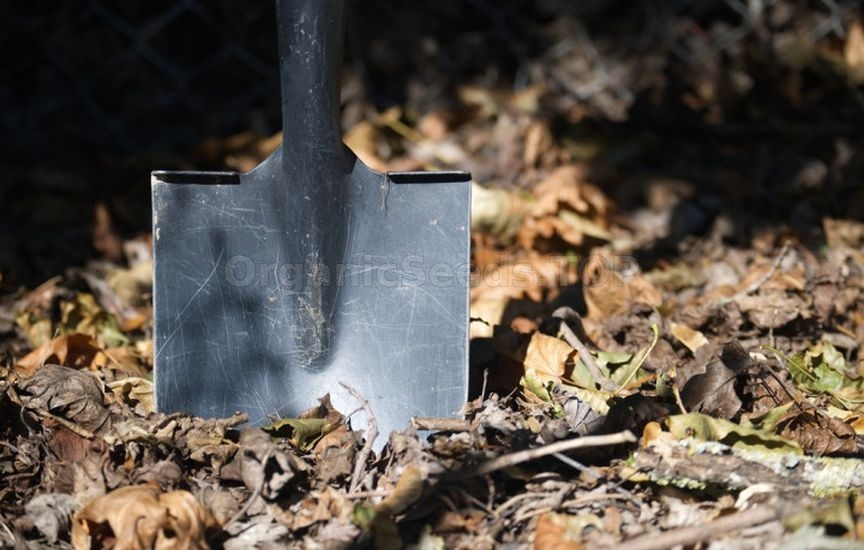 The question of whether it is worth plowing or burying foliage directly into the beds during autumn digging causes a lot of controversy. On the one hand, embedding organic matter into the soil enriches it with humus and improves physical properties. Earthworms and soil microorganisms willingly process the embedded leaves, turning them into nutrients. This method works great on light sandy or, conversely, heavy loamy soils, helping to make them more structured. On the other hand, the process of decomposition of whole leaves in the depth of the soil requires a large amount of nitrogen. Microorganisms that break down cellulose begin to actively absorb this element from the surrounding soil, which can cause temporary nitrogen starvation of plants next spring. To neutralize this negative effect, when burying foliage, it is recommended to water the beds with a solution of nitrogen fertilizers or combine digging with the introduction of rotted manure. Creating warm beds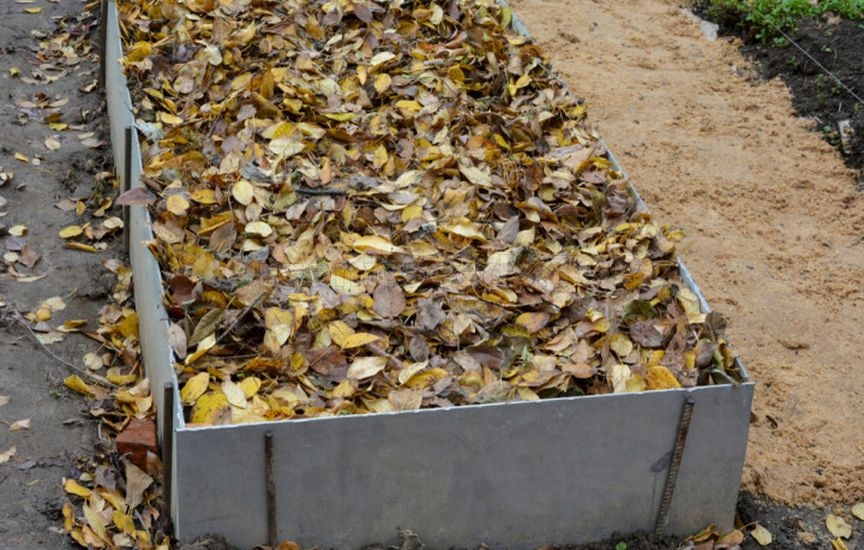 Fallen leaves are an ideal basis for arranging warm (sometimes they are called high) beds intended for growing early cucumbers, zucchini, tomatoes or greens. The principle of operation of such a bed is based on the release of heat during the decomposition of large volumes of organic matter. It is best to arrange such a structure in autumn, when there is an excess of "building" material in the garden. To do this, at the chosen place (it is desirable that it is well lit by the sun during the day) soil is removed to a depth of about 30-40 cm or a high wooden box is built. At the bottom of the future bed, large remnants are laid: cuttings of branches, stems of sunflower or corn, which will perform the function of drainage. The next layer is a thick layer of fallen leaves mixed with grass, tops or green manure. The foliage is carefully compacted and watered with a solution of microbiological preparations based on trichoderma and other beneficial microorganisms. On top, the organic "pie" is covered with a layer of fertile earth about 20 cm thick. In spring, the inner layers will begin to actively decompose, heating the soil from the inside and allowing seedlings to be planted several weeks earlier than usual. As you can see, there are many ways to use fallen leaves with maximum benefit for the plot. The main thing is that there are no signs of infections on the leaves. And then leaf litter will turn into a valuable, and, importantly, absolutely free resource. You may need:Green manure seedsTools & suppliesOrganic fertilizers |
|
|