
Which vegetables should not be stored next to each other |
Even well-dried and outwardly healthy vegetables can quickly spoil if stored in unsuitable conditions. And it is not only about temperature and humidity, but also about the compatibility of different crops. Some fruits release substances that accelerate the aging of «neighbors»; others like dryness; others like moisture.
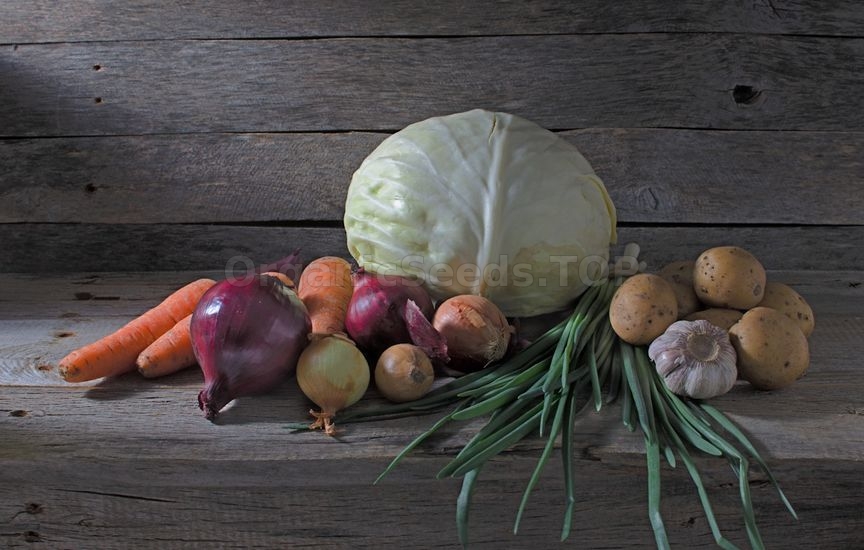 To keep potatoes from sprouting, carrots from wilting, and cabbage fresh longer, it is important to properly distribute the harvest among storage places. Some crops can quite well be stored in the same room if their microclimate requirements coincide. Others are better placed in different zones, even if there is not much space. To avoid creating unnecessary complications, it is enough to know a few basic principles. Main causes of incompatibility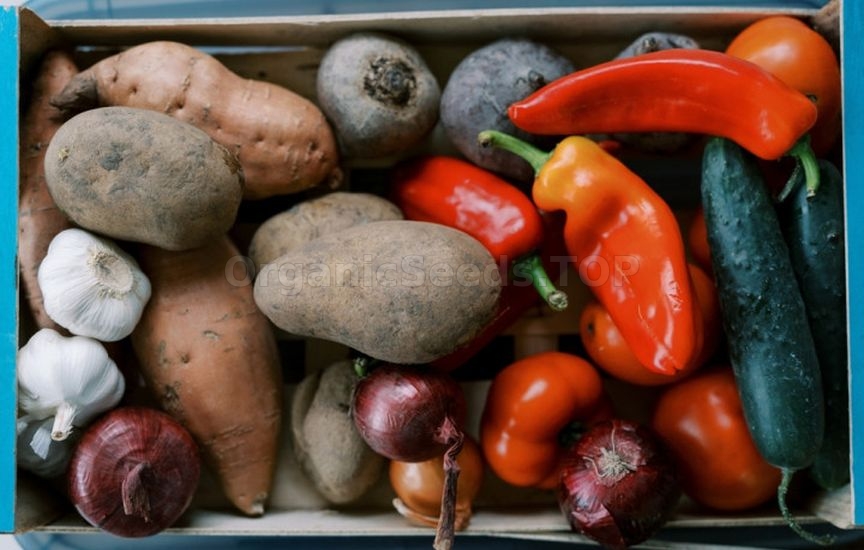 Before distributing boxes among storage places, it is important to understand the reasons why supplies negatively affect each other and cause mutual spoilage. The first reason is ethylene release. Ethylene is a volatile gas without color or distinct odor, produced by many fruits in the process of vital activity. For plants, ethylene is a natural ripening hormone. When one vegetable actively releases this gas, all surrounding fruits begin to ripen acceleratedly and, as a consequence, overripen and rot. The main «producers» of ethylene are fruits: apples, pears, bananas, apricots. Tomatoes and melons also release this gas. But there are far more vegetables sensitive to it: cabbage, carrots, cucumbers, eggplants, lettuce, greens, broccoli, cauliflower. Put one ripe tomato next to a head of cabbage – and within a few days the outer leaves of the cabbage will begin to yellow and spoil. The second important factor is different requirements for environmental conditions. Vegetables for long storage need a certain temperature and level of air humidity. Juicy and moisture-loving crops require high humidity so as not to wilt, while fruits with a dense dry shell in such conditions will become covered with mold and spoil within a short time. For example, onions and garlic like dryness and good ventilation: at increased humidity they begin to rot. But carrots and beets, on the contrary, need high humidity, and in conditions of dryness they wilt and shrivel. Storing all these fruits in one enclosed space is a big mistake: either dry vegetables will begin to spoil from dampness, or moisture-loving ones will dry out and lose turgor. The third reason is connected with the transfer of specific odors. Some crops have a strong, penetrating aroma that is easily absorbed by the porous structures of other vegetables, which irreversibly spoils their culinary qualities. There is one more nuance: vegetables with mechanical damage, traces of disease, or frozen specimens more often become a source of rot. Even successful neighborhood will not save the harvest if a spoiled root crop got into the box or the fruits lie close together. Which vegetables are better stored separately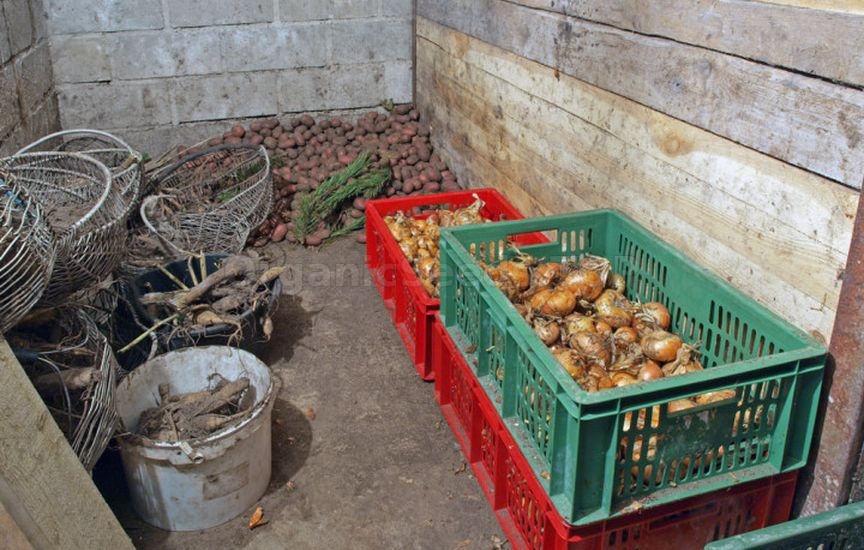 So which vegetables are better not put next to each other so that during storage they do not «spoil life» for each other? Potatoes and onions One of the most common violations of storage rules is the joint placement of potatoes and onions. They often end up next to each other, because both crops store well in a cool place. However, this does not mean that they are good together. Onions after harvesting must be thoroughly dried. For long storage they need dryness and free air circulation. For potatoes, a more humid environment is preferable, although its tubers also cannot be laid for storage wet. In the process of respiration they release a lot of moisture, and this moisture is absorbed by onions. The bulbs quickly become damp, their neck softens, and from the inside they begin to rot. In turn, onions during storage release ethylene, and this gas stimulates premature awakening of the eyes in potatoes. The tubers within a short time become covered with white sprouts, become soft, and their taste deteriorates. Thus, if the harvest of potatoes and onions has to be stored in one cellar, different containers must be used and they must not be placed close to each other. Well-dried bulbs without damage can be stored at home, at a temperature of 18-22°C. Onions are put in nets, low boxes, or tied into bundles. Carrots and onions Carrots belong to crops that in a room with dry air quickly lose moisture. To keep root crops from shriveling and becoming flabby, they are stored at high humidity and low temperature. Onions need a drier environment. During joint storage, either the onion will begin to rot, or the carrot will dry out. There is another reason not to place them in one container. Onions and other representatives of the Allium family release characteristic volatile substances that, on close contact, can affect the smell of neighboring products. And carrots belong to those crops that are capable of absorbing foreign odors when stored next to strongly smelling vegetables. Especially if it concerns long-term storage of the harvest of both crops in closed boxes or bags. Potatoes and cabbage Potatoes and white cabbage are capable of being preserved for a long time in a cool cellar, but at the same time they need somewhat different conditions. Potatoes require coolness, darkness, and ventilation, but excess moisture on the tubers is dangerous. During long storage in dampness, potatoes can rot, especially if damage remains on them after harvesting. Cabbage, however, stores well at a temperature close to 0°C and high relative humidity. If the air is too dry, the heads gradually lose moisture and may begin to wilt, To prevent this from happening, place cabbage on a separate shelf or in separate boxes, leaving space between the heads for ventilation. Store potatoes in another container. Do not allow cabbage leaves to come into contact with the tubers. 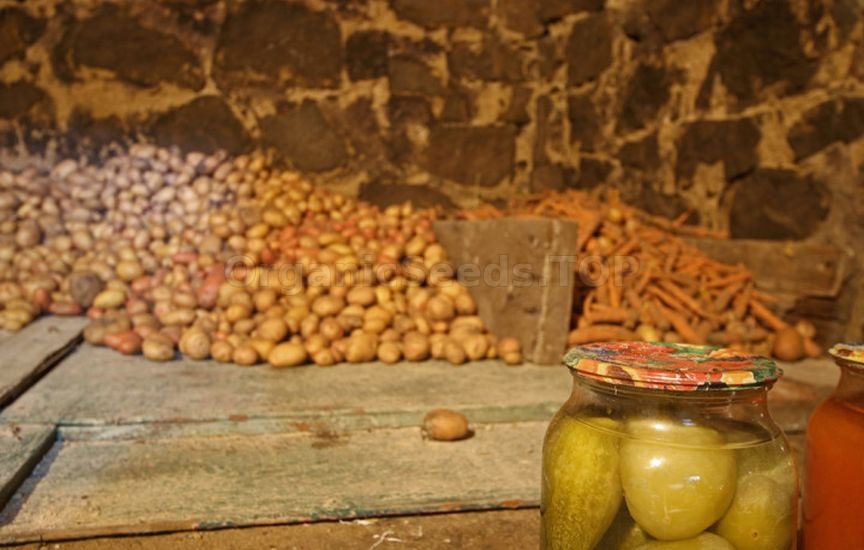 Carrots and potatoes At first glance this is a quite successful combination. Both crops belong to vegetables that are usually kept in winter in a cool cellar. However, they require different humidity. Carrots for long storage need relative air humidity within 90-95%. For potatoes, no more than 85-90% is recommended. In conditions suitable for carrots, especially with insufficient ventilation, potatoes will be more susceptible to rotting. There is one more nuance: potatoes during storage can «transmit» an earthy smell to neighboring products, especially if the tubers are poorly cleaned of soil or there is not enough fresh air in the room. And carrots, as we said above, are susceptible to any strong odors and can absorb them. For this reason, the crops are better placed in different boxes and in different places of the cellar. Carrots can be covered with clean (slightly moist!) sand, and potatoes can be kept in a box with holes for ventilation. Tomatoes and carrots Carrots and tomatoes (as well as any other sources of ethylene) are also a dangerous neighborhood. Carrots are very sensitive to this gas. If it lies next to tomatoes or, for example, peppers, the root crops acquire a bitter taste, the skin darkens, and the sweetness disappears. Cabbage and tomatoes Tomatoes should not be placed next to some other vegetables sensitive to the effects of ethylene, for example with white cabbage. Any neighborhood with fruits that release this gas (and besides tomatoes, apples and pears actively produce it) leads to the fact that cabbage begins to quickly yellow and the outer leaves die off. For this reason, always keep the heads at the maximum distance from any fruits, tomatoes, and zucchini. At the same time remember that the degree of ethylene impact on cabbage, as on other vegetables, depends on the gas concentration, temperature, and storage duration. Garlic and other vegetables Dry garlic, like onions, needs good ventilation and relatively dry conditions, therefore by themselves both vegetables are quite compatible and can be stored next to each other. But from other crops, garlic is better stored separately. Its sharp smell can be transmitted to neighboring products and change their taste, especially if vegetables are stored in closed containers. Besides, one should not place garlic next to carrots, beets, and other moisture-loving root crops also for the reason that these crops are stored at high humidity. And too humid air leads to rapid spoilage of garlic. Cucumbers and tomatoes These vegetables should not be kept in one box. Tomatoes are an active source of ethylene, and cucumbers are extremely sensitive to the action of this gas. Even a small amount of it accelerates yellowing, softening, and loss of crisp properties by cucumbers. Which vegetables can be stored next to each other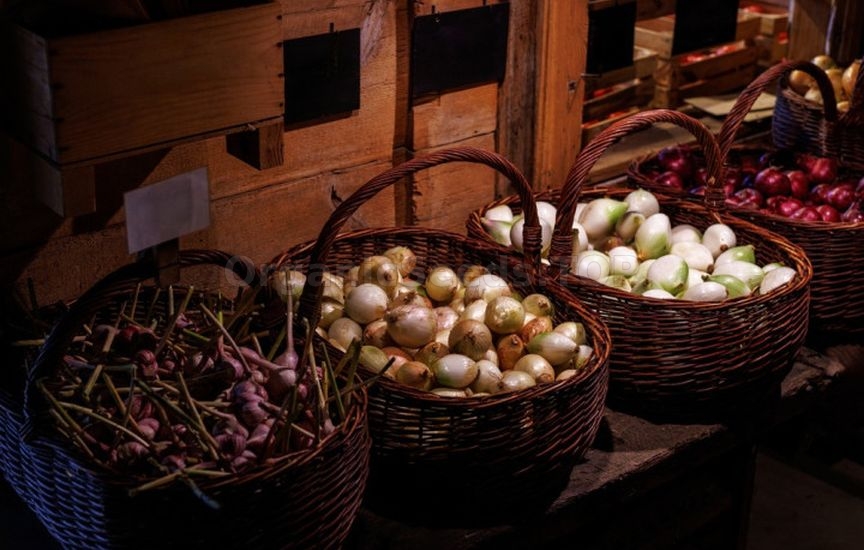 However, not all crops need isolation. Some vegetables perfectly «get along» and even «help» each other to be stored. Potatoes and beets are a good pair. Beets are recommended to be laid in an even dense layer directly on top of potatoes. Its tubers in winter often suffer from excess humidity and begin to rot if the air is too damp. Beets, on the contrary, have a thick skin and need increased humidity so as not to dry out. Laid on top, beets effectively absorb all the moisture that potatoes evaporate. As a result, both vegetables feel excellent: potatoes remain dry and healthy, and beets retain elasticity and juiciness until spring. Another example of harmonious coexistence is onions and garlic. They have similar requirements for microclimate. Both these vegetables need moderate coolness and, most importantly, dry air with good ventilation. They can be safely stored in common nets, wooden boxes, or woven into beautiful braids hung from the ceiling of the pantry. The crops do not cause mutual harm to each other, and their taste qualities do not deteriorate. Root crops (carrots, beets, turnips, celery root) can lie together in a room with high humidity. True, it is very important that there are no sources of ethylene nearby. In boxes with sand or sawdust these vegetables calmly coexist for months. Pumpkins and zucchini also store quite well next to each other, but provided that they are fully ripe and their skin has managed to lignify. They are best laid out in one layer on dry straw or paper on the upper shelves of the cellar, where the air is slightly warmer and drier. A few tips on organizing storage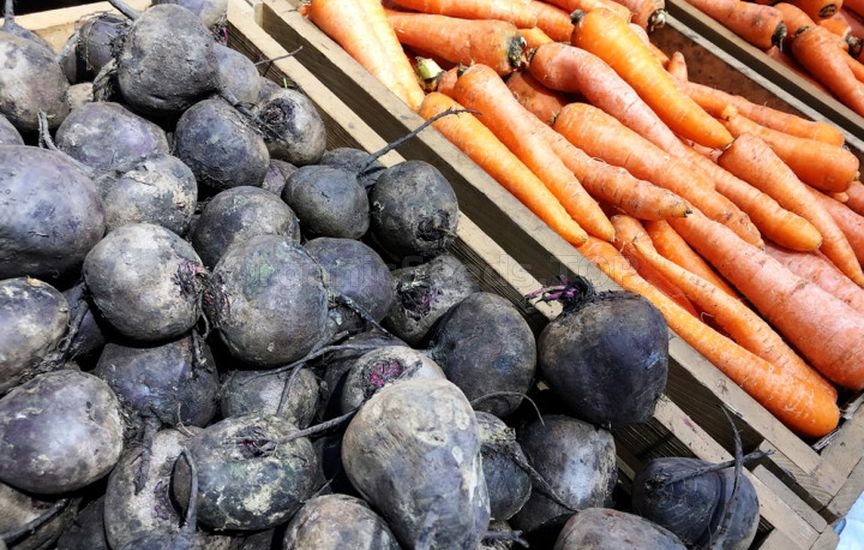 How to properly organize harvest storage? The most important thing is to put only healthy vegetables into winter storage. Rotten, frozen, severely damaged, or suspicious specimens are better set aside immediately for quick use if they are suitable for food. Vegetables with signs of rot should not be left in common boxes. To minimize the negative influence of vegetables on each other during long storage, divide the cellar room into clear zones. Remember the laws of physics: cold air always descends downward, and warm air rises to the ceiling. Because of this, near the floor the humidity is always higher and the temperature lower. For this reason, the lower tier is ideal for potatoes, beets, and radishes. These vegetables like coolness and are not afraid of high humidity. Below one can also place boxes with carrots covered with moist sand or sawdust. The middle shelves should be allocated for cabbage, which is laid out on shelves at some distance from each other. The upper tier, where it is drier and warmer, leave for pumpkins, zucchini, onions, and garlic. If the area of your storage is small and it is impossible to completely isolate the crops from each other, use physical barriers. These can be dense wooden partitions installed between different crops. Another option is clean sand, peat, or coniferous sawdust. All these materials are suitable for covering the fruits. Also do not forget about regular ventilation of the cellar and inspection of the harvest. Timely remove any fruits on which the first signs of wilting or spoilage have appeared, because one rotten vegetable can quickly infect the whole batch. Proper neighborhood of vegetables during storage helps reduce harvest losses, but does not replace a suitable microclimate. Therefore, throughout the entire winter period, monitor ventilation and humidity, ventilate the room, and control the temperature. You may need:Tools & suppliesVegetable seedsOrganic fertilizers |
|
|