
Cucumbers in the greenhouse: planting scheme for maximum yield |
By planting cucumber seedlings in the greenhouse in the first or second decade of May, you can expect the first crisp harvest already in June. At the same time, the success of the "venture" depends not only on favorable weather, but also on соблюдение the subtleties of agricultural technology, namely – proper planting of the plants.
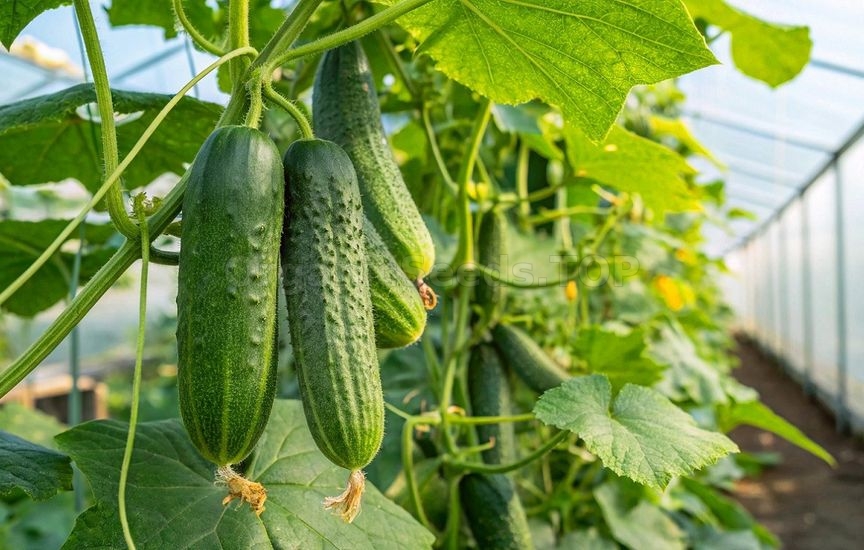 Getting a plentiful harvest of crisp juicy cucumbers is not as simple a task as it may seem. Many beginner gardeners believe that this crop is unpretentious and growing it will not require much effort, however in reality things are a little different. What matters most is not the method (seedling or direct sowing) or the planting location – greenhouse or open ground. The crop yield depends primarily on the грамотная planting of young plants and the quality of care for them. Why the planting scheme is so important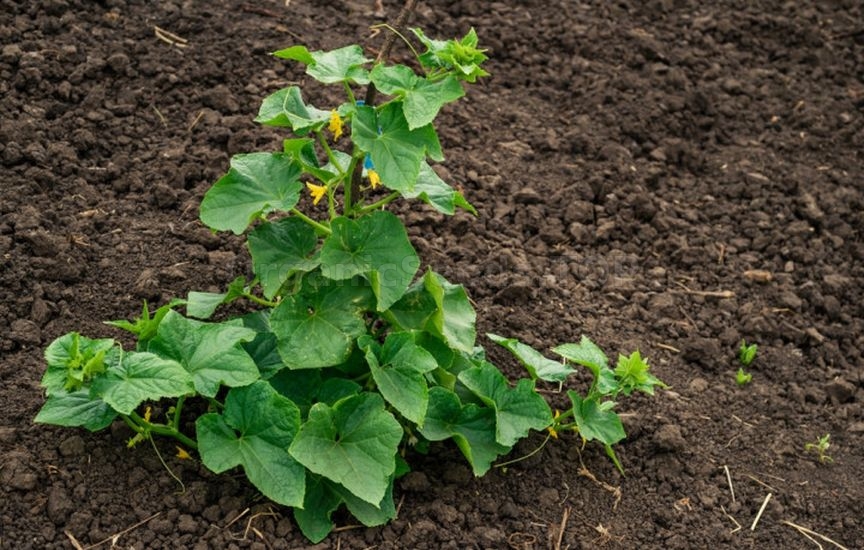 A properly selected planting scheme is the key to normal development and full fruiting of cucumbers. The crop is sensitive to various unfavorable factors: lack of nutrients, deficiency of light and fresh air, as well as excessive moisture or, conversely, lack of moisture in the soil. Any of these violations is fraught with a number of problems – from slowed growth to dropping ovaries and the development of infections. Bushes planted incorrectly develop slowly, often get sick, and their productivity noticeably decreases. The main mistake in placing cucumber bushes is choosing the wrong distance between them. Too sparse planting is ineffective, since it does not allow rational use of the useful greenhouse area. In addition, under such conditions the root system of plants more often suffers from lack of moisture and overheating, because free areas of soil quickly dry out under direct sunlight. 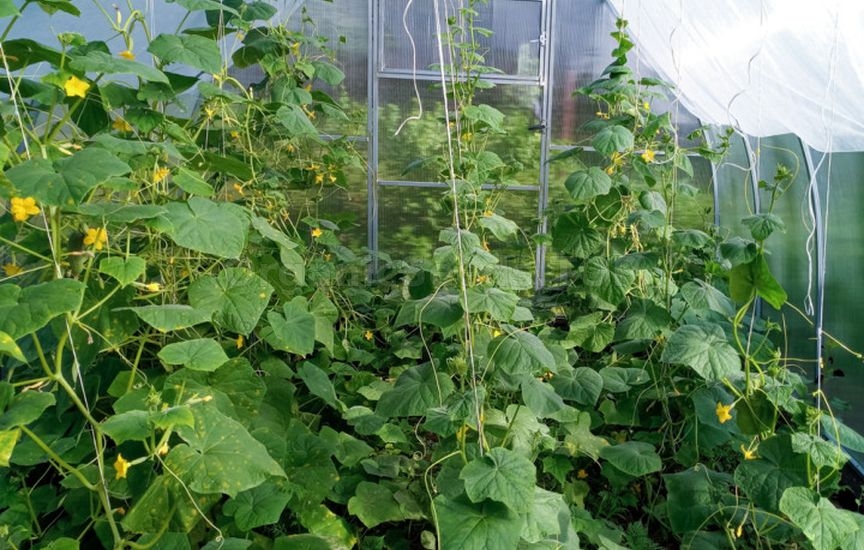 Excessive thickening is even more dangerous, especially in the enclosed space of a greenhouse. In such conditions the main threat to cucumbers is fungal diseases arising from the typical problem of lack of fresh air. Due to poor ventilation in the greenhouse, humidity rises and condensation forms, while dampness is an ideal environment for the reproduction of pathogens. With dense planting, moisture evaporation slows down even more, and such an environment becomes a real breeding ground for fungal spores. In addition, in cramped conditions cucumber bushes inevitably shade each other and compete for nutrients contained in the soil. Both negatively affect plant development and ultimately reduce yields. Attempts to compensate for deficiencies with additional fertilizing do not always give the desired effect, since with thickened planting standard fertilizer doses are not enough for full development, while overdosing can have deplorable consequences. Of course, the reality of a particular garden plot is, as always, a compromise. The dimensions of the greenhouse limit the possibilities: it is not always possible to create as much space for plants as experts advise. Therefore the gardener has to maneuver between ideal and acceptable placement standards. Methods of growing cucumbers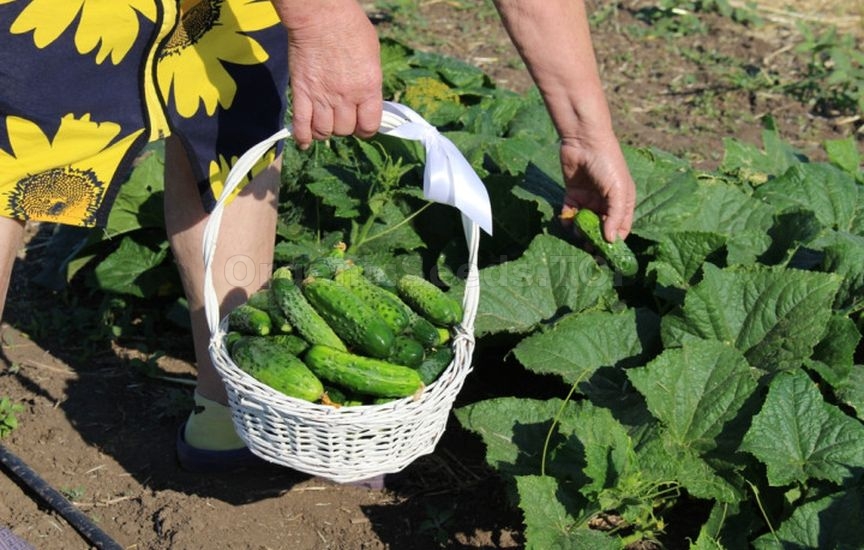 Depending on the variety, the number and length of vines and their ability to branch differ in cucumbers. Based on these characteristics, gardeners choose one of two methods of growing the crop – horizontal or vertical. The horizontal method involves growing cucumbers without supports: the shoots are allowed to freely spread along the soil surface. With this method plants take up a lot of space in the bed, which is inconvenient in limited space conditions, but there is also an advantage – there is no need to regularly tie up the vines. In greenhouses this method is practically not used, because here it is extremely important to rationally use every centimeter of soil. In some cases this option may suit temporary greenhouses, where young seedlings are covered with a removable shelter of suitable size, placing it on a frame made of flexible arches or slats. 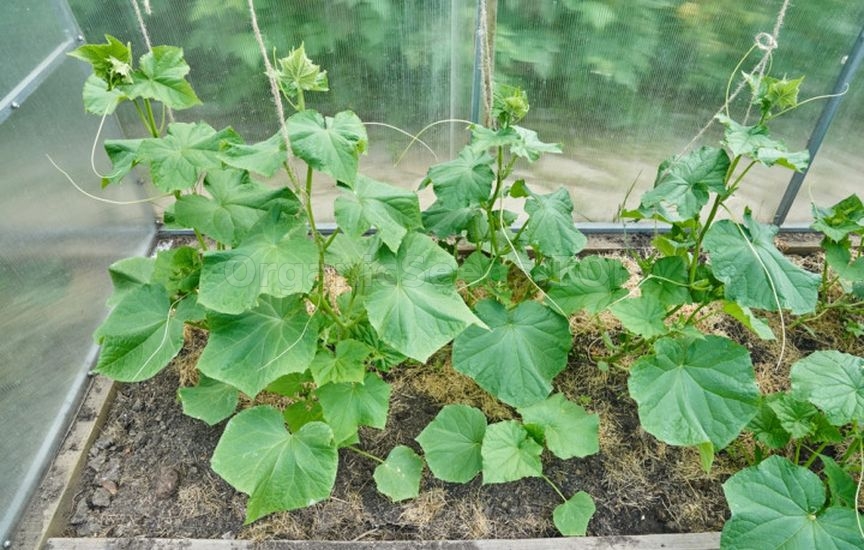 With the vertical method, a support is installed near each cucumber bush, to which the growing vines are later attached. Most often this method is used when growing long-vined cucumber varieties, because it allows proper organization of the growth of powerful shoots capable of reaching 3 meters in length and simplifies plant care. It is important to understand that the cucumber shoot is not capable of independently climbing the support upward – it cannot do without human help. The vines need to be regularly tied up or fixed using special clips. The flexible top of the shoot can be carefully guided around a support post or vertically stretched twine – this will help provide reliable and comfortable fixation for the plant. The vertical growing method is optimal for greenhouses, since it allows the most efficient use of available space. However, this method is also perfectly suitable for open ground. In both cases, separate vertical posts or trellises made of cord or wire strings stretched between strong support posts can be used as supports. At what distance to plant cucumbers in a greenhouse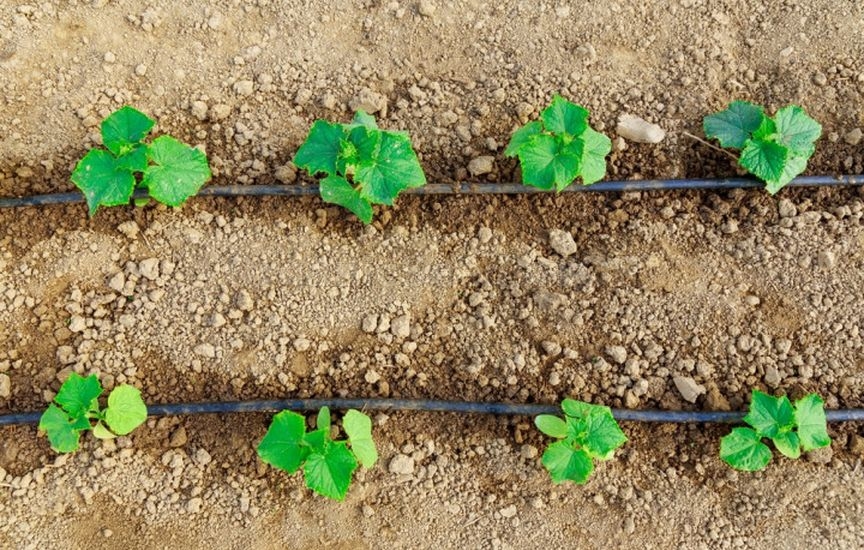 All cucumber varieties and hybrids are divided into two main types: bush and vining, while the latter may have different vine lengths. Consequently, in each specific case the growing method and planting scheme should be chosen based on these parameters. Bush cucumbers are characterized by limited growth, usually not exceeding 70 cm, and relatively weak branching. Most often they are grown in open ground or under film shelters, although greenhouse planting is also acceptable. Compact size allows such plants to be placed quite densely: the optimal distance between bushes is 30 cm, and between rows – 40-50 cm. 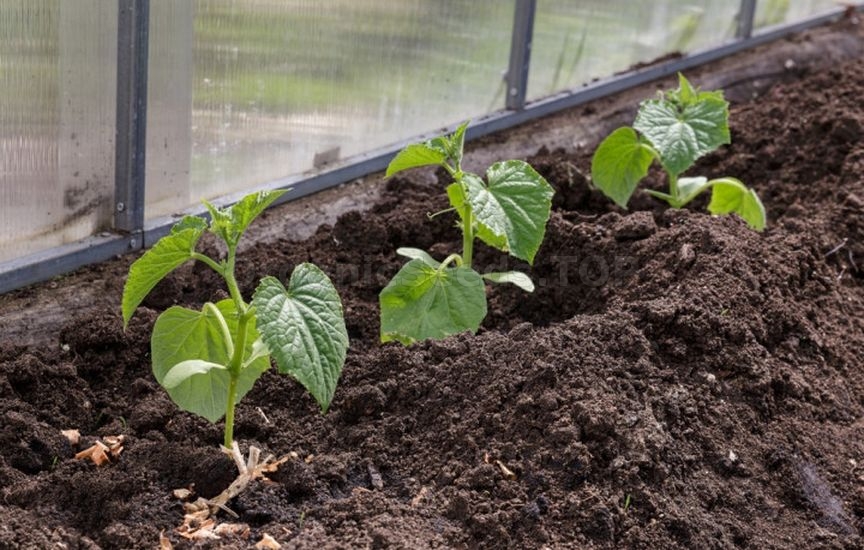 Vining cucumbers, on the contrary, are characterized by vigorous growth and form long shoots. In greenhouses they are recommended to be grown vertically, with mandatory tying to supports. On seed packages or in variety descriptions on sellers’ websites, recommended planting distances are usually indicated. However, in practice following these recommendations is not always convenient. For example, it is often advised to make the distance between rows at least 70 cm – but with such a scheme only a small number of plants can be placed in the limited space of a greenhouse bed. Therefore, when choosing the distance between bushes, the characteristics of the variety and the size of future mature plants are necessarily taken into account, but the planting distance is usually reduced to the minimum acceptable.
If you still decide to grow cucumbers spread out on the ground, then the distance should be increased – the distance between bushes in the greenhouse should be at least 60-70 cm.
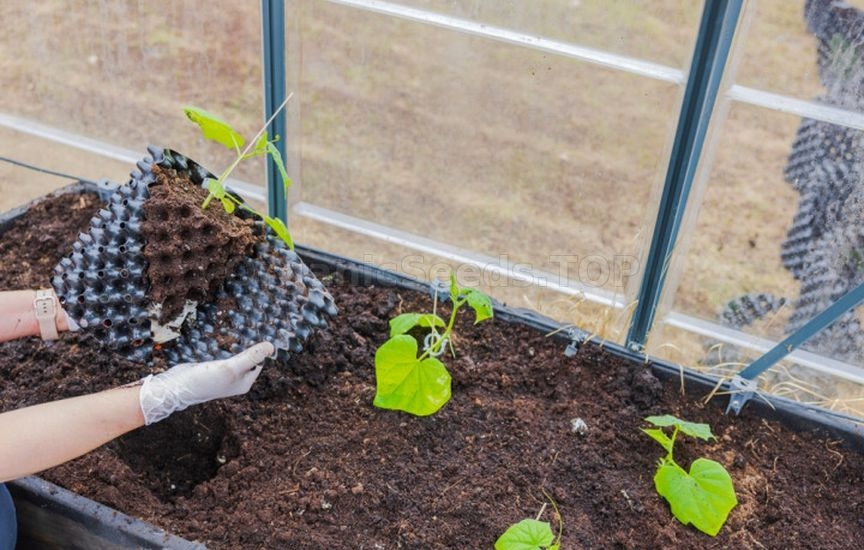 When placing cucumbers in two rows on a bed, it is recommended not only to observe the specified distances between plants and rows, but also to shift the rows relative to each other. In this case a "checkerboard" pattern will result – such planting will provide the best ventilation and lighting of the bushes, facilitate access to flowers for pollinating insects, and also make care procedures (watering, spraying) and harvesting more convenient. When sowing cucumbers directly into the ground with seeds, usually 4-5 seeds are sown per running meter of greenhouse bed. If the seeds are planted in holes (two or three seeds in each), then the minimum recommended interval between them should be 55-60 cm. After emergence, the strongest sprout is left in each nest, and the others are removed. Formation of cucumbers in the greenhouse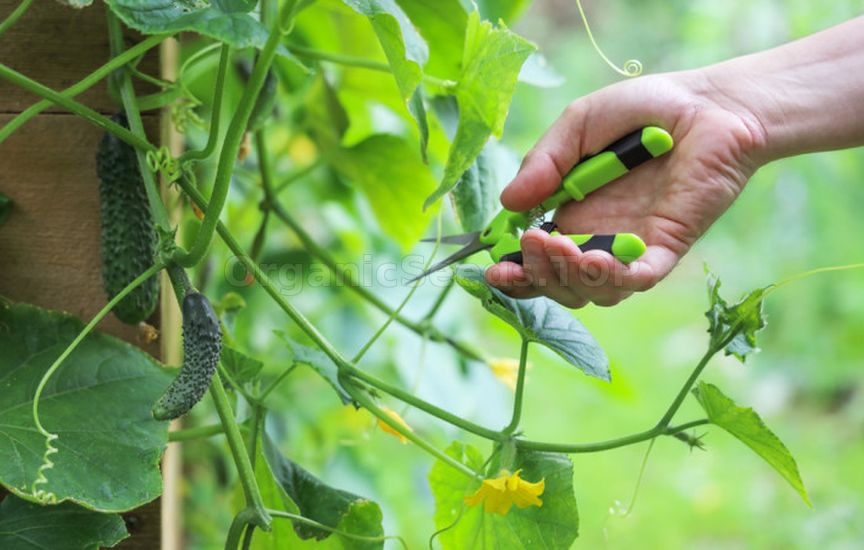 It is critically important to properly form cucumbers when growing them in a greenhouse. The vines are tied to vertical supports or trellises and pinched in a certain order:
The described formation method is not the only one, but one of the most convenient and easy to implement. At the same time it helps cucumber bushes fully reveal the yield potential inherent in the variety. The «grandmother's» method of growing cucumbers as a continuous carpet without formation can be used, but it is suitable only for open beds where there is enough space for the free development of plants. In the limited greenhouse space, the approach described above looks much more reasonable. You may need:Cucumbers seedsOrganic fertilizersTools and supplies |
|
|