
Do you need to dig up the garden in autumn: analyzing the pros and cons |
Autumn digging of the soil is one of the oldest and most controversial procedures in gardening. Some dacha gardeners take up the shovel year after year, believing that without it a rich harvest cannot be obtained; others urge leaving the land alone.
 Autumn digging of the soil, after harvesting, was for a long time considered a mandatory agronomic practice. However, today the voices of supporters of so-called organic, or lazy, farming are increasingly heard. They claim that the traditional turning over of the soil layer brings the garden more harm than good. Arguments of supporters of autumn digging Adherents of the classical approach are convinced that without serious mechanical cultivation of the soil on the eve of winter, a good harvest next year should not be expected. Their position is based on many years of experience and arguments that seem quite logical at first glance. The main argument of defenders of digging up the garden is the fight against pests and diseases. It is believed that most insect pests, their larvae and pupae settle for the winter in the upper layers of the soil. There, protected by dry grass and fallen leaves, they safely survive the cold period of the year. When the gardener turns over the clods of earth, these pests end up on the surface. As a result, they either die at the first serious frosts or become easy prey for birds. In approximately the same way, according to supporters of the classical method, the spores of many fungal diseases die: once they end up deep down or, conversely, in the piercing icy wind, they lose their viability. The second important argument is connected with soil structure and moisture accumulation. Dense, compacted soil over the summer poorly lets through autumn rains and spring meltwater, as a result of which moisture remains in the upper layer for a long time. A dug-up bed, however, left for the winter in the form of large clods, acquires a more suitable condition by spring. Snow is retained in the cavities between the clods, and in spring it gradually melts and deeply saturates the soil with moisture. In addition, water freezing in these cavities expands and thus loosens even the heaviest clay areas. All this leads to the fact that by the beginning of the new season the dense earth becomes soft and pliable. Another argument that many dacha gardeners give in favor of digging is connected with perennial weeds. According to gardeners, it is much easier to fight them in autumn. First, these plants with rhizomes or powerful roots are easier to find and remove when digging. Second, the roots of couch grass or dandelion turned outward when the soil layer is turned over freeze out during the winter, which significantly reduces the number of weeds. Finally, autumn cultivation of the land allows organic and mineral fertilizers to be effectively incorporated into the soil. Manure, compost, phosphorus and potassium compounds manage to partially decompose over the winter and pass into a form accessible to plants. Arguments of opponents of digging the soil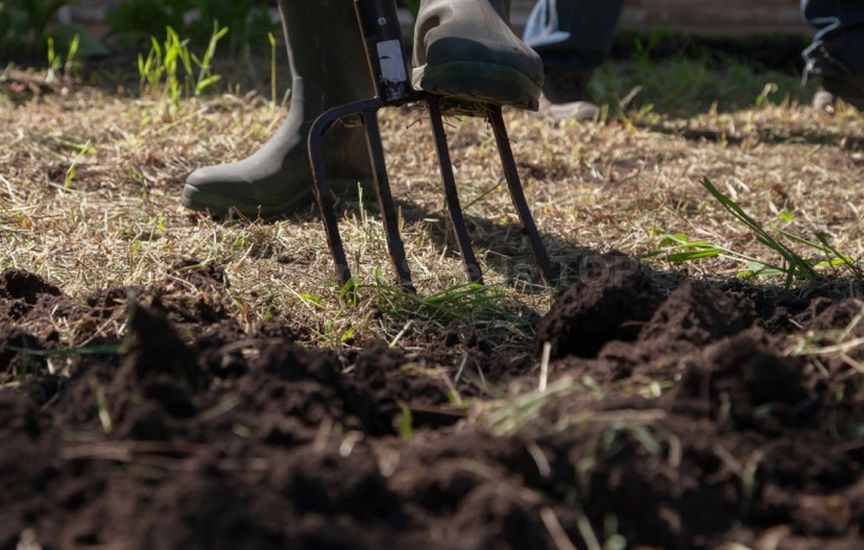 Opponents of the traditional method, among whom there are many followers of natural farming, look at the situation completely differently. They urge us to remember how soil is arranged in the wild – in a forest or meadow, where no one digs anything, but everything grows beautifully. The main emphasis of opponents of digging is on preserving soil microflora. Soil is not just a mixture of sand and clay, but a complex living ecosystem. The upper layer of the earth is inhabited by aerobic bacteria, which vitally need oxygen to exist. A little deeper, where air almost does not penetrate, anaerobic microorganisms live. They are capable of living and reproducing only in the complete absence or reduced content of oxygen. When we dig up a bed with turning over the soil layer, we swap them. Aerobes end up buried under the thickness of the earth and die without air, while anaerobes that come to the surface, on the contrary, are destroyed by an excess of oxygen. As a result, the biological activity of the soil sharply decreases, and instead of fertile soil we get exhausted land, which has to be restored for quite a long time. An equally important argument concerns the destruction of the natural structure of the soil. Over many years, as a result of the vital activity of earthworms, soil fungi, bacteria and plant roots, a network of microscopic channels has formed in the earth. It is through them that air and water reach plant roots. When the earth is regularly turned over and crushed, part of these connections is destroyed. With a single cultivation, the soil is capable of recovering, but constant intensive loosening and turning over gradually change its physical and biological properties. The earth turns to dust. After the first strong spring rains, such dug-up soil silts up, and when it dries it becomes covered with a dense impermeable crust, which again has to be loosened. As for fighting weeds, here critics of the digging method see not only positive but also negative sides. By turning over the earth, we really do destroy some weeds. But at the same time we bring to the light millions of seeds that have slept in the deep layers of the soil for years. Having gained access to oxygen and sun, in spring the seeds sprout together, creating even more problems for the gardener. Not everything is so clear-cut with rhizomatous weeds either. If the rhizomes of some perennial species are cut with a shovel or cultivator, small parts may end up in places in the garden where they were not before and give new shoots. Therefore, the roots of couch grass and other difficult-to-eradicate plants are better carefully selected from the soil rather than simply chopped up. Real advantages of autumn digging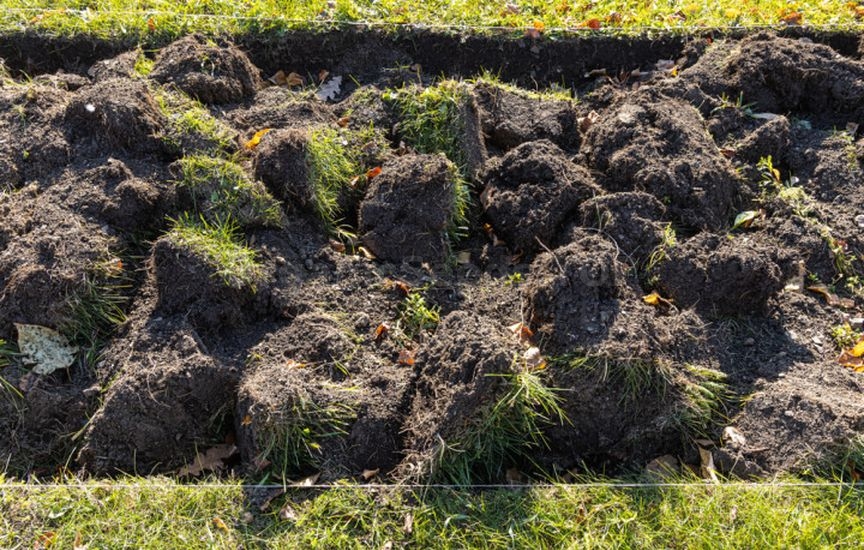 So who is right – supporters or opponents of autumn digging of the earth? As often happens, the truth is somewhere in the middle. Autumn digging is not an absolute good and not an absolute evil. Its effectiveness (and uselessness too) directly depends on the type of soil in a particular plot and the climatic conditions of the region. The method brings unambiguous benefit on heavy clay and loamy soils. Without autumn loosening, such earth compacts over the winter almost to the state of concrete. For heavy soils, digging is the only way to let air inside and give the soil a chance to “breathe.” Large clods of earth, exposed to frost, crumble, and the soil structure temporarily improves. In addition, during digging it is convenient to add peat, compost, leaf humus and other organic matter to improve soil structure. Deep cultivation is also justified in areas with a high groundwater level or in lowlands, where water stagnates for a long time in spring. Dug-up beds warm up and dry out one or two weeks earlier in spring, which allows planting to begin earlier. You also cannot do without a shovel when developing new or neglected lands. To clear a plot of sod, perennial weeds with a powerful root system, level the relief, and add fertilizers, digging is simply necessary. It is with it that the cultural development of the land begins. Negative sides of the traditional method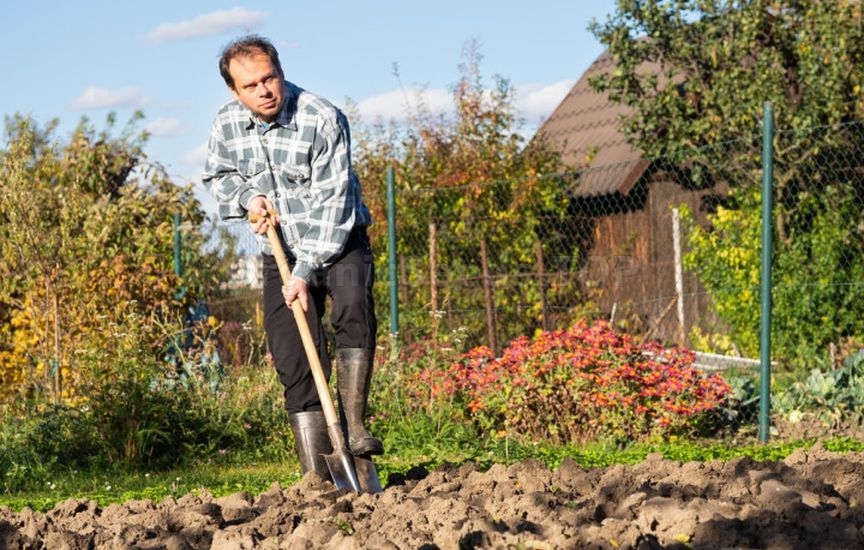 For light sandy and sandy loam soils, autumn digging brings exclusively harm. Such soils are themselves loose and porous; they do not need additional saturation with air. By digging sand in autumn, we only accelerate the washing out of useful substances into deep layers, where plant roots cannot reach. In addition, light dug-up earth in snowless winters is highly subject to wind erosion – the valuable upper layer of humus is simply blown away by the wind. Another minus of digging is a gradual decrease in fertility. The excess oxygen that enters during digging accelerates the activity of some microorganisms and the decomposition of organic matter. Soil bacteria begin to rapidly process humus, releasing nutrients. If at that moment nothing is growing in the bed (and in autumn and winter it is usually empty), these substances are not absorbed by plants but leave together with groundwater or evaporate. In the long term, this leads to depletion of the plot. We should also not forget about the physical costs of the gardener himself. Digging a standard six sotkas by hand is a colossal burden on the back and cardiovascular system. Often this hard work does not pay off with an increase in harvest, but only takes away precious time and health at the end of the dacha season. Do you need to dig the soil in autumn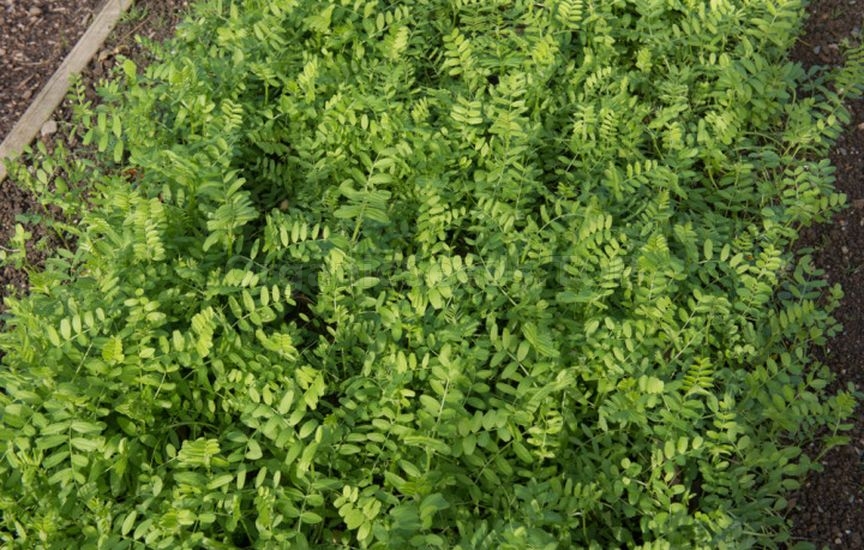 The modern approach to farming calls for abandoning extremes. There is no need to blindly follow traditions, but also there is no need to completely abandon soil cultivation if there are indications for it. The situation must be assessed individually for each plot and even for each individual bed. A good compromise is non-moldboard soil cultivation. With this method, the earth is not turned over, but only deeply loosened with garden forks or a special tool – the Fokin flat cutter. At the same time, the soil structure and its inhabitants remain in their usual places, but the earth stops being excessively dense, and access for air and moisture is opened. Mineral and organic fertilizers can be incorporated with a milling cutter or cultivator, loosening only the upper layer of soil. An excellent alternative to classical digging has become the use of green manure crops – green fertilizers. Sowing mustard, phacelia, rye or oats immediately after harvesting solves most of the problems for which people used to take up the shovel. The powerful roots of green manure crops penetrate deep into the earth, loosening it no worse than a shovel or plow. The growing green mass protects the soil from washing out and wind erosion, prevents the growth of weeds, and in winter covers the bed, preserving heat and moisture. In spring, all you have to do is lightly incorporate the organic matter that has rotted over the winter into the upper layer of soil. It is also worth separating beds by purpose. Under root crops (carrots, beets, potatoes), which vitally need loose earth to a great depth, autumn cultivation is indeed useful. But under greens, cabbage or zucchini, there is no point in digging the soil in autumn – for them it is better to prepare the beds by loosening or mulching with a thick layer of compost and grass. There is no unambiguous answer to the question of whether it is necessary to dig up the garden in autumn. It depends on many factors. If your plot has heavy clay soil, autumn digging will help cope with its density and prepare the earth for spring. If you have light sandy soil, put the shovel aside. Instead, sow the earth with green manure crops and cover it with mulch. And then your garden will certainly repay you for your care with a rich harvest. You may need:Vegetable seedsGreen manure seedsOrganic fertilizers |
|
|