
What to feed cabbage in the second half of summer |
Cabbage belongs to those crops that like to «eat well». In the second half of the growing season, when heads and inflorescences are forming, cabbage consumes more potassium and phosphorus. However, other nutrients important for this crop should not be forgotten: nitrogen, calcium, magnesium, sulfur, and boron.
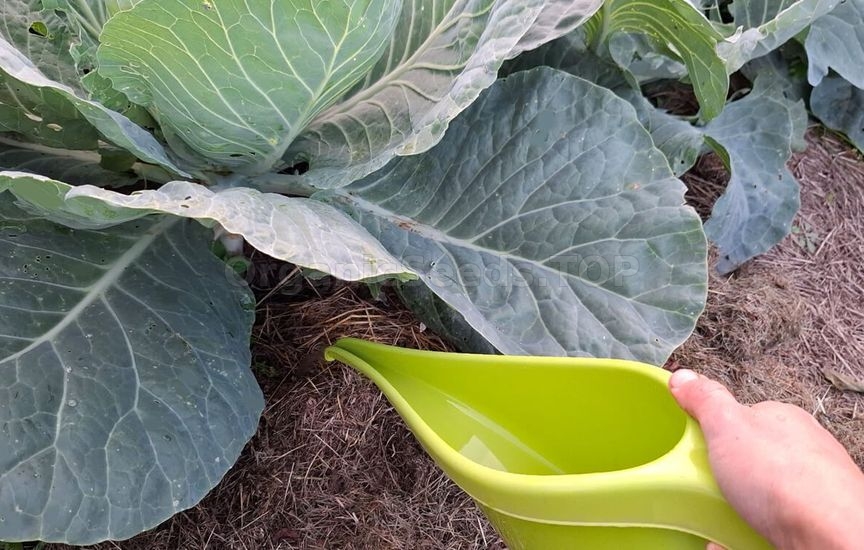 When feeding cabbage, it is necessary to take into account its type and growth characteristics. For example, mid-season white cabbage is fed for the last time in early or mid-August with potassium-phosphorus fertilizers. Late white cabbage, broccoli, kale, and ornamental leafy cabbage are fed 2-3 times in the second half of summer because these types have a long growing season. In addition, it is important to consider the type and composition of the soil: on poor sandy soils it is advisable to use complex mineral fertilizers and fertilize every 2-3 weeks; on fertile loamy soils rich in organic matter, it is enough to feed cabbage once at the end of summer with ash infusion or any mineral fertilizer with a high potassium content. So, what fertilizers can be used for feeding cabbage in the second half of the growing season. Potassium-phosphorus fertilizers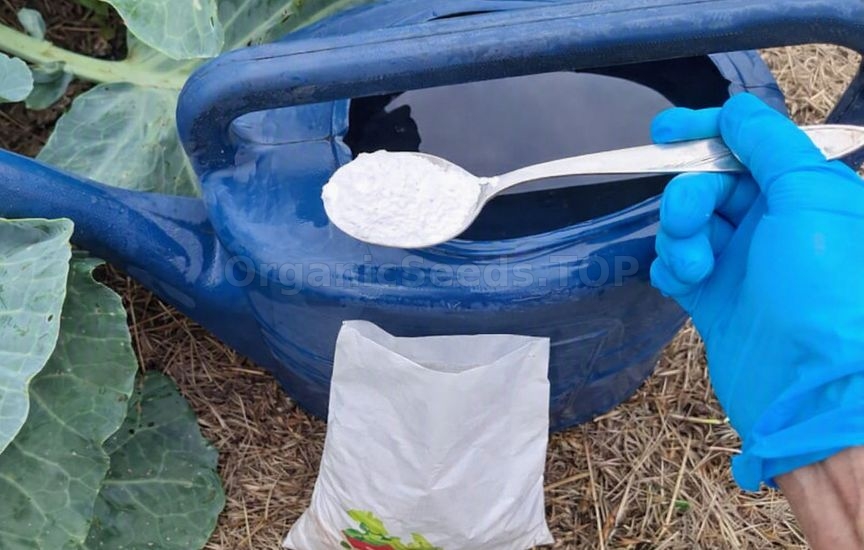 Potassium-phosphorus fertilizers help cabbage form dense heads and inflorescences, increase plant resistance to adverse weather conditions, stimulate metabolic processes, and promote sugar accumulation. Potassium monophosphate can be used for foliar and root feeding of cabbage in the form of a water solution: 10 g per 10 L of water. The fertilizer contains 34% potassium and 51% phosphorus and is suitable for all soil types. Ammoniated superphosphate is a granular long-acting fertilizer. It contains about 29% phosphorus, 9% nitrogen, 0.5% magnesium, up to 10% sulfur, and about 12% calcium. To make the fertilizer absorb faster, you can prepare an extract: dissolve 15 g of superphosphate in hot water and bring the volume up to 10 L. Water on moist soil at the rate of 1 L per plant. Potassium sulfate contains 45-50% potassium, 17-18% sulfur, 3% magnesium, and 0.4% calcium. For feeding cabbage, use a solution: 20 g per 10 L of water. It can be mixed with superphosphate. Kalimagnesia (potassium-magnesium sulfate) contains 26-32% potassium, 11-18% magnesium, and 17-20% sulfur. This fertilizer works most effectively on light sandy soils poor in magnesium. For feeding cabbage, you can use a mixture: 1 tbsp of kalimagnesia and 1 tbsp of superphosphate per 10 L of water. Sulfur is one of the most important nutrients for all types of cabbage. It improves the absorption of other nutrients, increases plant resistance to temperature fluctuations, and extends the storage period of the harvest. Therefore, if you did not apply gypsum or sulfate fertilizers (potassium sulfate, ammonium sulfate, magnesium sulfate, kalimagnesia) when preparing the bed, be sure to use potassium-phosphorus fertilizers containing sulfur at the end of the growing season. Complex fertilizers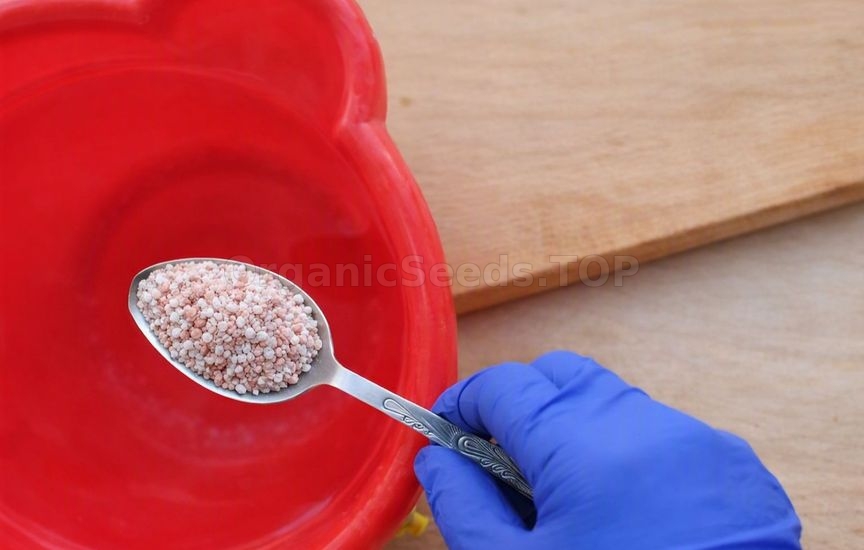 For feeding cabbage in the second half of the growing season, you can use complex water-soluble mineral fertilizers with a high potassium content. These complexes contain a full set of macro- and micronutrients that are quickly absorbed by plants. Fertilizing can be done both at the root and on the leaves, which is especially important under unfavorable conditions (temperature fluctuations, irregular watering, insect damage, etc.). At the end of the season, choose complex fertilizers for cabbage with a minimal nitrogen content. When carrying out foliar feeding, fertilizers can be mixed in the same tank with biological products (Fitosporin-M and others) to protect cabbage from dangerous diseases such as bacterial soft rot, gray mold, phomosis, vascular bacteriosis, and others. If cabbage grows on poor soil, complex organomineral fertilizers can be used for feeding: both water-soluble and granular. Water-soluble fertilizers are applied during watering, while granular fertilizers are scattered under the plants, after which the soil is watered and the cabbage is hilled up — this will help the plants form a stronger root system. It is advisable to feed cabbage with organomineral fertilizers one and a half to two months before harvest. To retain moisture in the soil and improve cabbage nutrition, the beds can be mulched with organic matter: well-rotted sawdust, compost, hay, straw, or flax shives. Calcium and boron fertilizers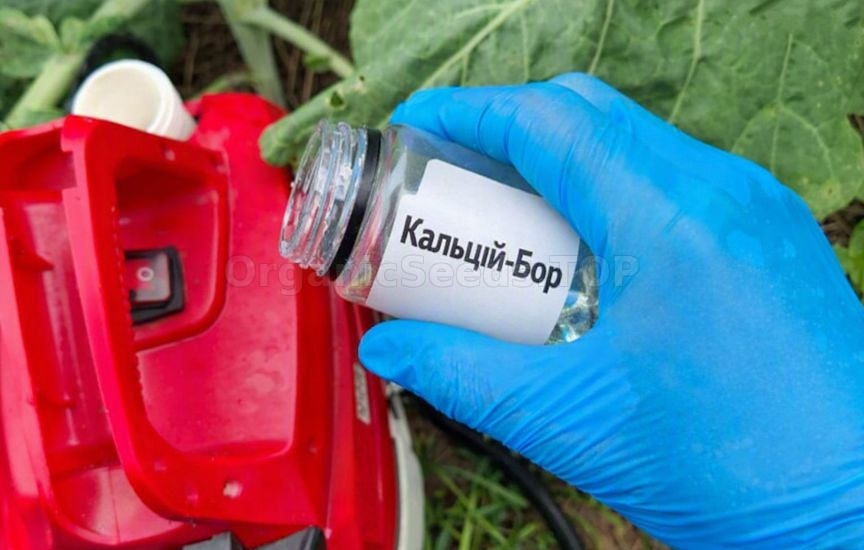 Calcium is just as important for cabbage as nitrogen, phosphorus, and potassium. With calcium deficiency, heads form loosely, with dry areas of leaves inside, and the plants themselves are more often damaged by insect pests and pathogens. That is why in the first half of the growing season cabbage is obligatorily fed with calcium nitrate. However, it should be taken into account that calcium nitrate contains a large amount of nitrogen. Therefore, if the cabbage shows no signs of nitrogen deficiency, then at the end of summer it is better to use calcium chelate for feeding: 1 g per 1 L of water for foliar feeding and 1 g per 10 L of water for watering at the root. For foliar feeding throughout the summer, fertilizers containing not only calcium but also boron can also be used. Boron helps calcium be absorbed better, reduces the likelihood of cabbage being affected by rots, and promotes the formation of dense heads without hollow spaces in the core area. Plants can be provided with sufficient calcium and boron by applying borofoska fertilizer to the soil. Wood ash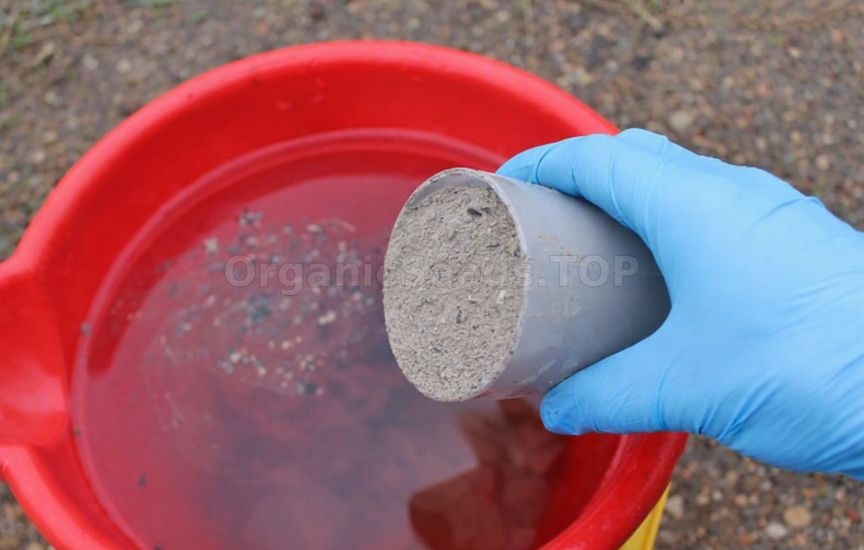 Wood ash is the most popular and affordable fertilizer for cabbage. It is useful to add ash to the soil when preparing beds, dust plantings to protect against slugs and caterpillars, and also use it for feeding plants throughout the entire growing season. Wood ash contains potassium, calcium, phosphorus, silicon, iron, magnesium, sulfur, boron, manganese, and other nutrients in a form available to plants. This natural fertilizer excellently deacidifies the soil, which is very important for preventing clubroot — one of the most dangerous diseases of cruciferous crops. For feeding cabbage at the end of the growing season, you can use an ash infusion: 2 cups per 10 L of water. Pour water over the sifted ash and leave for several hours. Then stir and water the plantings on well-moistened soil at the rate of 1 L of infusion per plant. If there has been no rain, water the beds thoroughly the day before feeding the cabbage. In hot weather, do not allow the soil to dry out and then become heavily watered — this can lead to cracking of the heads. In the second half of summer, it is important not only to carry out proper fertilizing but also to protect cabbage from diseases and pests that cause significant damage to plantings. Only a comprehensive approach to growing this popular crop will help obtain a worthy harvest. You may need:cabbage seedsOrganic fertilizersSpecial offers |
|
|