
Garden bandage: how to use and what to replace with |
Garden bandage comes to the rescue when you need to protect trees from rodents, sunburn, sharp temperature fluctuations and other adverse environmental factors. And if you did not manage to whitewash the trees in autumn, it is not a problem: wrap them with a garden bandage.
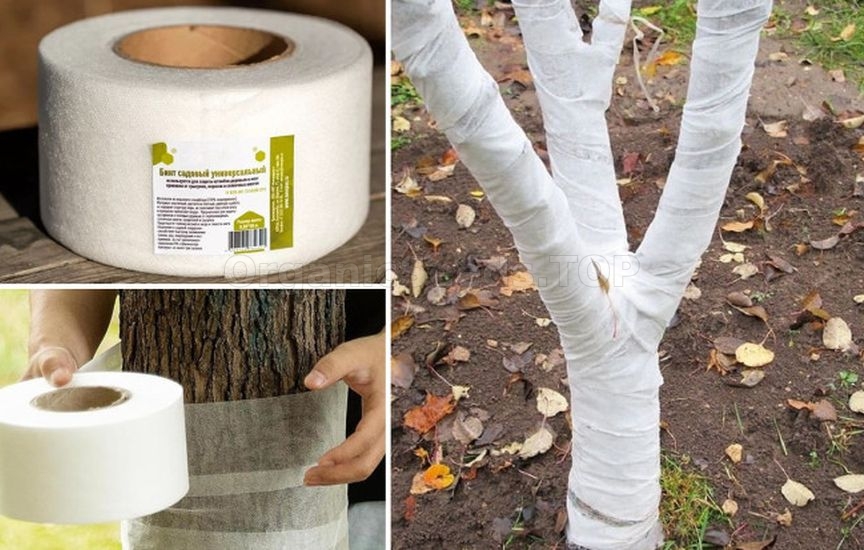 Garden bandage is agrotextile cut into strips and rolled into rolls of white or green color. The density of the material can be different: from 40 to 100 g per 1 sq.m. The higher it is, the longer the material will last. The width of the strips usually varies from 5 to 20 cm, and the length – from 5 to 60 m. Sometimes the package contains several rolls of different widths, and this is very convenient: a wide bandage can be used to wrap the trunk, and a narrower one to protect skeletal branches. Functions of garden bandage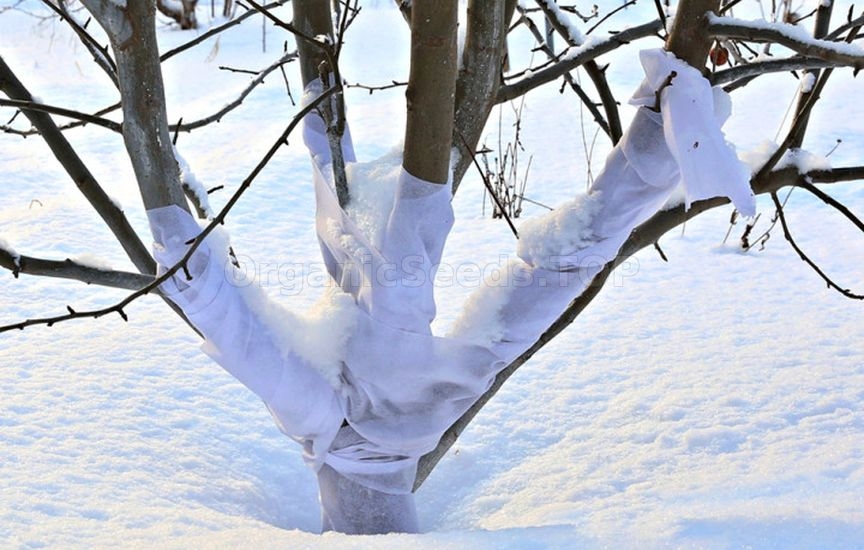 The main use of garden bandage is to protect the trunks and branches of trees from damage. In cold weather, the bandage protects the tissues of the tree from frost, drying out, saves from rodents, perfectly reflects sunlight, preventing the appearance of frost cracks and sunburn. And if the tree already has damage, then the use of the bandage will help accelerate regeneration processes and protect wounds from pathogenic fungi and bacteria. It is very convenient to use garden bandage to protect the grafting site on trees. Agrotextile retains moisture necessary for the growth of new cells and protects the cut site from infection. Garden bandage is a good alternative to whitewashing. And if it was not possible to whitewash the trees in autumn, or if the whitewash was quickly washed away by rains already at the beginning of winter, then it is worth wrapping the trunks of trees and skeletal branches with garden bandage. Such work can be carried out in any weather, even with the onset of frost. It is especially important to protect young trees with thin and vulnerable bark – for them garden bandage will be a real salvation, since it is not recommended to whitewash such trees with lime. How to prepare trees for bandaging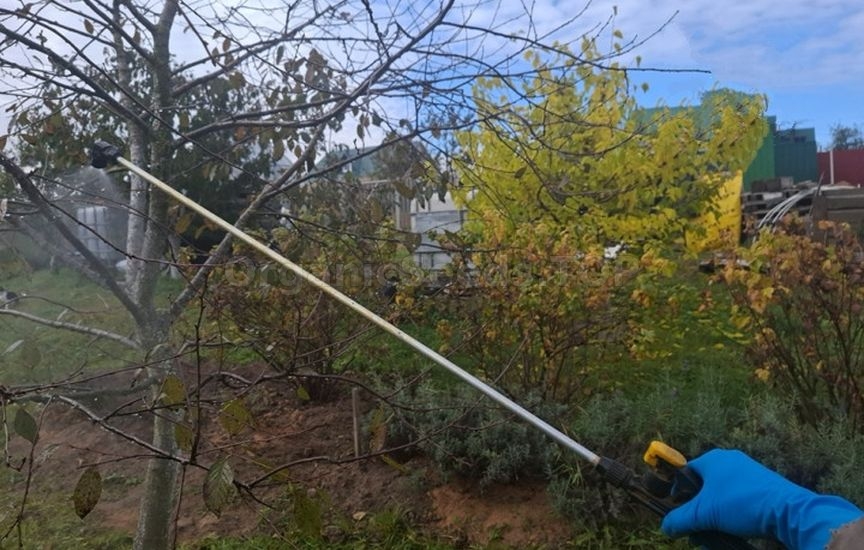 Garden bandage is not able to protect trees from insect pests that have already settled for the winter in the forks of branches and in cracks in the bark. Therefore, at the end of the season it is very important to carry out sanitary pruning, cleaning of the trunk and skeletal branches, as well as eradicating treatment of the garden. Cleaning trees is better to carry out in wet weather. To do this, spread a film or agrotextile under the tree so that insect egg clutches and pieces of bark with fungal spores do not fall into the near-trunk circle. Detached bark, lichens can be removed with a wooden scraper, stiff brush or not too sharp spatula. If the tree has wounds, clean them to healthy wood. All plant debris that fell on the bedding should be carefully collected, taken out of the garden and burned. Also remove pruned branches and fallen leaves from under the trees. After cleaning, it is necessary to carry out eradicating treatment of trees. For this, you can use iron or copper sulfate and urea:
Spray plants in dry weather at positive temperature. It is advisable to carry out treatments in the morning and evening hours or in cloudy weather during the day.
How to use garden bandage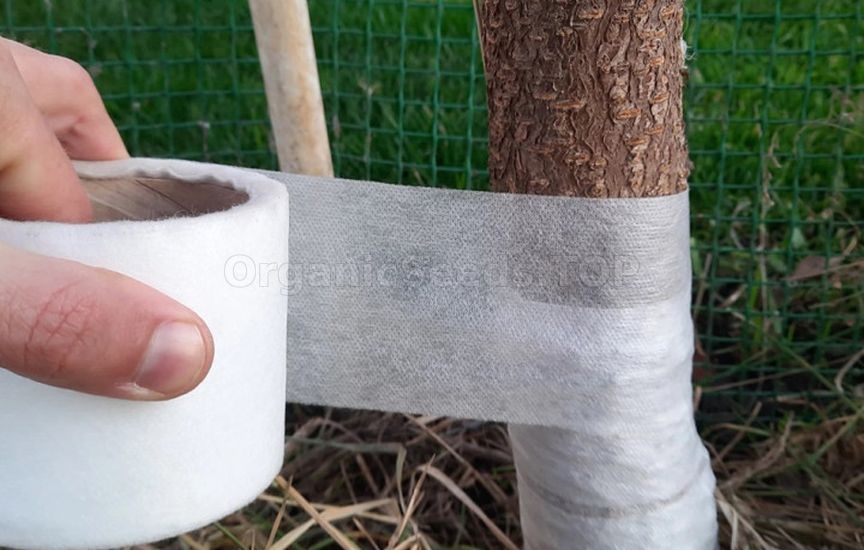 Wrap the tree with garden bandage from bottom to top with an overlap of each subsequent turn on the previous one. Thus, water during rain will not flow under the material to the bark. But before starting work, it is important to fix the bandage well at the base of the trunk. You can press it to the ground with a staple for fixing agrotextile or tie it around the tree, cutting the end of the bandage lengthwise into two parts. For this, you need to remove all plant debris at the base of the trunk, rake the soil and only after that fix the edges of the bandage. To repel mice, the bandage at the very ground can be soaked with tar or creolin. It is recommended to wrap the tree to a height of up to 1.5 m. However, if the trees are tall, grow in open sunny and windy areas, it is advisable to carry out higher wrapping. The end of the bandage at the top can be fixed with a rope. Or cut it lengthwise and tie it around the branches, similar to how a bandage is tied on a finger. Garden bandage is removed when warm weather sets in and the danger of return frosts has passed. If you used dense material with UV protection, then such garden bandage will last more than one year. Therefore, when removing bandages, carefully roll them back into rolls so that it will be easier to work with them in autumn. Garden bandage can also be used in warm weather to protect damaged areas on the bark of fruit trees and for quick graft healing. At the same time, it is recommended to periodically remove the bandage, inspect the damaged tissues and treat them with Heteroauxin. What to replace garden bandage with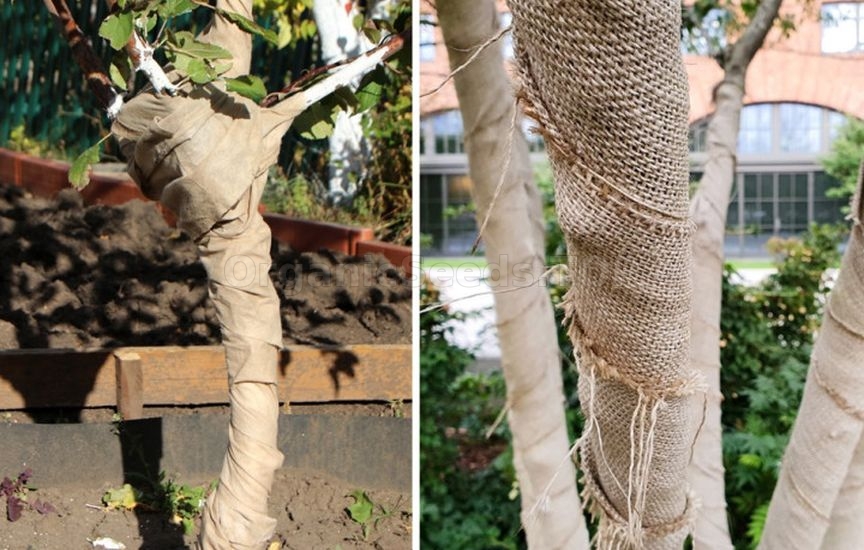 Garden bandage can be replaced with light spunbond cut into strips. For this purpose, even old or damaged covering material that is no longer suitable for insulating beds will do. But before use, it must be cleaned of soil and washed, and then cut into strips 10-15 cm wide. In addition, to protect the trunk and branches of the tree, you can use burlap, mesh with small cells, old sheets, nylon stockings or any light-colored fabric that passes air and dries quickly after getting wet. But at the same time it is worth remembering that the denser the material, the longer it will dry. If you use agrotextile to protect the tree, then before use it is worth processing the edges of the material so that they do not fray and polypropylene threads do not get into the soil. When wrapping the trunk, do not forget to securely fix the material at the very ground. To create additional protection against mice, you can mulch the soil at the base of the trunks with sawdust soaked in a solution of turpentine, creolin or birch tar. Garden bandages and strips of nonwoven covering materials are convenient to use and do not lose their protective functions even under prolonged exposure to sun, rain and wind. |
|
|