
How to store tools and equipment in winter so as not to buy new ones in spring |
Storage of garden equipment and tools is a topical issue of the off-season, on the solution of which depends the durability of service and the quality of inventory work. Let’s choose a suitable place and method, and also take care of proper conservation.
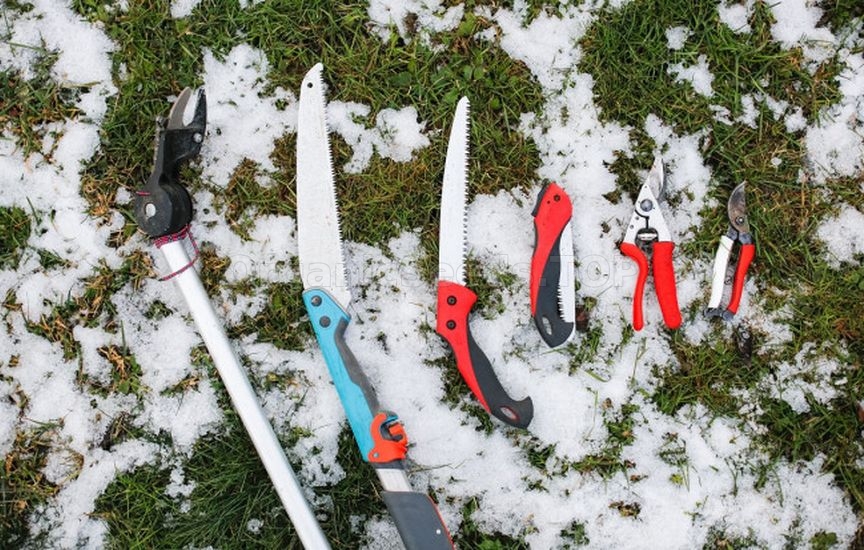 Unheated rooms in winter become a real test for lawnmowers, trimmers, tillers and other equipment: a decrease in temperature combined with increased humidity can provoke serious breakdowns, which will later turn into costly repairs. Small tools can also suffer from improper storage, and although the repair will not be so complicated, it will require your attention and take some time. To avoid wasting it, it is worth immediately ensuring neat conservation for the winter. What is the danger of improper storage of tools and equipment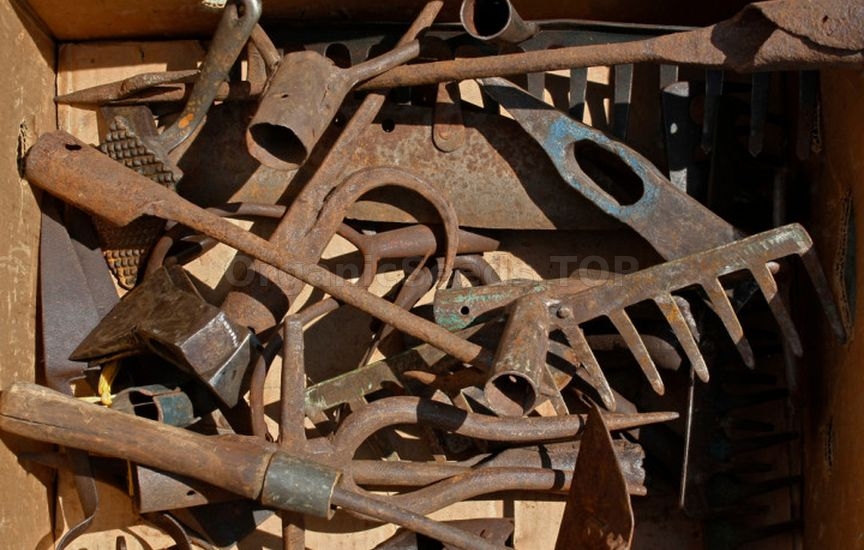 The cold season carries a whole range of threats to garden inventory. Some consequences of incorrect storage can be solved by maintenance, others can disable entire units of aggregates, which will eventually require complex and expensive repairs.
Where to store inventory and equipment in winter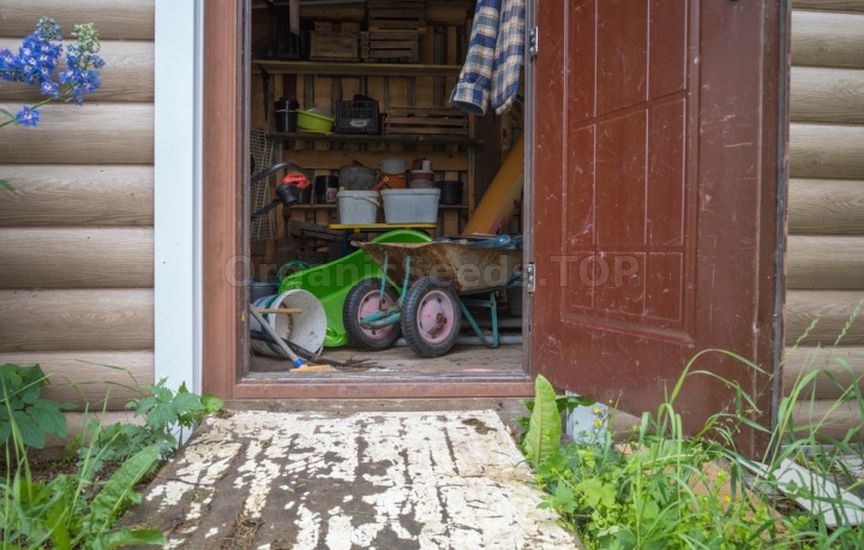 It is highly undesirable to leave garden inventory and especially complex equipment outdoors in winter. Even a short stay in such conditions can lead to damage to surfaces and sensitive electronics. Therefore, rule number one – store aggregates and inventory indoors. The storage room must be dry, insulated, with good ventilation and a reliable lock to protect against unwanted "guests." It is also important that it meets fire safety requirements. Possible options include a garage, a warm shed or the country house itself. Garage (if available) – a universal solution for storing most tools, which is most often chosen by gardeners. However, to fit both the car and large equipment in the garage, it is worth designing the area with a margin in advance. In addition, it is important to place bulky devices at a safe distance from the car to eliminate the risk of damage. If there is a utility building on the plot – for example, a wooden shed – it can also be a suitable place for storage. At the same time, it is important to pay attention to quality thermal and waterproofing, as well as to take care of ventilation. This will avoid the accumulation of moist air inside the room, which is especially important for the preservation of equipment. For small equipment, you can find a place directly in the house – in the hallway or pantry. This option will provide the best protection against adverse weather conditions. However, do not consider the cellar or attic as storage places: the high humidity of these rooms can cause serious damage to devices. General rules for preparation for winter conservation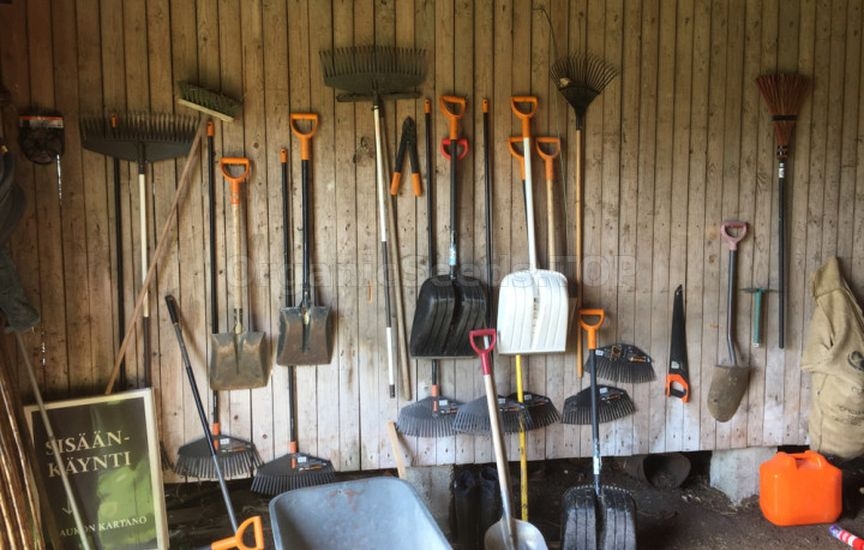 Depending on the complexity of the device, different equipment and tools require different preparation for winter storage. If it is not difficult to cope with an ordinary shovel, then caring for gasoline or electric saws is more labor-intensive. First of all, the tool must be thoroughly cleaned of dirt. First, remove stuck soil or grass with a dry brush or rag, and then wipe surfaces and cutting edges with a damp cloth. Heavily soiled hand tools (shovels, hoes, rakes) can be immersed for half an hour in soapy solution, and then scrubbed with a sponge or scourer. After washing, it is important to ensure complete drying. Many overlook this stage, but it is critically important, because moisture left in joints and cracks in an unheated room at low temperatures will turn into ice and can cause serious damage. Tools that need lubrication should be treated accordingly – especially this applies to cutting edges, which without protection are easily covered with rust. Sharp tools (pruners, garden scissors) and toothed implements (saws, hacksaws) are recommended to be stored in protective covers after sharpening. In the absence of special covers, you can use improvised means: dense cardboard or plastic boxes, an old irrigation hose cut lengthwise (similar to a skate cover) or even sleeves from old jackets. From the point of view of fire safety, it is important to completely drain gasoline from equipment tanks. As for oil, it should not be removed – it is better to replace it with winter oil, with different viscosity (if occasional use of equipment in winter is expected), or with a special conservation mixture (when operation in the cold period is not planned). How to store garden tools in winter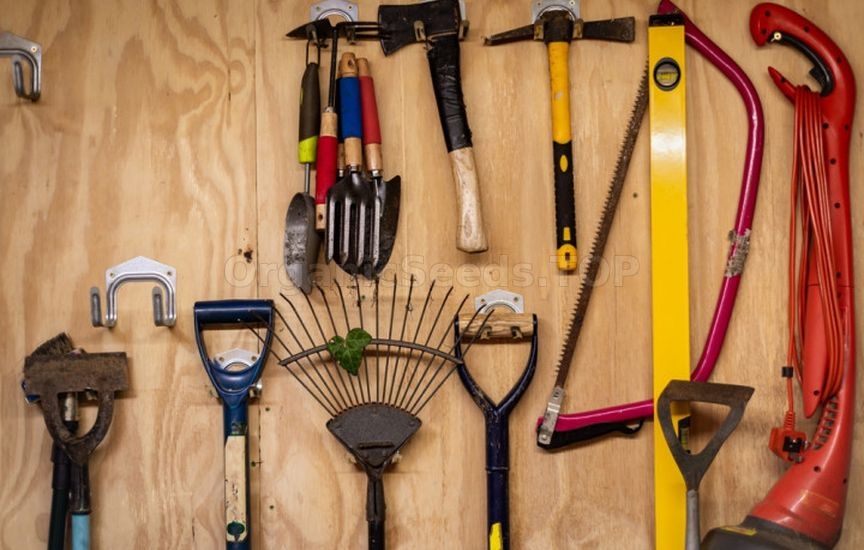 One of the most practical ways to store hand tools is vertical placement on wall brackets, perforated panels or ordinary hooks. Tools with long handles are conveniently hung by the handles. Small devices such as pruners, garden knives or scoops can be placed on the same hooks or on a magnetic strip. If wall placement is not possible, an alternative can be tool racks. Ready-made structures made of metal or plastic can be found on sale or racks can be made independently from wooden slats. Special attention should be paid to preparing tools for winter storage. Metal parts (blades of shovels, hoes, pruners) after cleaning are recommended to be lubricated with machine oil. For additional protection they can be wrapped in cloth soaked in the same oil – this will prevent rust. 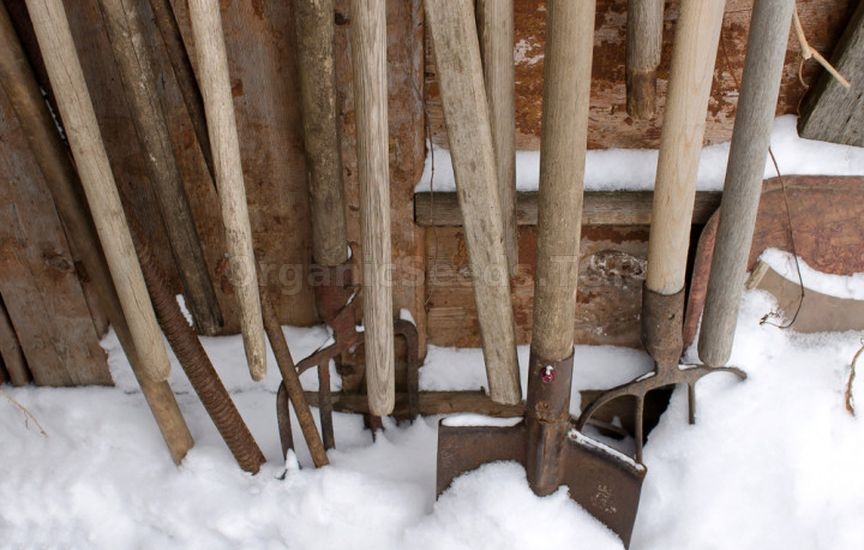 Wooden handles before storage should be washed and well dried, and then treated with wax or a special compound to protect against cracking. When storing inventory with plastic elements, it is important to consider their resistance to frost. Before conservation for the winter, it is worth carefully studying the instructions: some types of plastic cannot withstand severe cold, so such tools must be kept in a heated room. Tools with rechargeable batteries require a separate approach. They must be stored in a dry and warm place at a temperature from 5 to 30°C. Before placing on shelves or in boxes, batteries should be removed from devices, charged to 50-70% and stored separately. How to store irrigation system elements in winter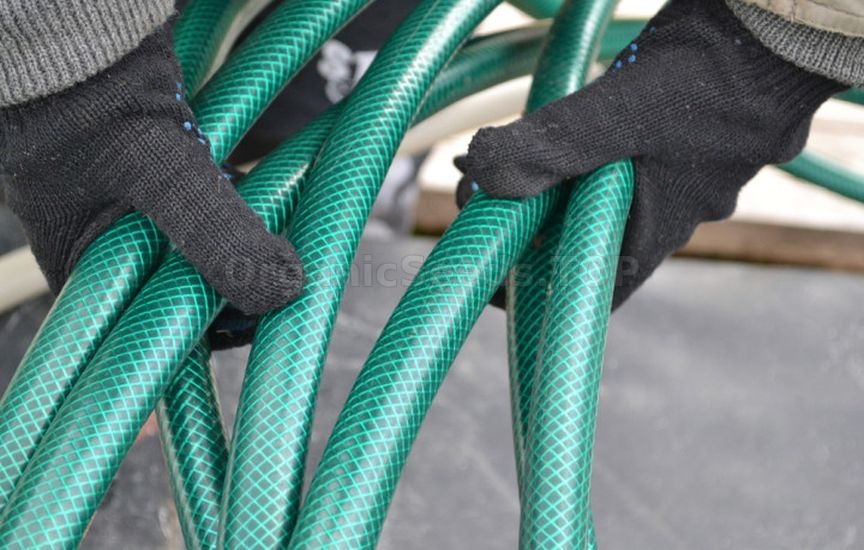 Sprinklers, irrigators, spray guns and other elements of the irrigation system (including automatic) are extremely sensitive even to small subzero temperatures. Moisture left inside when frozen will almost certainly disable the unit. To avoid breakdown, it is important to dismantle the irrigation system before the first frosts. Before storage, the devices should be thoroughly washed, blown out, and all openings securely closed with film or cloth. Hoses should not be left on the plot. They also need to be blown out to remove residual water, then well dried, rolled into a coil and placed on a horizontal surface. Storing hoses in a suspended state is undesirable, as it can lead to deformation. Metal and plastic barrels, tanks and even watering cans also need preparation for winter. Leaving them filled with water is not allowed: when frozen, the liquid expands, which can lead to cracks. The optimal storage method is to completely drain the water and turn the containers over. Before putting tanks into storage, they should be thoroughly washed. Metal containers are additionally recommended to be protected against corrosion. To do this, first clean the surface of rust with a wire brush, then apply an anti-corrosion agent, and after it – a primer for metal. If desired, the surface can also be painted. Such comprehensive preparation will allow you to preserve not only the appearance but also the functionality of barrels for a long time. How to store large equipment in winterFor each type of large garden equipment there are a number of mandatory recommendations. Gasoline and electric saws 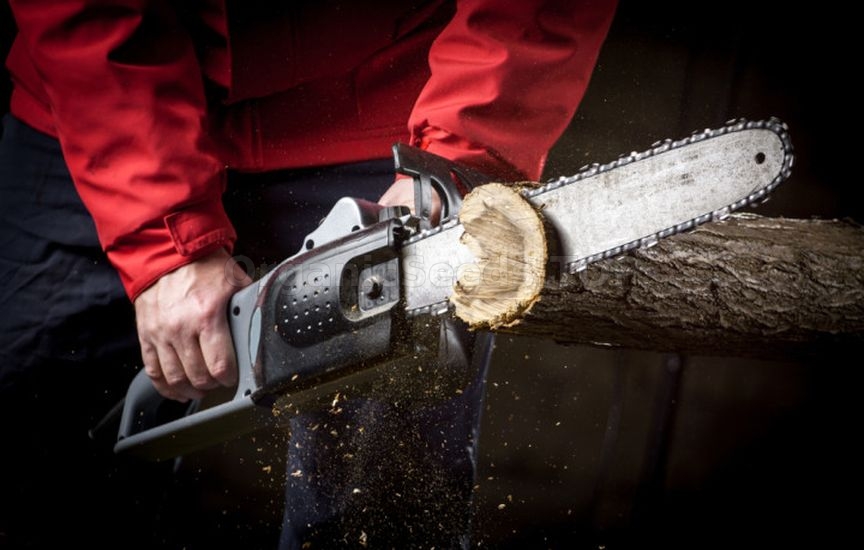 Before conservation of a chainsaw, it is important to perform a number of preparatory actions. First, drain the oil and gasoline, and then start the tool at idle until the engine stops. After that, it is necessary to thoroughly dry the tank, and remove, wash and return fuel and air filters to place or replace them with new ones. The next step is working with the clutch cover, which must be removed, washed and dried. Spark plugs are cleaned of carbon deposits, after which 5-7 ml of machine oil is poured into the spark plug hole. Then the crankshaft is turned several revolutions so that the oil spreads through the mechanisms, while leaving the piston in the upper position. After these manipulations, the spark plug can be installed without putting on the ignition terminal. The final stage of preparing the chainsaw for storage is removing the chain. It must be washed from chips and dust, lubricated and wrapped in oiled paper. In the case of electric saws, the procedure is much simpler. It is enough to clean the chains and guide bars from dirt and lubricate them with oil. If the electric saw is corded, it is worth checking the condition of the wires. For battery models, it is important to remove the battery, charge it about halfway and place it in a warm place for the winter. Lawn mower 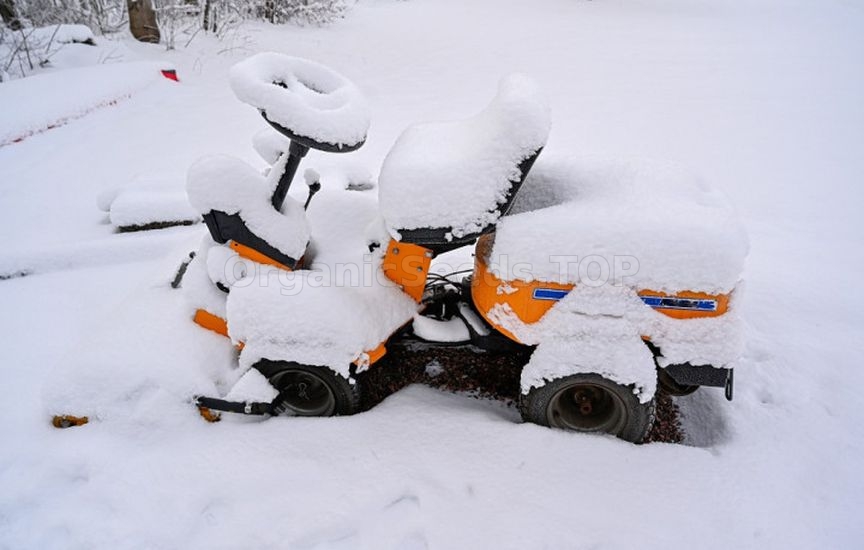 When preparing a gasoline lawn mower for storage, it is important to take care of its main elements – the engine and cutting parts. Accessible internal elements (in particular, knives) should be thoroughly cleaned and dried from grass, as well as remove plant residues from the body, exhaust pipe and engine cooling radiators. The fuel tank is recommended to be emptied of fuel residues and wiped dry. Next, check the cutting blade for damage: if necessary, repair and then sharpen. If in doubt or with complex defects, it is better to contact specialists. It is also important to control the oil level – it must comply with the instructions in the operating manual. When preparing an electric lawn mower for winter storage, start by checking the contacts for integrity and absence of oxidation or rust. The electric motor itself does not need special conservation. Before storage, fully charge the battery, clean the body, deck and knives from grass, and if necessary sharpen the cutting elements. Tiller and cultivator 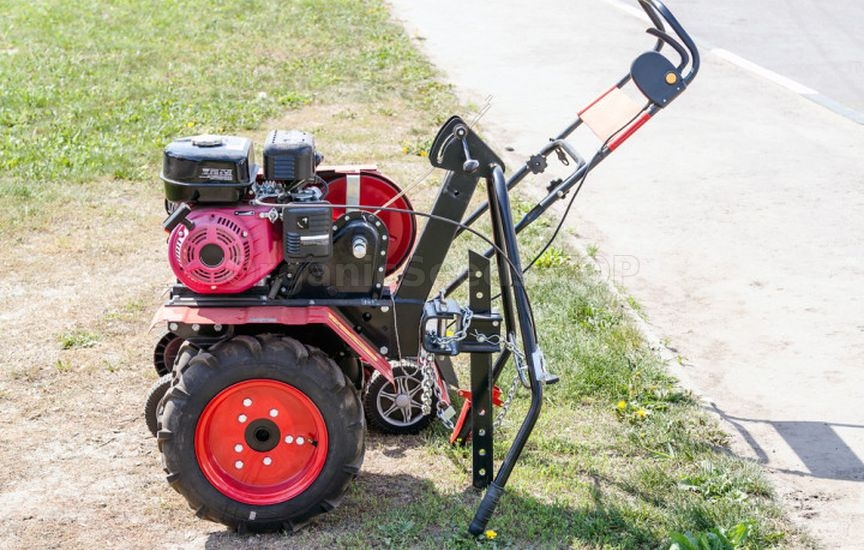 When preparing a cultivator or tiller for winter, start with engine conservation. To do this, first drain the gasoline and use up the residues until the engine stops completely. While the engine is still warm, replace the old oil with fresh. Next, deal with the air filter: replace the paper one with a new one, wash the foam one with warm water and detergent, and after drying soak it with machine oil. Also clean the fuel filter. The spark plug must be unscrewed, cleaned, moistened in gasoline and dried. After this, pour 15 ml of oil into the cylinder and turn the shaft so that it is evenly distributed over the parts. Then install the spark plug back in place. During inspection, it is important to clean all units, parts, elements, engine fins and muffler from dirt, soil and oil stains. All attachments and other metal parts should be coated with grease, wrapped in paper and stored in a box. Trimmer 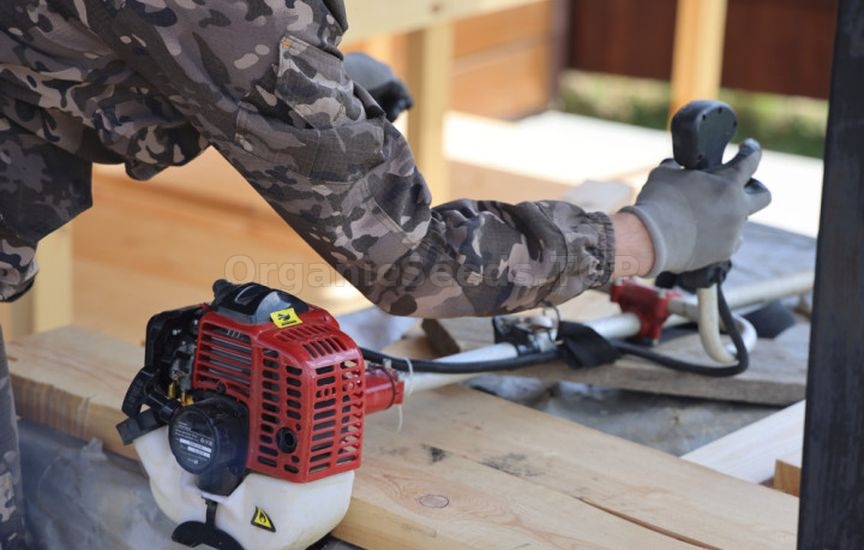 When preparing a gasoline trimmer for winter storage, first drain the fuel mixture, and then let the device run at idle until it stops completely. Next, remove grass residues between the blades and stationary parts of the device, as well as clean the blades and body. The spark plug must be unscrewed and either cleaned of carbon deposits or replaced with a new one. The metal cutting blade should be removed, checked for cracks or chips and replaced if necessary. A clean and dry blade is recommended to be stored separately from the main device. If the trimmer is equipped with a cord (line), it should be removed and placed in fresh water for the winter – this will help maintain the flexibility of the material, ensure resistance to tension and extend service life. It is better to store the trimmer in a suspended position, while the handle, if it creates inconvenience, can be turned to the desired side or completely unscrewed. When preparing an electric trimmer for winter, first check the integrity of wires, insulation and contacts. It is extremely important to avoid sharp temperature fluctuations and not to leave the device in the cold – the resulting condensation can damage contacts and other important elements. Proper conservation of equipment for the winter is the key to long and stable operation. |
|
|