
Seedlings in peat tablets: step-by-step instructions |
For growing seedlings, both beginners and experienced gardeners have adapted to use a huge number of more or less suitable containers – from "purchased" boxes, bags, cassettes, trays, greenhouses and pots to homemade ones, from cardboard tubes from toilet paper or paper towels, cups, bottles and jars from food and drinks, and even from eggshells!
 However, the use of certain containers has many different limitations and nuances – some are not suitable for plants with a taproot system, others are not "liked" by those who painfully endure picking, others require a lot of space in the apartment or complex preliminary preparation, and homemade ones often look very unattractive and are short-lived, literally falling apart "on the go" and serving only one season. 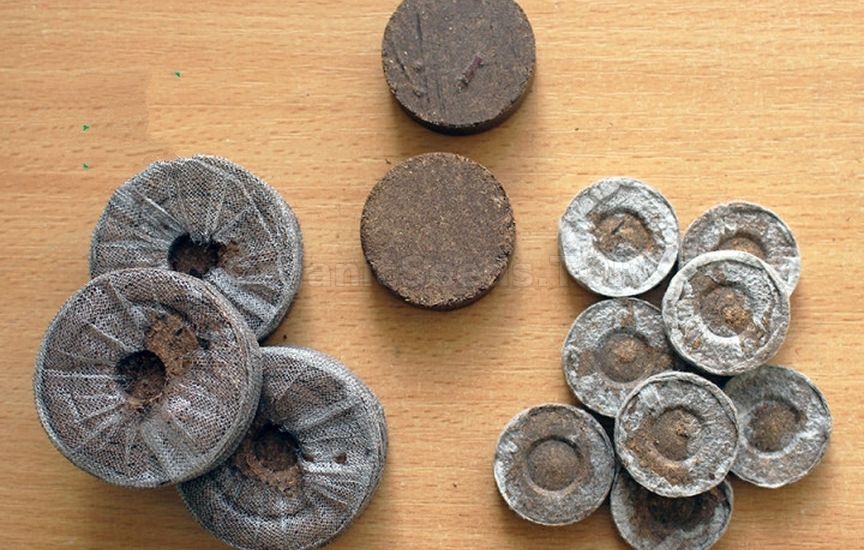 We suggest you take a look at another option, convenient and suitable for absolutely all crops, both flower and vegetable, the only thing – not the most budget-friendly, especially if you have a large number of seedlings. We are talking about peat (peat-humus) tablets. If you still don’t know what this “miracle” is, why it is better than other containers, how to use these tablets and whether they can in any case replace the usual pots for growing seedlings – our step-by-step instructions with explanations are for you. What peat tablets are made of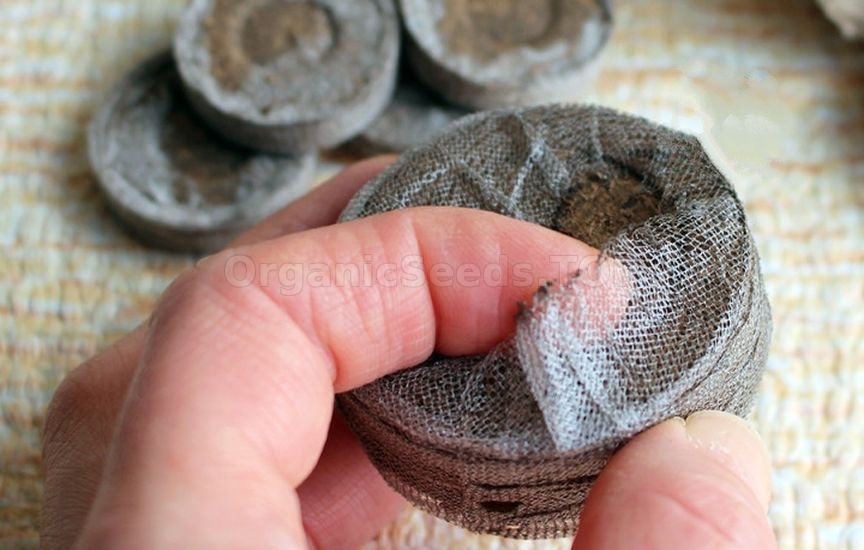 Peat tablets can be made from pure pressed high-moor peat or from a mixture of different types of peat, sometimes with the addition of humus (then they are called peat-humus). Also, conscientious manufacturers today often include additional nutrients (macro- and microelements), fungicides, antibacterial components, growth stimulants and even additives that reduce stress during transplantation and planting in open ground in their peat tablets. Thanks to a fairly rich and balanced composition, seedlings grown in these tablets are provided with all the nutrients necessary for full development and are not susceptible to blackleg disease and other ailments at the initial stage of growth. The size of the tablets can be different (from 2.4 to 9 cm), which is quite convenient for different seed sizes and different seedling growth. Outside, peat tablets are covered with a special non-woven material-"mesh", which protects them from crumbling during transportation and growing seedlings, but easily stretches and does not interfere with the substrate swelling from water. 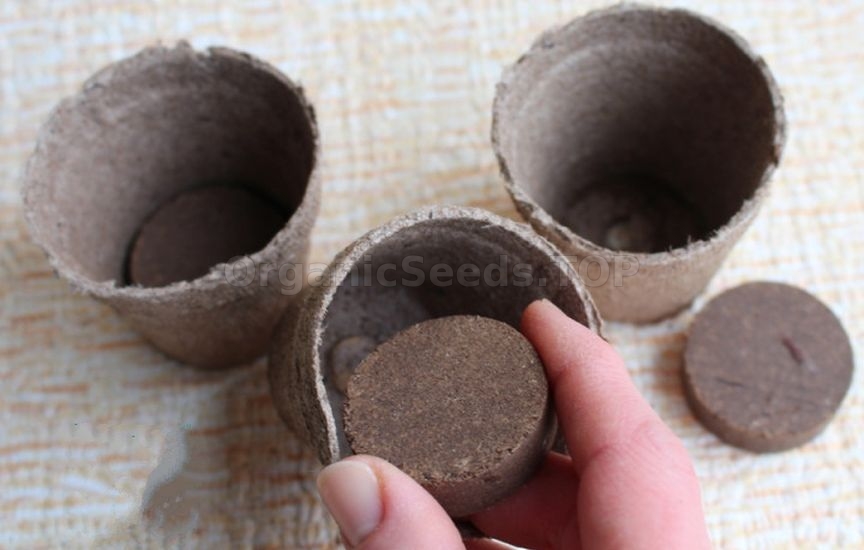 A slightly more expensive option is a peat tablet not covered with material, but coming with a peat pot. These consist of 70-80% peat and 20-30% paper. Their porous walls allow moisture and air to pass through well, and seedlings are planted in the soil directly in them. For which plants peat tablets are suitable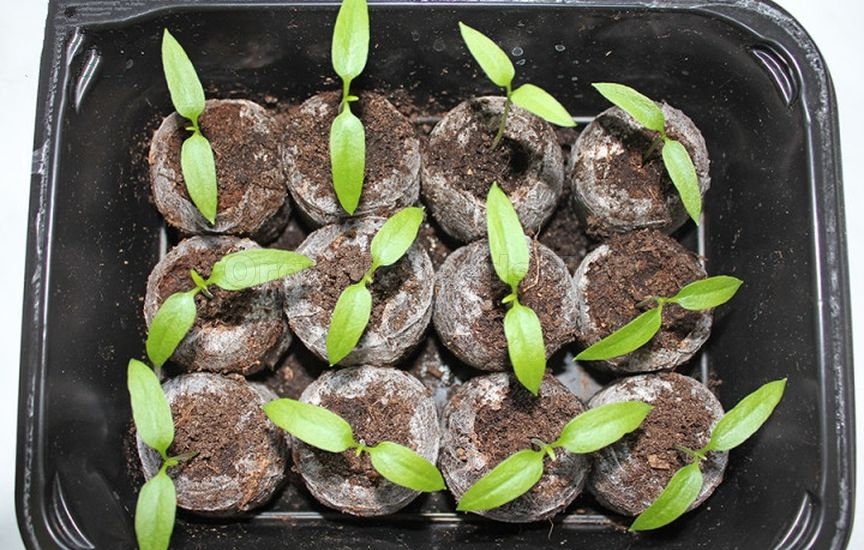 There are no restrictions on the use of peat tablets for certain plants. The acidity of the substrate in them (pH 5.4-6.2) is suitable for most plants, so you can germinate seedlings of any vegetables, berries, flowers in tablets, and also, if necessary, root leaf and stem cuttings. Peat tablets are excellent for plants with very delicate seedlings (petunia, lobelia, etc.), as well as for those that do not tolerate picking well (eschscholzia, pumpkin crops, etc.) and whose roots can be easily damaged during transplantation, or for especially rare and/or valuable plants (also cuttings of difficult-to-root crops). For germinating small seeds (strawberries, basil, arugula, etc.) you can use the smallest tablets (2.4-3 cm). For cuttings and growing small seedlings, as well as for growing plants before subsequent transfer to larger containers, tablets with a diameter of 3-6 cm are suitable. And if you need to get high-quality seedlings of vegetables (tomatoes, peppers, eggplants, etc.) and flowers, choose tablets with a diameter of 7-9 cm. How to use peat tablets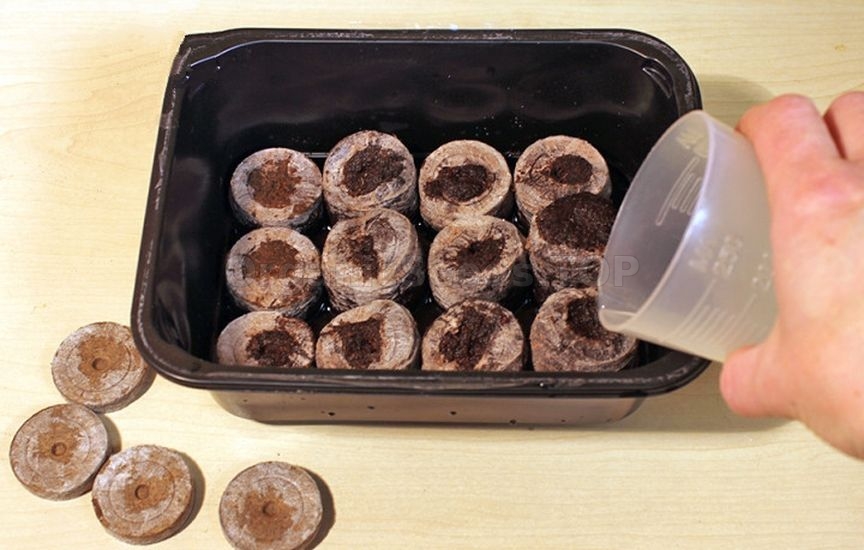 Peat tablets are sold in a highly compressed form. To sow seeds or place cuttings in them, the substrate must be filled with warm water before use. This is done simply:
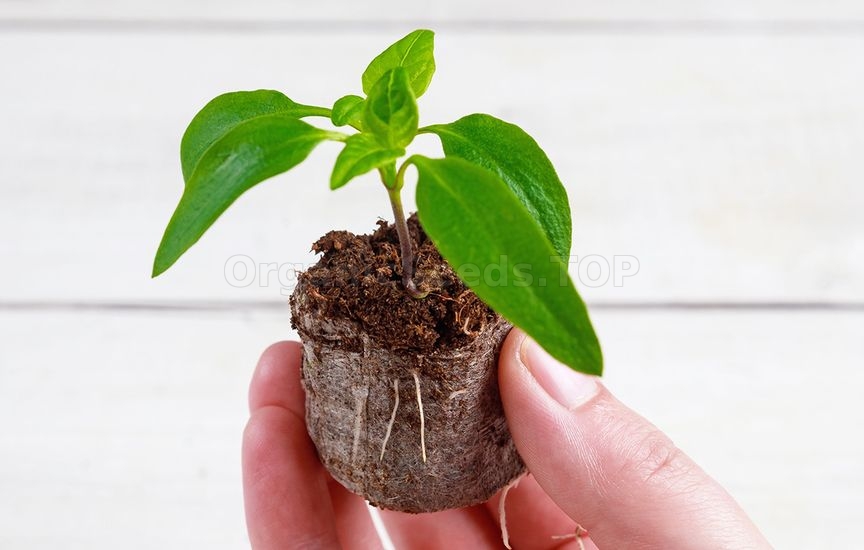
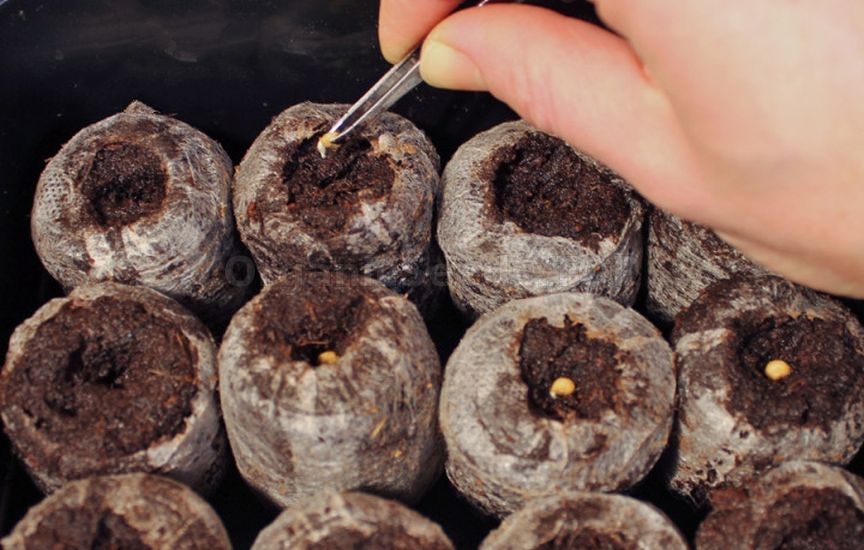 To sow seeds in peat tablets, "turned" into ready-made containers for planting, make a small recess in the swollen substrate using a toothpick or wooden stick, place the seeds in it at the depth recommended for the particular crop and slightly press them into the substrate with a toothpick. If it is necessary to add soil (for large seeds), use high-moor peat. Seeds can be sown both dry and pre-soaked or even germinated. Coated seeds, before covering with substrate, must be moistened (you can drop water on them from a pipette), and after their shell becomes soft, slightly distribute it to facilitate germination. How to grow seedlings in peat tablets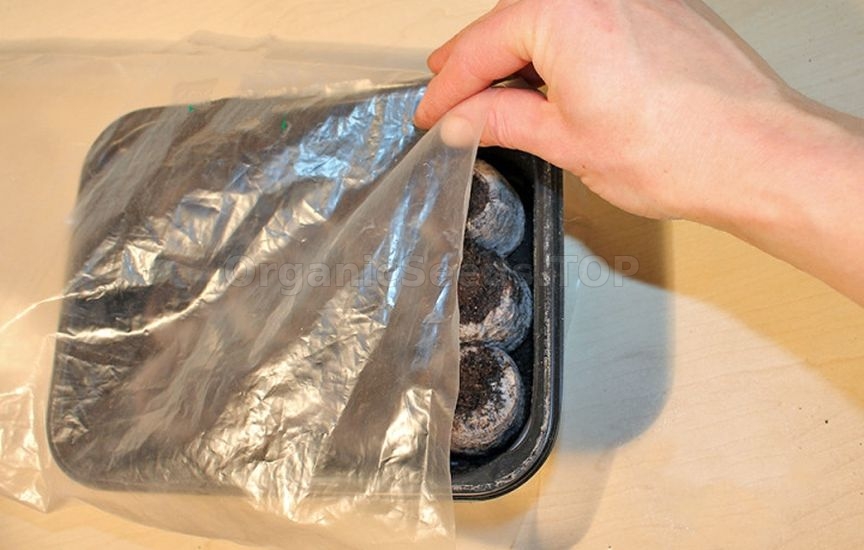 Place the tablets with seeds sown in them in a closed transparent container (special seedling greenhouse, transparent plastic container with a lid, ordinary polyethylene bag, etc.) and put them in a warm (23-25°C), well-lit place – but not on the battery. In the future, make sure that the tablets do not dry out (regularly spray them with a spray bottle) and ventilate your "greenhouse" as condensation forms on the lid from the inside. 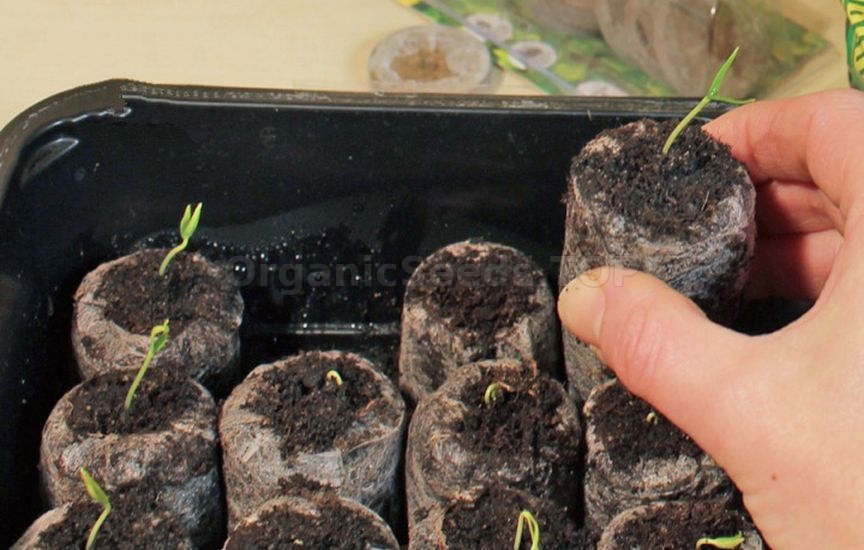 After the seedlings appear, remove the lid/film. While the plants are still small and fragile, water them from a spray bottle, and when they grow and get stronger, you can water them through the tray, regularly draining the remaining unabsorbed water. Otherwise (temperature and light conditions) focus on the requirements of a particular crop – they may differ somewhat. How and when to remove plants from peat tablets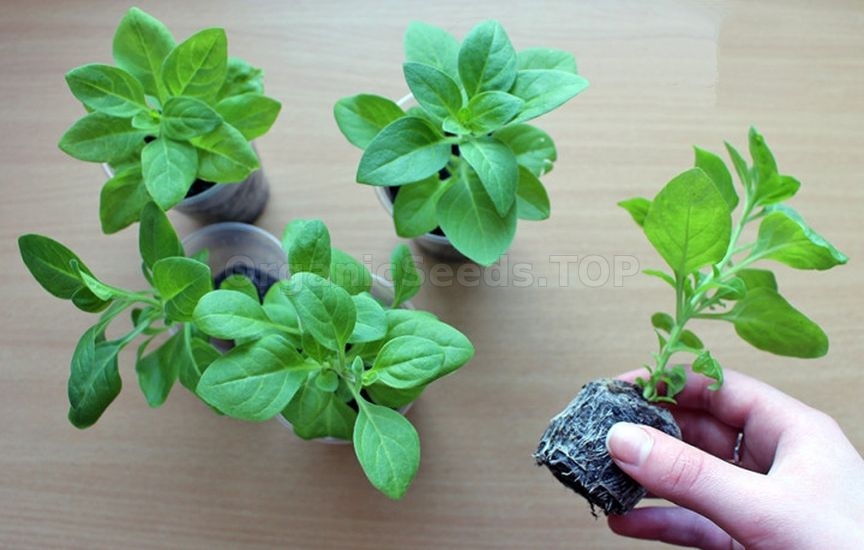 The time plants spend in peat tablets again primarily depends on the size and requirements of the seedlings. In general, plants should be transplanted as soon as you notice their roots on the surface of the peat cylinder, when they begin to break through the mesh material. The main advantage of peat tablets is that seedlings are not removed from them, but transplanted to a permanent place or, if necessary, into a larger container directly with the tablet. The likelihood of damaging the roots in this case is minimized. Before performing the procedure, it is enough just to cut the mesh at the bottom and side so that it does not interfere with further root growth. If the mesh holding the peat tablet is torn, the seedlings should be transplanted in the usual way, with partial damage to the root ball. Peat tablets are convenient and easy to use, do not require additional soil and fertilizers, have excellent air and moisture permeability, take up little space, are suitable for germinating any crops. Tablets allow you to achieve almost 100% seed germination, facilitate seedling cultivation and reduce the risk of various diseases and root damage in young plants. The only nuance in their use is the rather high price, which makes their purchase impractical with a really large volume of seedlings. You may need:Verbena seedsFlower seedsOrganic fertilizers |
|
|