
Seedlings of cabbage: timing and care |
White cabbage can be early, mid-season, and late varieties, and the choice of variety largely determines the ripening time of the crop and its purpose. Thus, cabbage of early and mid-early varieties is better suited for fresh consumption: it is tender and juicy, but cannot be stored for long. Heads of medium ripening can be used fresh, and are also suitable for short-term fermentation. Vegetables of late varieties are best suited for winter storage. They are also appreciated by those who want to ferment cabbage for a long time.
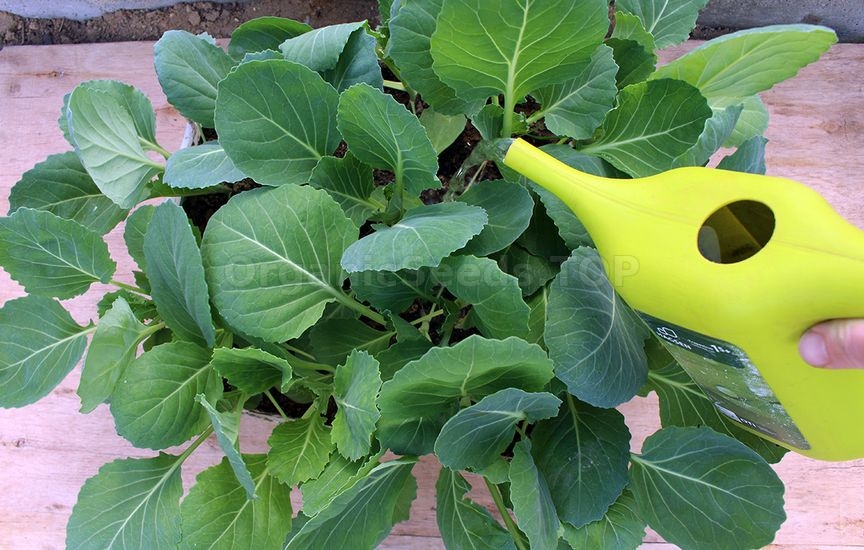 Knowing this information, you can start sowing white cabbage of the varieties you have chosen at the times suitable for your purposes – and how to do this correctly and then properly care for the seedlings, read on. How and when to sow cabbage for seedlings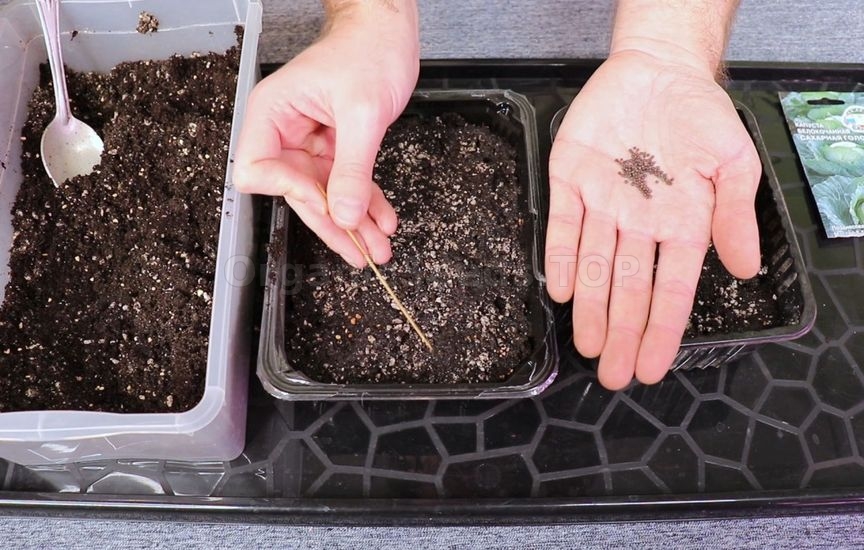 Cabbage seeds for seedlings are sown at the following times:
Accordingly, seedlings of early varieties are planted in the ground in early May, mid-season – around mid-May. By this time, seedlings of early varieties should have 5-6 leaves and reach a height of 13-15 cm, mid-season varieties – a height of 15-20 cm and 6-7 leaves.
Here is a step-by-step algorithm for sowing cabbage seeds for seedlings: 1. Prepare cabbage seeds of the desired variety – they can be bought in a store or use seeds collected by yourself in previous seasons. If you use your own seed material, its shelf life without loss of germination is on average 3-4 years. 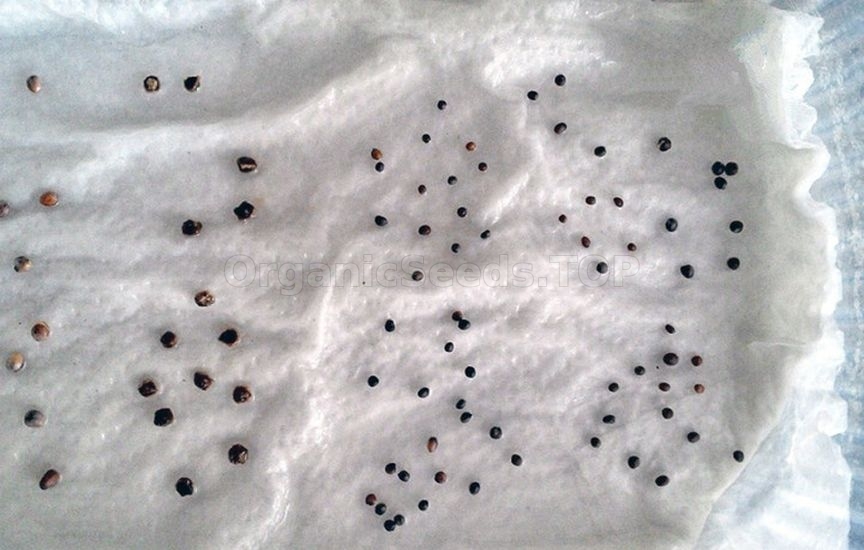 2. To increase seed germination, before sowing they are kept for 12 hours in a solution of a growth stimulator (Epin, Zircon, Heteroauxin, potassium humate, solution of microelements, etc., according to the instructions). Then they are slightly dried and placed in the refrigerator for a day. 3. Prepare containers for sowing. You can use seedling boxes, plastic pots, peat tablets and other containers. If sowing is done in a common container, later the sprouts will have to be transplanted into separate pots. If you plan to grow seedlings without transplanting, seeds should be sown immediately in separate containers. Both special containers and ordinary plastic or paper cups with drainage holes at the bottom are suitable. 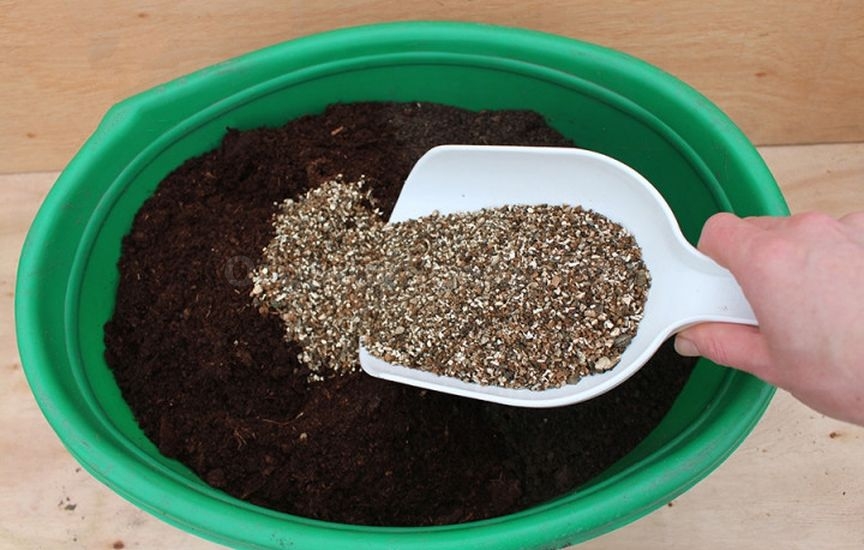 4. The substrate for growing cabbage seedlings can be purchased in a store or prepared independently. For this crop, a universal store-bought soil for seedlings or a mixture of deoxidized peat, compost and vermiculite in a ratio of 2:2:1 is suitable. If the pH of the soil mixture is below 6.8 units, you can add sifted wood ash (50-70 g per 10 l of substrate). When using your own soil mixture, do not forget to bring it into a warm room 3-5 days before sowing seeds and disinfect it (for example, steaming in the microwave for 10 minutes). After disinfection, it is worth watering the soil with Fitosporin-M or an analogue to enrich it with beneficial soil bacteria. 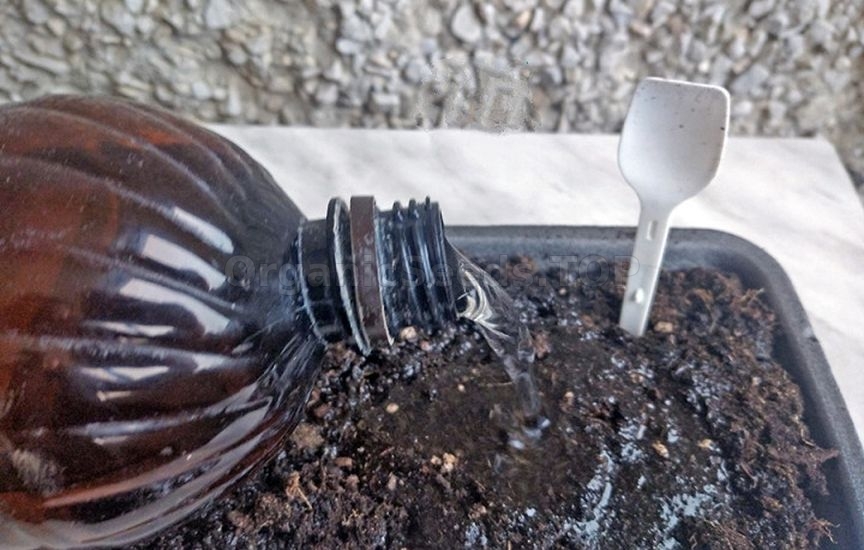 5. Fill the containers with the prepared soil mixture, water abundantly. If the soil settled after watering, add a little more soil and water again. When the water is absorbed, make indentations in the soil for the seeds – cabbage is sown to a depth of about 1 cm. 6. Place the seeds in the holes. Then carefully cover them with soil (when sowing seeds in a common container, it is important to keep a distance of 3-5 cm between them so as not to damage the seedlings during transplanting). Moisten the soil with warm water (preferably from a spray bottle), cover the container with glass or film and place it in a warm place (about 22-24°C) until sprouts appear. How to care for cabbage seedlings at home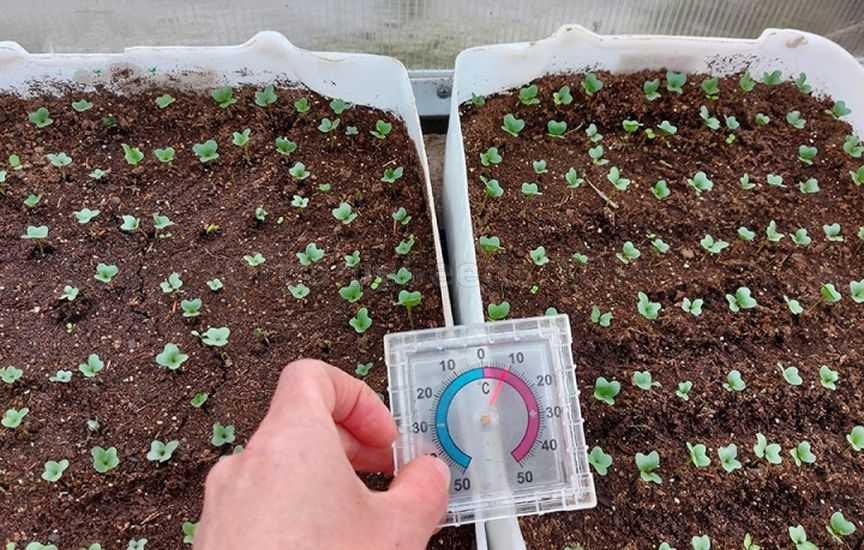 After the sprouts appear, containers with cabbage seedlings are transferred for several days to a room with a temperature of 7-9°C (so that the seedlings do not begin to stretch). Then the temperature is again increased to 15-17°C during the day and 8-10°C at night. Care for growing cabbage seedlings at home includes additional lighting if necessary, watering, loosening and fertilizing. The duration of daylight for normal growth of cabbage seedlings should be at least 12 hours. To create such conditions in constantly cloudy weather or with early sowing, additional lighting is used. Both special phytolamps and ordinary lamps emitting white light are suitable as artificial light sources. 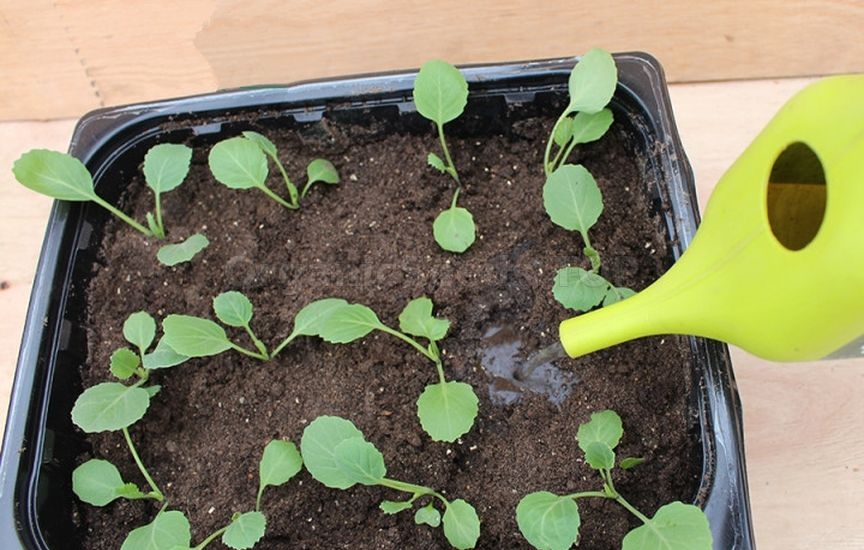 Watering of seedlings begins after the top layer of soil dries, since excessive watering can cause blackleg and other diseases. For watering, use water at room temperature. The first fertilization of cabbage seedlings with a ready-made mineral complex is carried out when the seedlings have three true leaves. For fertilization, you can use complex water-soluble fertilizers: Agricola for cabbage. The second fertilization is carried out 7-10 days before planting seedlings in the ground (1 tsp of urea and potassium sulfate per 5 l of water). If the seedlings still get sick with blackleg, remove and destroy all diseased plants along with the soil, and transplant healthy seedlings into separate containers with disinfected soil, place them in a warm place, shade from sunlight, after the soil dries water with a solution of any fungicide (Fitosporin-M, etc.). How and when to transplant cabbage seedlings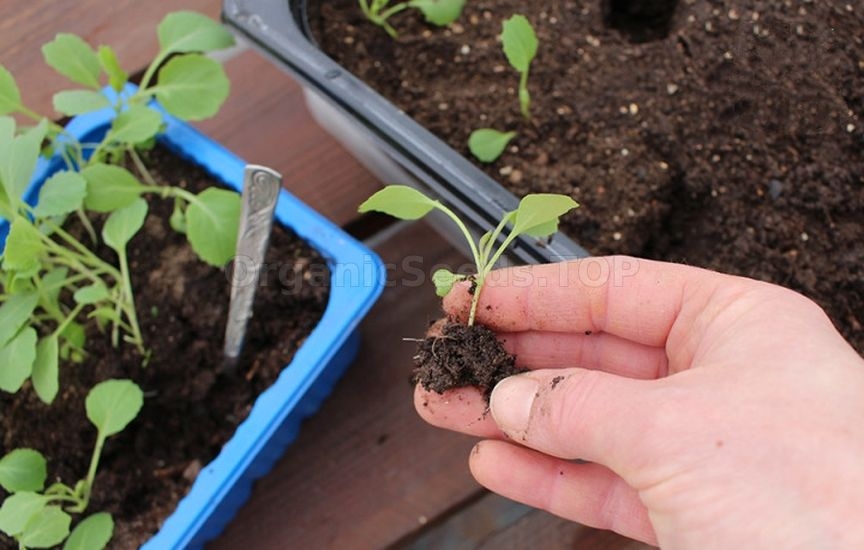 Cabbage seedlings can be grown without transplanting: sow seeds immediately at a large distance from each other in deep containers, trays or even in a greenhouse covered with film. But if the seeds were sown densely, then transplanting is indispensable – otherwise the seedlings will grow crooked and weak. Transplanting cabbage is carried out after the appearance of 1-2 true leaves in the seedlings. How to do it correctly: 1. On the eve of transplanting, water the container with seedlings with settled water at room temperature. 2. To transplant seedlings, prepare a nutrient soil mixture: mix peat half with compost or biohumus, add 100-150 g of sifted wood ash and 1 l of perlite or vermiculite per 10 l of soil to increase the moisture capacity of the substrate. 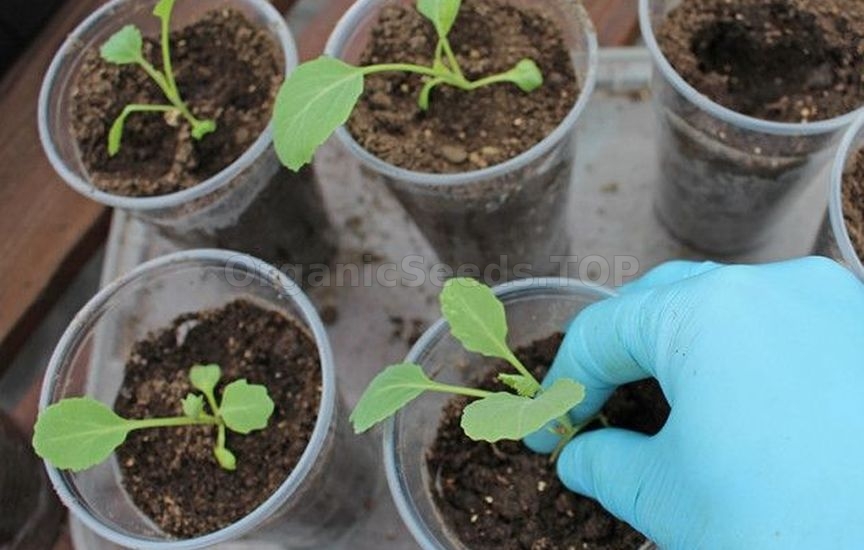 3. Fill the prepared containers with the soil mixture and water the soil with a solution of a biofungicide based on Bacillus subtilis or Trichoderma (Fitosporin-M). To prepare the solution of the biological product, use settled water at room temperature. 4. Carefully remove the seedlings from the container together with a lump of soil, trying not to damage the root system. 5. When transplanting, make sure that the main root of the seedling does not bend upwards. Plant the seedlings, deepening them to the cotyledon leaves. How and when to plant cabbage seedlings in the ground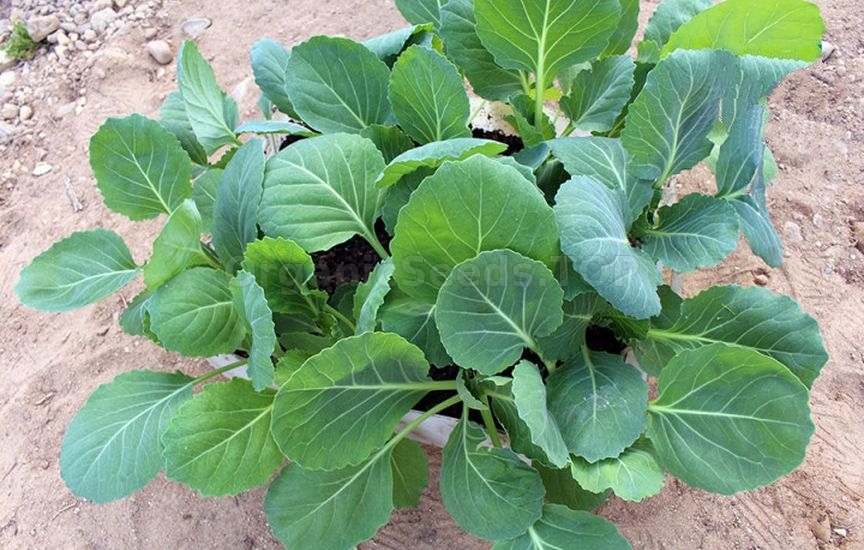 Cabbage grows best on flat, open, well-lit areas with loose fertile soil. The crop prefers neutral or slightly alkaline soils (pH 6.7-7.4). Good predecessors are potatoes, tomatoes, onions, peas, beans, legumes, cucumbers, carrots, green manure. Cabbage seedlings are planted in the ground at the following times:
By this time, seedlings of early varieties should be 13-15 cm tall and have 5-6 leaves, mid-season and late varieties – 15-20 cm tall and have 6-7 leaves. 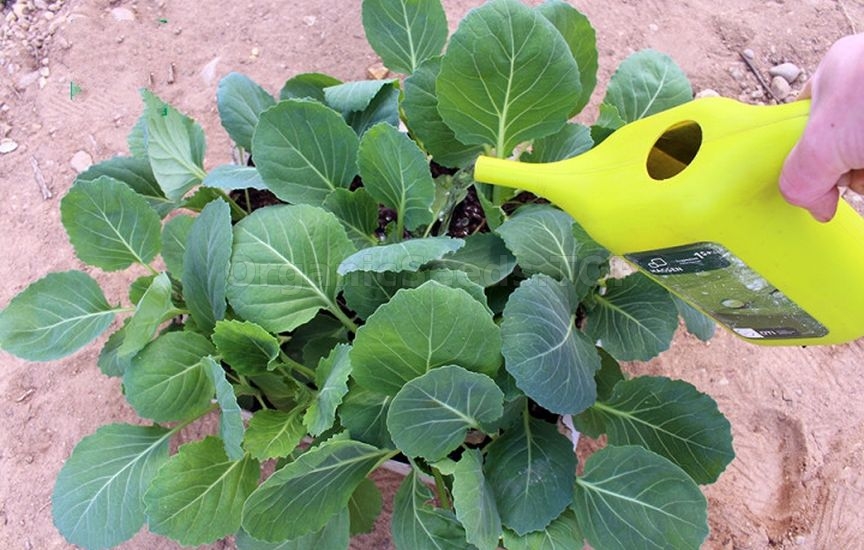 10 days before planting cabbage seedlings in the ground, it is worth starting to harden them. In the first days, it is enough to open the window in the room for 3-4 hours. In the next couple of days, seedlings can be taken out for several hours to a glazed balcony or loggia. If the weather is sunny these days, the seedlings should be shaded. 4 days before transplanting, watering of cabbage seedlings should be reduced (but not overdrying the soil in the pots) and the seedlings should be taken out into the air, no longer returning them to the room. For planting cabbage, choose a windless cloudy day. It is better to do this in the evening so that the plants have time to recover from transplant shock. If the weather is sunny and hot, then after transplanting the plants may look wilted, but over time they should recover, and to help them with this, cover the seedlings with breathable agro-fabric for the first few days. Plants are planted according to the scheme 40-50×50-70 cm, deepening into the soil to the true leaves. At the same time, make sure not to cover the growth point, otherwise the plants may die. For each seedling, dig a small hole and add 2 tbsp of wood ash, which will allow the plant to take root well, 1 tsp of nitrophoska and 200 g of humus. Mix everything thoroughly and water abundantly. Then carefully remove the plant together with a lump of soil from the pot and place it in the hole. Cover with dry soil and press lightly. As you can see, growing cabbage seedlings will not cause particular difficulties even for a novice gardener, but the main nuances of the process must be observed. You may need:Cabbage-seedsLeafy vegetable seedsOrganic fertilizers |
|
|