
What flowers can be sown for seedlings already in January |
The elders of country life know that mid-winter is the time for completely different sales. Right now it’s time to buy seeds at the best prices and… start the sowing season.
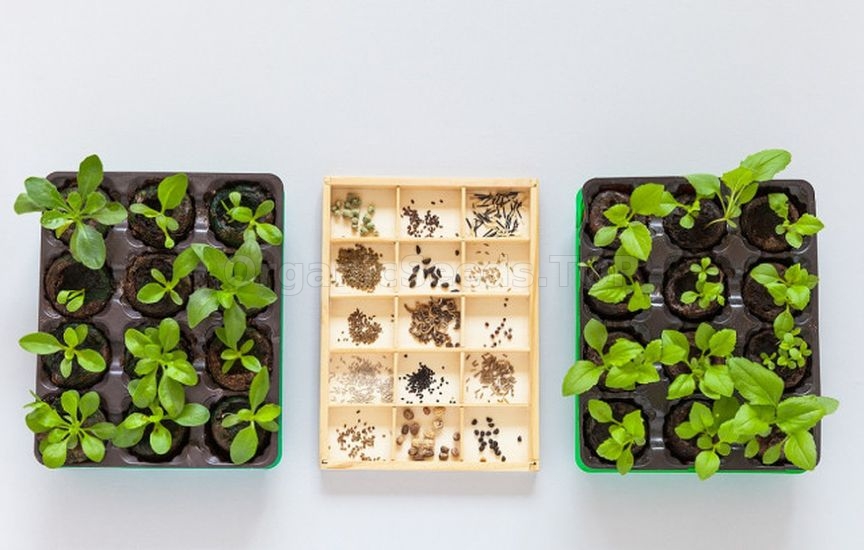 Yes-yes, don’t be surprised. December and January are the ideal time for sowing crops for seedlings that take a long time to sprout and develop slowly. Among flowers, this includes, for example, verbena, which reveals its shield-shaped inflorescences three months after sprouting, as well as eustoma and Shabo carnation, which bloom even later – five months after germination. To enjoy the buds as early as possible, these flowers are given several months of “head start” and are sown in winter. Hybrid verbena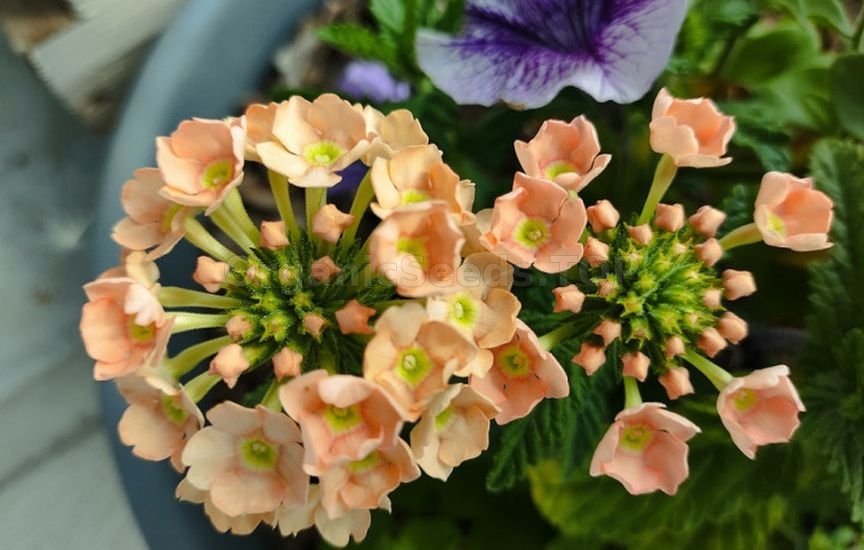 Hybrid verbena – a spectacular annual up to 20-30 cm tall – impresses with its rich palette. Its flowers can be white, red, blue, purple, burgundy, and there are also varieties with attractive pastel and two-tone coloring. Flowering begins in July and lasts until October, giving bright colors until the coldest days. Verbena is quite unpretentious: it can withstand light frosts and periods of drought, is resistant to diseases and does not require abundant fertilization. However, for successful growth it needs a sunny place. The peculiarity of hybrid verbena is its long vegetation period, which is the reason for such early sowing. At the same time, the seeds have low germination, so before planting they should be stratified. To do this, wrap the seeds in a damp cloth, place them in a plastic bag and keep them for about a week on the bottom shelf of the refrigerator. Additionally, they can be treated with a growth stimulator solution (Heteroauxin, Epin). 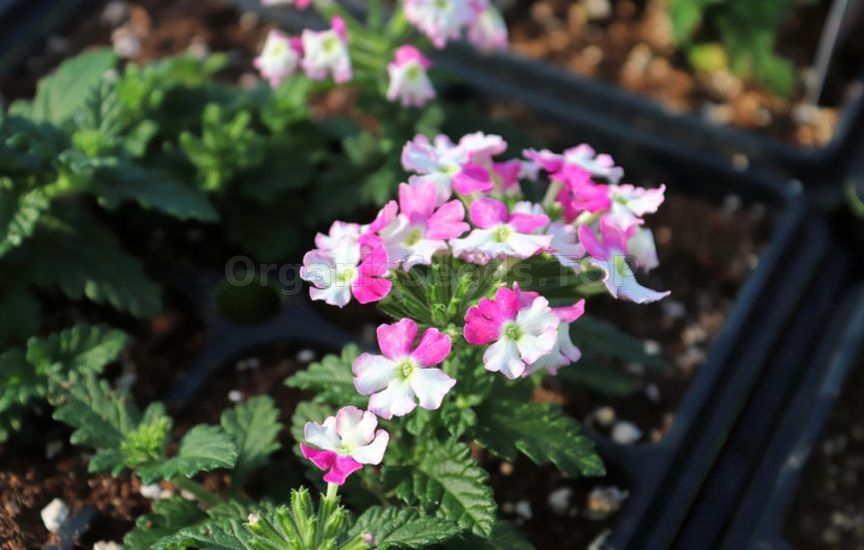 For sowing, use special soil for seedlings, which is pre-moistened. The seeds are spread on the surface without covering with soil, and then covered with film. For successful germination they require a temperature in the range of 18-20°C. The first sprouts may appear within a week, but on average this process takes 20 or more days. The grown seedlings are kept in a well-lit place at a temperature of 15-17°C. As soon as the plants form 1-2 pairs of true leaves, you can start picking. It is recommended to plant hybrid verbena in open ground after mid-May, when the threat of return frosts has passed. If it is not possible to organize full lighting for verbena seedlings, then it is better to sow the seeds closer to the beginning of March. Calceolaria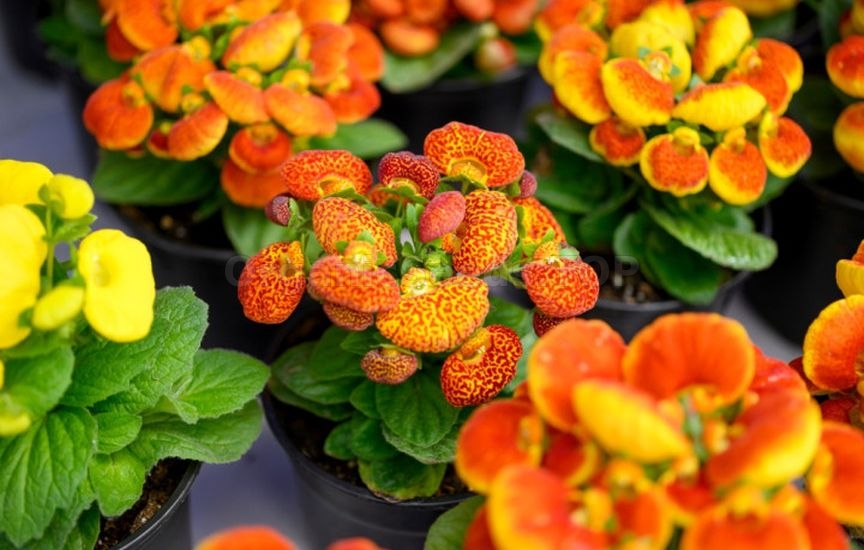 Wrinkled calceolaria – a plant with exotic flowers resembling lady’s slipper – has not yet become widespread among gardeners. However, there are those who have already come to love this crop, despite some difficulties in care – such as frequent pest attacks (especially whiteflies) and sensitivity to watering regime. In country conditions, calceolaria is most often grown in containers, although sometimes it is planted in open ground, in well-lit areas without direct sunlight. The plant is demanding on watering regime – it reacts equally poorly to both drying out of the soil and excessive moisture. But in favorable conditions calceolaria pleases with abundant flowering from May to September. 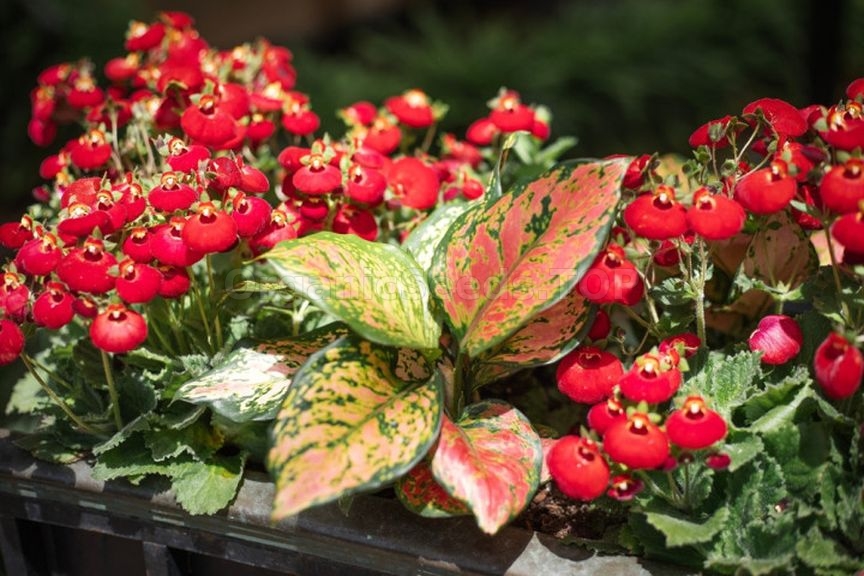 To get flowering at optimal times, sowing for seedlings is recommended in January. Calceolaria seeds are small, so they are not embedded in the soil, but evenly distributed over the surface of the soil and covered with film to create a greenhouse effect. The first sprouts appear no earlier than 2-3 weeks later. A month after germination, the seedlings must be transplanted into separate containers. After transplanting, calceolaria needs regular fertilization. To ensure lush flowering, a complex mineral fertilizer should be applied every two weeks. The optimal temperature for growing calceolaria is in the range of 10-15°C. Some growers prefer to keep the plants in winter by moving pots with calceolaria indoors. However, in the second year of life the intensity of flowering decreases significantly, so it is more advisable to grow this crop as an annual, renewing plants from seeds every year. Shabo carnation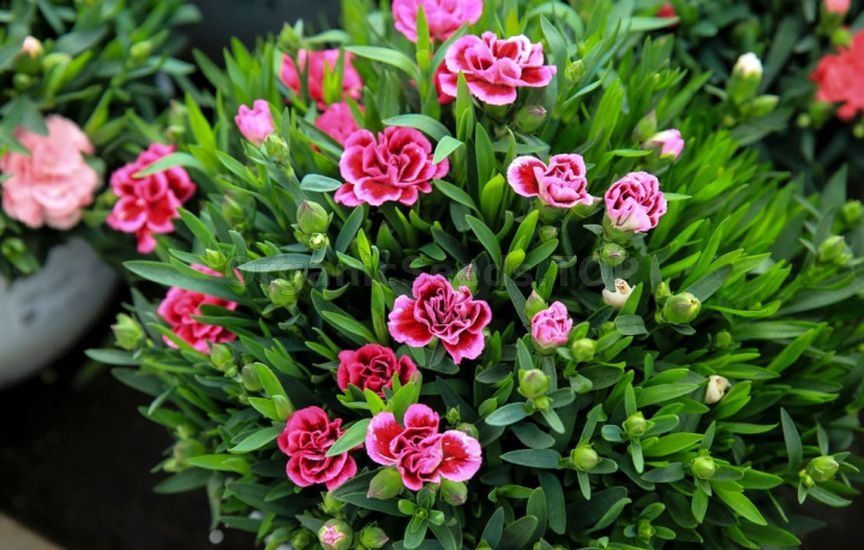 Shabo carnation stands out among other flowers with an especially long development period: its exquisite double flowers open only 5-6 months after sprouting. That is why sowing work begins earlier than with most ornamental crops – already in mid-December. The seedling container is filled with soil for flower crops. On the surface of the soil, at a distance of 2-2.5 cm, grooves about 3 mm deep are formed. Seeds are evenly distributed in them, sprinkled on top with a thin layer of river sand. After sowing, the soil is sprayed, and then a greenhouse effect is created: the container is either placed in a plastic bag or covered with film. Then the crops are placed in a well-lit place, in a temperature range of 18-20°C. At the same time, it is important to protect them from direct sunlight (for example, shade with a sheet of cardboard). As soon as the first sprouts appear, the film and protective shading are removed. To prevent the seedlings from stretching and to develop evenly, they are provided with additional lighting using a phytolamp. Lavender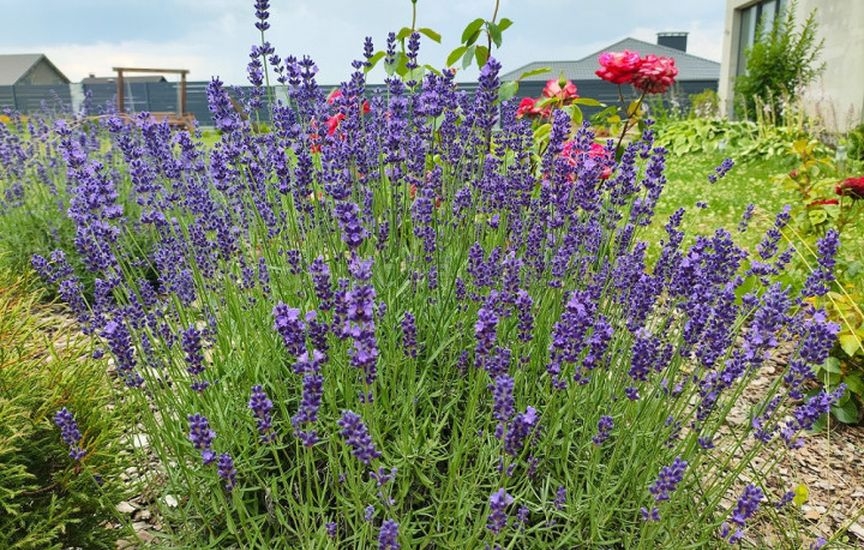 To grow lavender from seeds, you need to purchase planting material in autumn or at the very beginning of winter, since before sowing it is necessary to carry out stratification. It is recommended to start the procedure already in January. The process begins with preparing the soil mixture. You can use universal soil for seedlings or prepare it yourself. To do this, combine garden soil, humus and clean river sand in a ratio of 3:2:1. Put drainage (for example, small expanded clay) into the seedling container, and then the prepared soil. After that, it is recommended to water the soil with a pink solution of potassium permanganate or a solution of a biological preparation based on trichoderma (Trichocin, Trichoplant, Trichoderma Veride, etc.), since lavender seedlings often suffer from root rot. The seeds are distributed over the surface of the soil, sprinkled with a thin layer of sand (no more than 3 mm) and sprayed with warm water from a spray bottle. The container is covered with a bag or film and placed in the refrigerator or another cold place with a temperature of 1-5°C for up to two months. After stratification, the container is moved to a well-lit place, preferably under a phytolamp. It is important to monitor the temperature regime (the optimal range is considered to be 15-22°C) and maintain the necessary level of soil moisture. To prevent fungal diseases, the crops should be regularly ventilated. Stratification of lavender can also be carried out before sowing. To do this, the seeds are wrapped in a damp cloth, then placed in a bag or container with small holes and put in the refrigerator for at least a month. When the seedlings develop into small bushes with a good root system, they can be transplanted into separate cups. Transplanting into open ground is carried out in spring, after stable warmth is established. Lobelia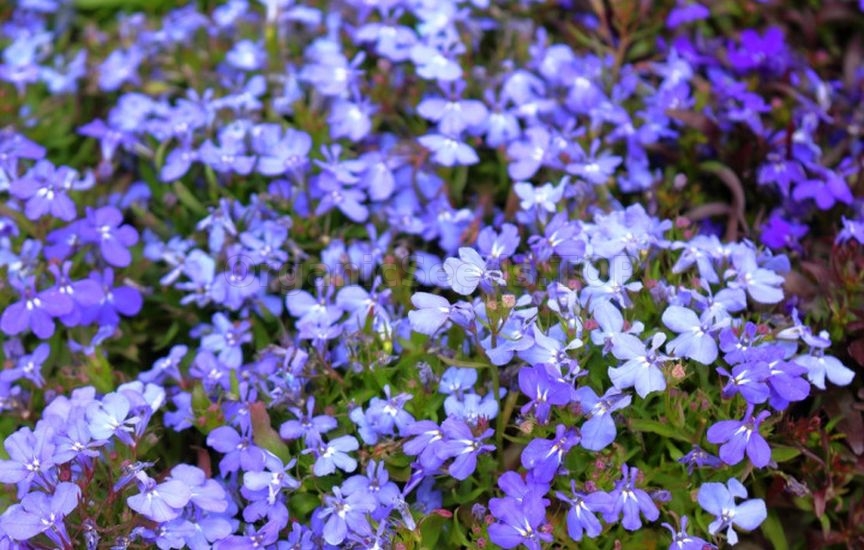 Lobelia erinus (also known as garden or blue lobelia) is another example of a plant with a long development cycle, taking about 80 days. Its luxurious balls in blue, white, pink or purple shades, blooming throughout the summer, look great in outdoor containers and hanging baskets. To get a lush flowering lobelia bush by June, its seeds are sown for seedlings already in January. Sowing can be done in common containers or in bunches in individual cups or peat tablets. In the first case, the seeds are mixed with river sand and “salted” into the soil, after which they are sprayed with clean water. The grown seedlings are picked after the formation of 2-3 pairs of leaves. The second option is more suitable for pelleted seeds. The granules are conveniently placed one by one in separate containers – since each granule contains several seeds, a ready-made bush grows in the end, which does not need to be picked. After sowing, the container is covered with glass or plastic wrap and placed in warmth. An important nuance of care is daily spraying with a spray bottle. At a temperature of about 18°C, the first sprouts usually appear after two weeks. As soon as this happens, the cover must be removed, and the seedlings moved to a well-lit place with an air temperature of 15-20°C. Lobelia can be planted in open ground already in May. Pelargonium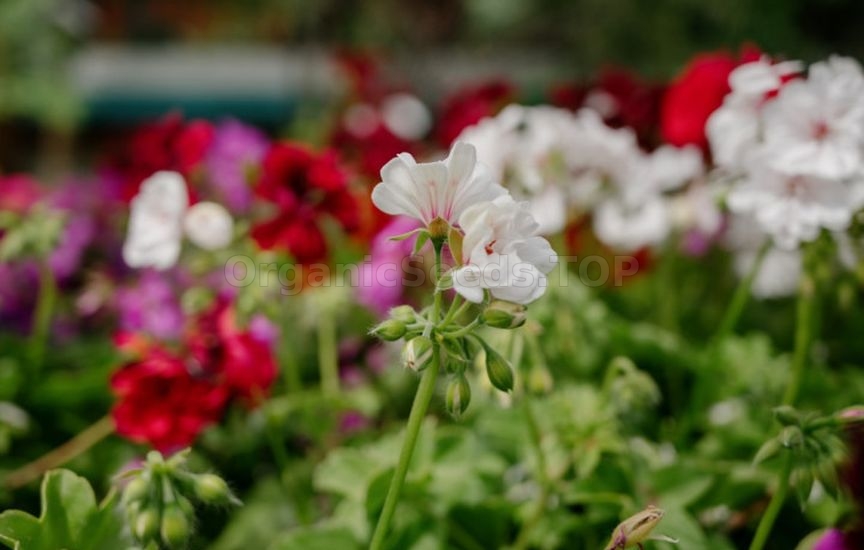 Pelargonium can be sown at any time from autumn to spring (November – April). But it is important to remember that in autumn or winter sowing additional lighting with a phytolamp will be required, since natural light will not be enough for the development of seedlings. For sowing, prepare loose nutritious soil – a mixture containing 2 parts of sod soil and 1 part each of sand and peat is optimal. The seeds are distributed over the surface of the filled container and lightly sprinkled with soil, after which they are covered with polyethylene film and kept at a temperature of about 20°C. During germination, the soil is periodically moistened with a spray bottle and the crops are ventilated, removing the condensate accumulated on the film. For active growth, seedlings are provided with a 12-hour daylight. Under such conditions, the seedlings form strong and healthy, and later delight with lush flowering. They can be planted in a flower bed or continue to be grown as a pot culture, placed in summer on a terrace or balcony, and taken indoors for the winter. Eustoma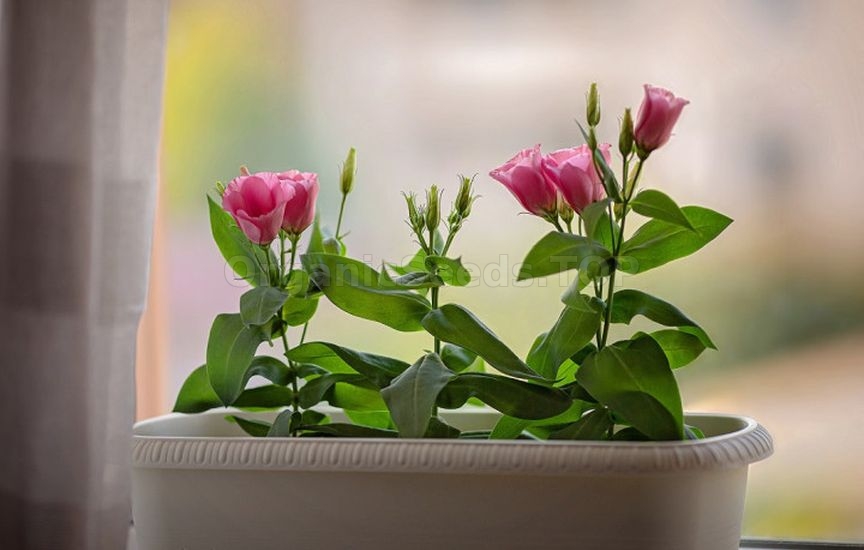 This attractive plant is also known by other names: lisianthus, Irish rose. Among the many varieties there are eustomas with simple and double inflorescences of different colors – from the species blue to all shades of yellow, pink, green, and even with a contrasting border along the edges of the petals. Eustoma blooms 5 months after sprouting, so it is recommended to sow it no later than January. The seeds are pre-soaked for 1-2 hours in a solution of a growth stimulator, then spread on the surface of a moist soil mixture of peat, sand and perlite, slightly pressing into the soil. Alternatively, peat tablets placed in a common seedling container can be used for sowing. The container with crops is covered with a bag or glass and kept for 1.5-2 months in a room with bright lighting and an air temperature of 20-25°C. During germination, it is recommended to provide additional lighting with phytolamps for at least 12 hours a day. Eustoma seedlings develop slowly: first they build up the root system and only after that release leaves. Once a week they are watered with a syringe bulb or through a tray. Two weeks after picking, fertilization with a complex seedling fertilizer begins, which is repeated every 10-14 days. If you sow these slow-growing crops in the coming months, then even before moving to the country house in summer you will be able to admire blooming “flower beds” right on the windowsill. You may need:Verbena seedsLobelia seedsCarnation seedsEustoma seeds |
|
|