
Spring fertilization of perennials: when, what, how much |
Preparing garden plants for the season is a crucial part of work on a country plot. After all, the condition in which perennials enter the flowering and fruiting stage directly affects their health, appearance, decorativeness, and yield.
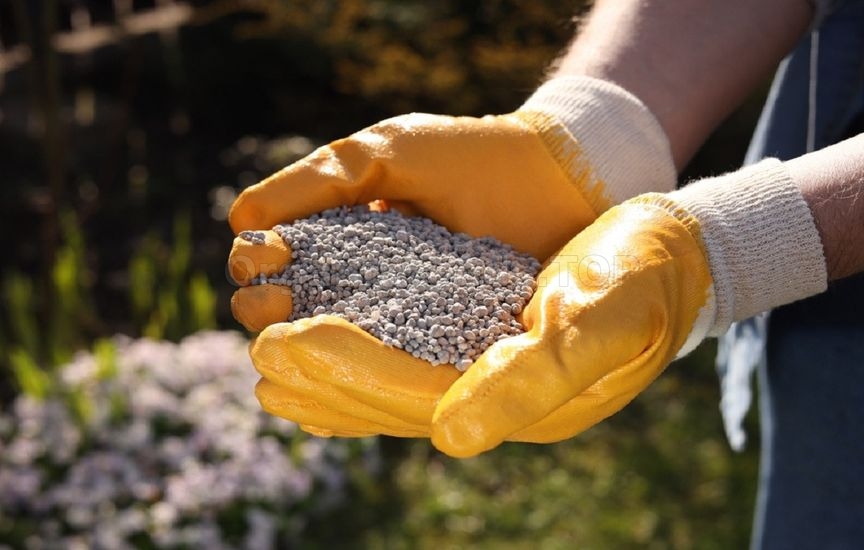 And one of the essential steps in such preparation is the spring application of appropriate fertilizers, which help plants gain strength and boost immunity, and the soil — restore its fertility ahead of the new active season (especially important for perennials growing in the same spot for years). When applying spring fertilizers, you should consider the soil type, its structure, acidity, and the nutritional needs of the specific crop growing in that area. But the general rule is: in spring, preference is given to complexes rich in nitrogen, which helps plants "wake up" and build vegetative mass. But don't forget about other elements — potassium and phosphorus restore and strengthen the root system, increase plant resistance to adverse weather and diseases, participate in metabolism, and ensure flowering and fruiting.  Before we talk about fertilizers themselves, let’s recall the rules for their application:
When to fertilize the flower garden in spring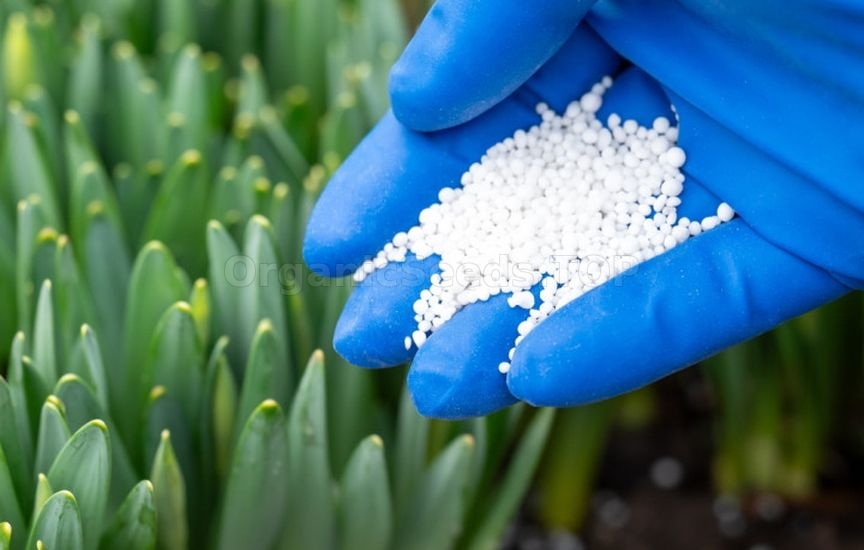 You can start applying fertilizers for the first time in the season when warm weather with stable positive temperatures sets in and the soil thaws, and plants begin active vegetative processes. This is usually early April, but rely on current weather and the type and condition of plants (for example, early-flowering primroses should be fertilized first — already in March, while the most heat-loving perennials will need to wait a few more weeks). At this time, focus on nitrogen mixtures — preferably enriched with micronutrients. The second fertilization usually coincides with bud formation — for some crops it’s still spring, for others it smoothly transitions into early summer. During this period, the focus shifts to fertilizers containing phosphorus. What to fertilize the flower garden with in spring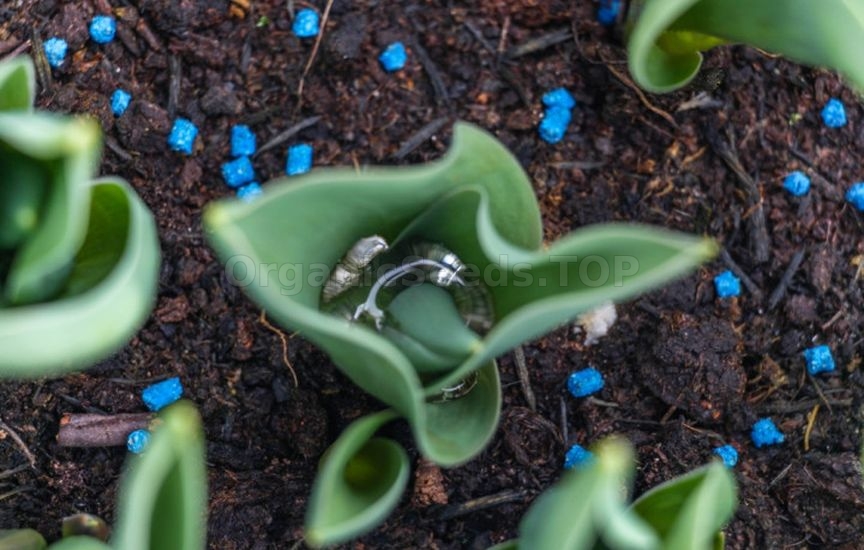 So, the first to be fertilized in the flower garden are early-flowering bulbous plants — after sprouting and after bud formation (but not all; some require only one feeding — see the scheme below). In March, the soil usually hasn’t fully thawed, so mineral fertilizers (bulbous plants don’t like organics) are scattered on the ground in the morning, avoiding contact with greenery, and closer to midday, under bright sun, they are gently raked into the moist topsoil (if the snow has melted and the soil is dry, do this along with watering). What fertilizers and how much to apply for each crop:
Wood ash is also suitable for primroses — it can be sprinkled on moist soil or used for watering: dissolve a cup of ash in a bucket of water. 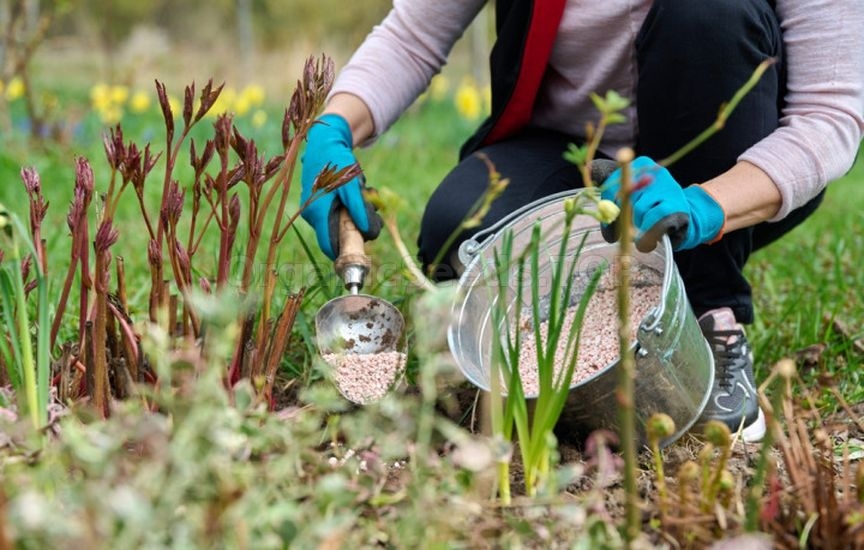 By mid-April, it’s time for the first fertilization of large and more heat-loving perennials (of course, those that were covered for winter should be fully uncovered). Loosen and moisten the soil, then apply a universal complex fertilizer with sufficient nitrogen, phosphorus, potassium, and micronutrients. These can be any "spring" fertilizers for perennials. Note that for some perennial flowering crops, universal complexes are not suitable — they need special fertilizers due to their biological characteristics. For example, ornamental heathers, which grow only in sufficiently acidic soil, won’t absorb "regular" fertilizers. 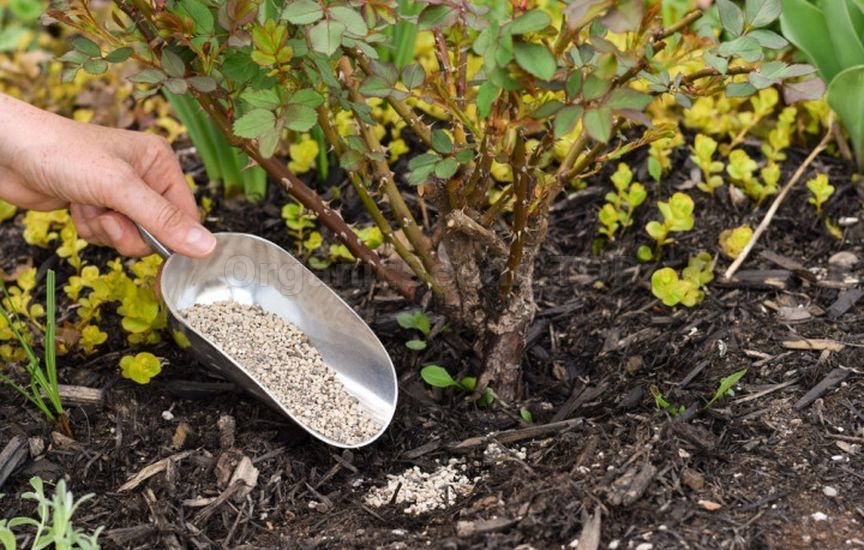 For beloved rose bushes, both organic (recommended primarily for young plants) and mineral fertilizers (for mature ones) may be suitable at this time. As organic fertilizer, use a solution of cow manure (dilute with water 1:10, ferment for seven days, then dilute again 1:2) or chicken droppings (dilute with water 1:20, ferment for five days, then dilute again 1:3) — water at the root. If using mineral fertilizers, choose complex mixtures for roses or flowering perennials labeled "spring" or ammonium nitrate at 1.5–2 tbsp per 1 sq.m (can be applied earlier, right after snow melts). In May, to stimulate flowering, roses can be given an "add-on" — 10 g of superphosphate + 10 g of potassium sulfate per 10 L of water. Fertilizing the flower garden in spring won’t take much time if you plan everything in advance — and it will bring great benefits to the plants. Don’t skip this important procedure at the very start of the season. You may need:Flower SeedsPerennials Flover SeedsOrganic fertilizers |
|
|