What flowers to sow directly into the ground in April–May |
If all horizontal surfaces in the house are occupied by vegetable seedlings, then dreaming about flowers is, of course, possible, but there is absolutely nowhere to place trays with flower sprouts. And in summer at the dacha you want to admire not only the ripening harvest, but also bright flower beds.
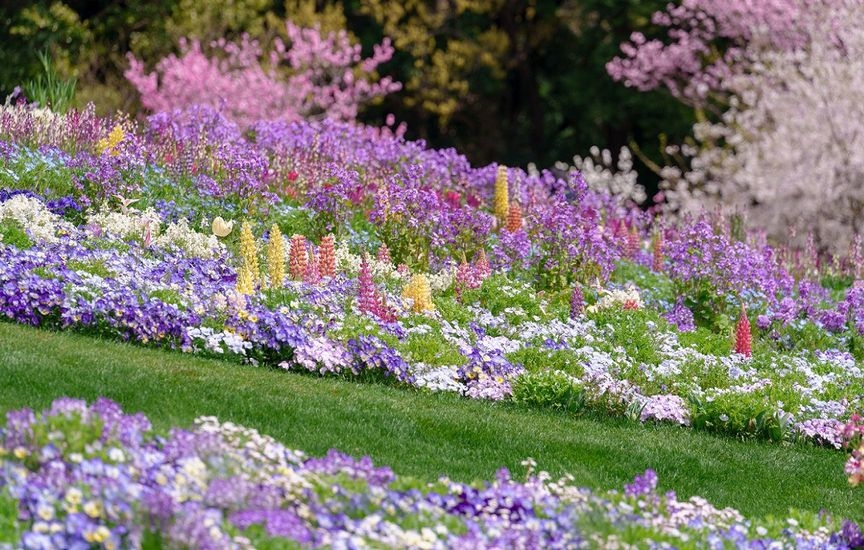 The most hardcore gardeners may wave a hand at “all that beauty stuff” and think only about daily bread. But if the soul asks for a celebration and daily enjoyment of blooming – it should be given that opportunity. Especially since it’s not that difficult: just choose flower crops that can be sown directly into the ground. To make the choice easier, we have prepared a selection of easy-care, hardy, cold-resistant plants that can be sown already in the coming weeks of April or during the May holidays. Believe it, these flowers will impress you not only with their “Nordic character,” but also with a picturesque palette of colors and aromas! Amaranth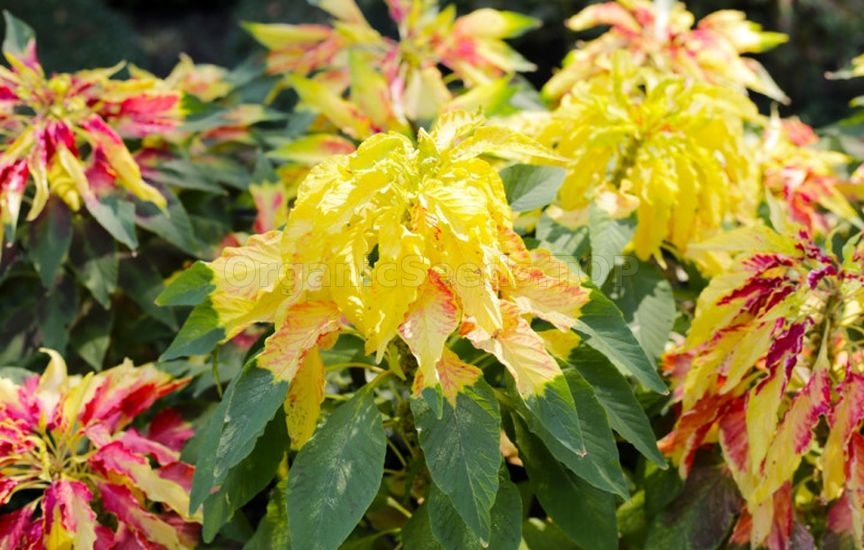 Amaranth amazes with its diversity of species. Some of them are considered weeds, others, on the contrary, are used in agriculture, and others—decorative—are planted to decorate gardens and flower beds. For these purposes, panicled, tailed, sad, and tricolor amaranths are usually used. About three months after sowing, these plants transform the flower bed with their small flowers gathered in elegant spike-like panicle inflorescences. And brightly colored leaves create an expressive visual effect even earlier. Dried inflorescences retain their shape for 3–4 months and are therefore often used for dried bouquets and winter interior decoration. Sowing amaranth seeds in open ground is carried out in late April or early May. For this, furrows 1.5 cm deep are prepared in advance, keeping a distance of 45 cm between rows. Seeds are placed individually, with intervals of 7–10 cm. In the first couple of months after germination, it is important to regularly water the seedlings, weed, and loosen the soil. Later, watering will be needed only during periods of severe drought. Marigolds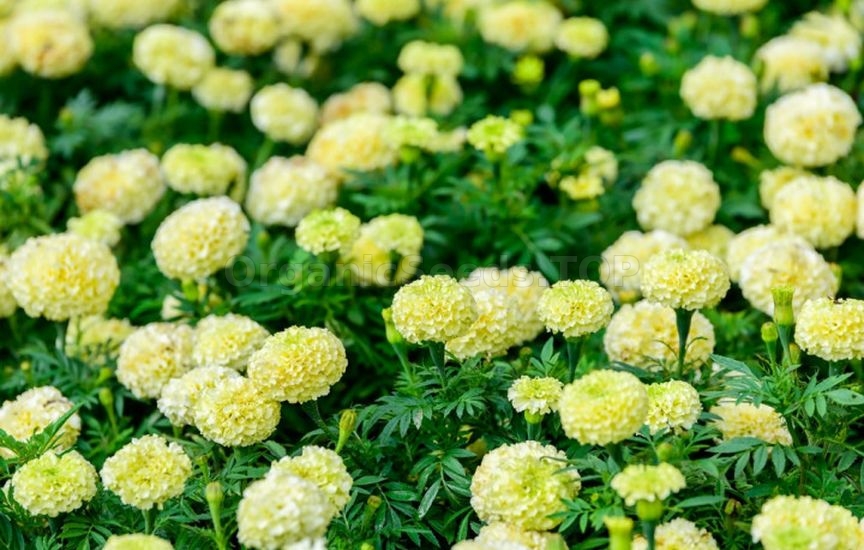 Marigolds are constant favorites of gardeners, without which it is difficult to imagine a country flower bed. These annuals from the Aster family win hearts with their unpretentious nature, cheerful shades of inflorescences, and long flowering, which starts in summer and continues until frost. Marigolds can be grown by seedlings or by direct sowing into the ground. The second option предполагает planting after the threat of return frosts has passed (usually late May). In this case, flowering begins later than with the seedling method, but the plants turn out stronger and delight with colors longer. Marigolds are loved not only for their декоративность. These flowers are often sown next to vegetable beds, because their specific aroma repels harmful insects, helping to protect the harvest. Verbena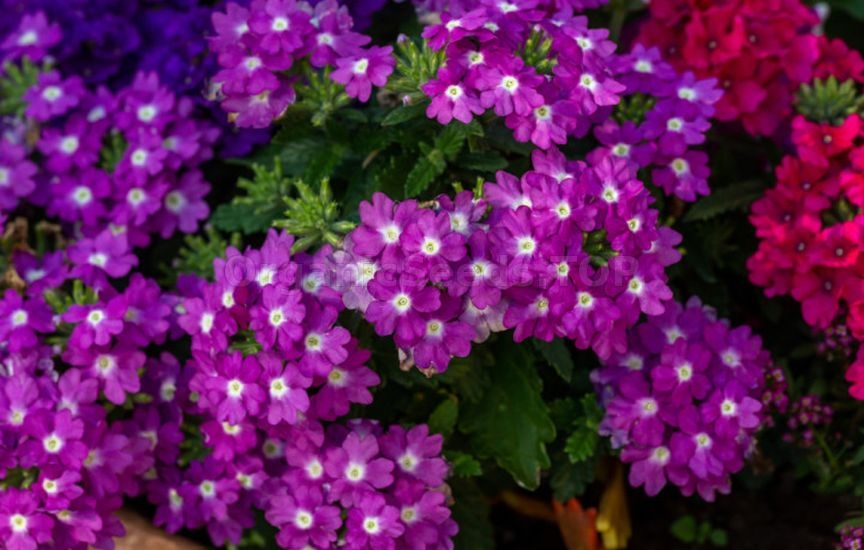 Verbena is represented in nature by annual and perennial plants, as well as subshrubs. In temperate climates, the plant is cultivated exclusively as an annual, as it is not able to survive harsh winters. Several types of verbena are grown: wrinkled, beautiful, marsh, lemon, and hybrid. The total number of varieties exceeds 250 names. The dark green leaves of verbena vary in shape, and its main decoration is the inflorescences. Paniculate or corymbose, they combine up to 30–50 small flowers of various shades. Plants of different varieties bloom with white, yellow, pink, cream, red, salmon, rich blue, purple, and blue flowers, and there are also hybrids with expressive bicolor coloring. The flowering period of verbena lasts from June to November. Verbena is usually grown by seedlings or by direct sowing into the ground. In the first case, seeds are sown in March, and young plants are transplanted to a permanent place closer to the end of May, when stable warm weather sets in. Sowing in the ground is also carried out in May. Young seedlings can withstand short-term frost down to −3°C, but lower temperatures are destructive for them. Annual delphinium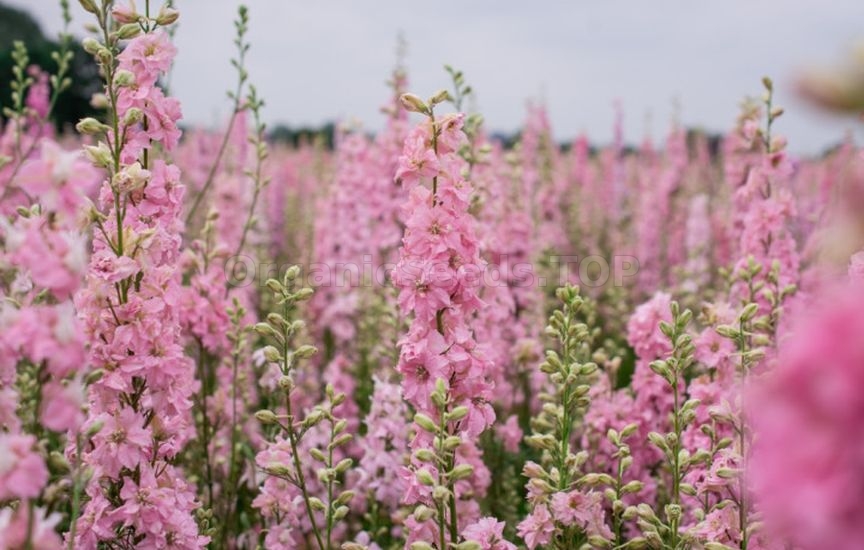 Delphinium belongs to the Buttercup family and can be either annual or perennial. In total, there are about 450 species of this crop, of which about 40 are annuals. Unlike perennial “relatives,” which reach a height of 2 m or more, they grow compact—20 to 100 cm. The special charm of delphinium is given by tall pyramidal inflorescences crowning the ends of shoots. The color of the flowers is striking in its diversity: they can be white, pink, red, blue, light blue, and purple, and some hybrids delight with two-tone or gradient shades. Flowering of annual varieties starts in June and lasts until September. Delphinium can be grown, like other crops, in two ways—through seedlings or by direct sowing into the ground. In the latter case, it is important to wait until the threat of return frosts has completely passed, and only then sow seeds in prepared soil. Godetia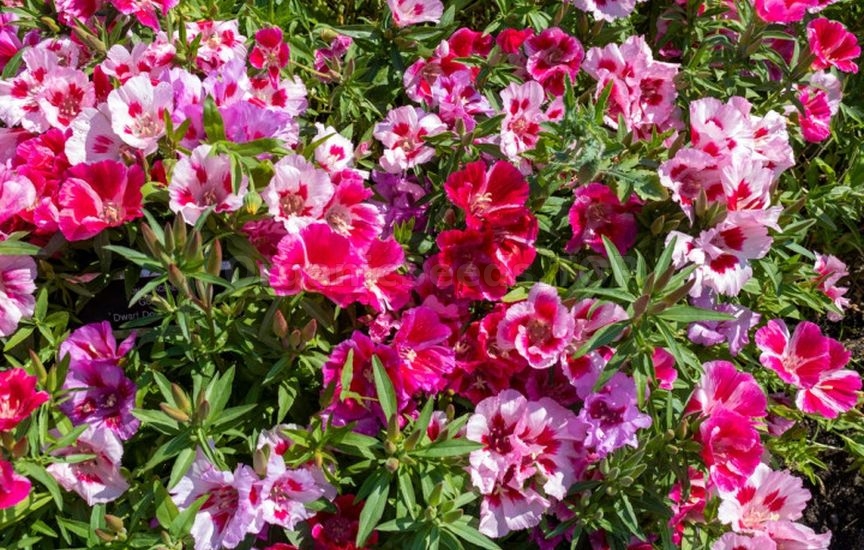 The natural range of this plant from the Evening Primrose family covers parts of Europe as well as North and South America, and California is considered the homeland of godetia. That is why the flower is sometimes called the California rose. The appearance of godetia varies depending on the species and variety: bushes grow from 20 to 60 cm high and can be formed either as neat pyramids or spreading clumps. Cup-shaped flowers, with a diameter from 3 to 10 cm, delight the eye with white, pink, red shades, and in some varieties—with refined bicolor coloring. Flowering lasts from July until the first frost. Godetia reproduces exclusively by seeds—either by предварительное выращивание seedlings or direct sowing into the ground. In temperate conditions, the optimal period for sowing seeds into a flower bed is late April or May. For successful development, the plant needs a sunny place and slightly acidic or neutral soil. Iberis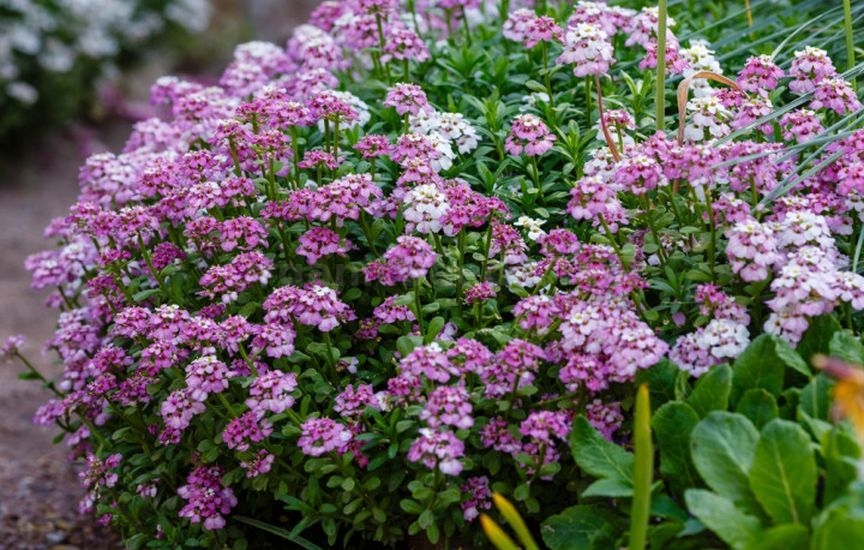 Iberis is a genus of plants in the Cruciferous family, including about 40 species of annual and perennial representatives. They grow in lush “cushions” no more than 30–40 cm high, differ in varying frost resistance, and delight the eye with inflorescences in white, pink, lilac, or burgundy tones. Gardeners value iberis for its unpretentiousness and resilience: it grows successfully even on poor soils and is ideal for alpine slides and rockeries. It looks equally impressive in mixed and border plantings. Sowing iberis seeds in the ground is usually carried out in April. To extend the flowering period, you can sow twice with a two-week interval. Already after 4–6 weeks, characteristic umbrella-like inflorescences appear on the bushes, which will decorate the garden until frost. Calendula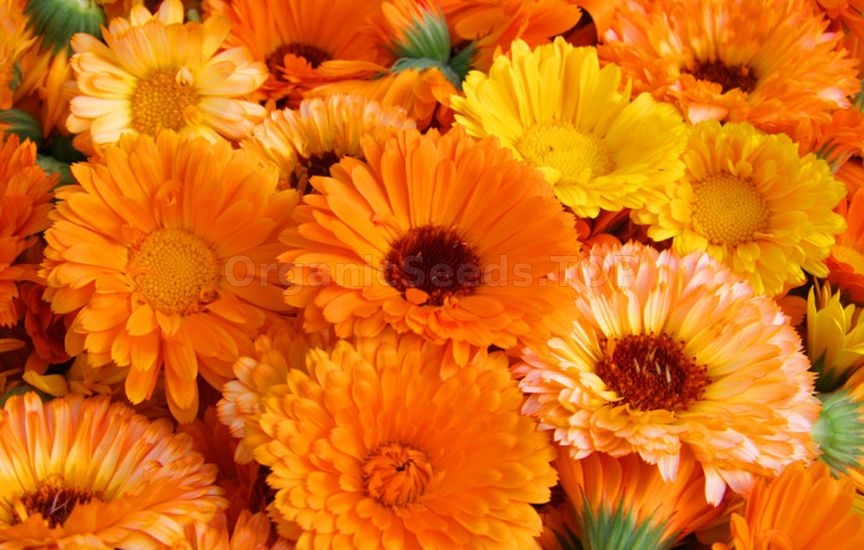 Calendula is a frequent guest in landscape-style gardens: it can be seen in Moorish lawns, in flower beds and containers, as well as in the form of bright borders along beds and expressive accents next to conifers. Gardeners value this plant not only for its sunny inflorescences, but also for its ability to protect vegetable crops from pests. The volatile substances released by calendula repel slugs and Colorado beetles, and also drive aphids, mites, and bugs away from the plot. Calendula is completely unpretentious: it does not have special requirements for lighting and watering, tolerates weather whims well, and does not need complex care. Moreover, calendula is an excellent honey plant, and thanks to its medicinal properties, it has long been used in folk medicine and pharmacology. Calendula can be sown in two ways: for seedlings in March or directly into the ground—in late April or May. The first option requires more time and effort, but allows earlier flowering. However, additional hassle is not necessary—calendula easily reproduces by self-seeding. Cosmos
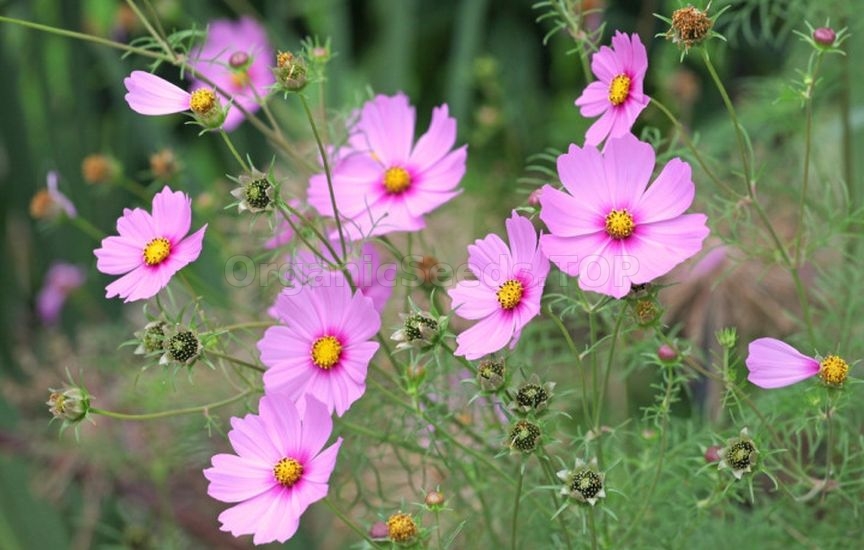
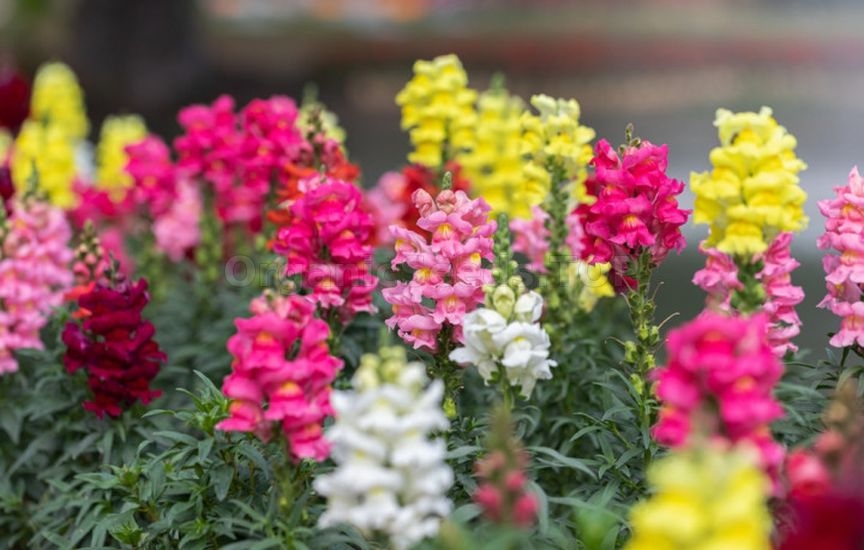
Cosmos is a herbaceous plant of the Aster family; its height ranges from 50 cm to 1 m. Like delphinium, it includes both annual and perennial varieties. In cultivation, about 25 species of cosmos are known, but most of them are heat-loving and do not adapt well to temperate climates. In our regions, the most popular are representatives of the two hardiest species: bipinnate cosmos and sulfur cosmos. Gardeners especially appreciate this plant for its ease of care and unpretentiousness. It grows successfully even in relatively poor soils and does not require complex maintenance. In addition, cosmos readily self-seeds—once sown in a flower bed, it will return year after year, delighting with delicate pink “daisy-like” flowers on slender stems. Sowing can be done both in spring and before winter: in the first case, the optimal time is April–May, after the end of night frosts. Snapdragon
Matthiola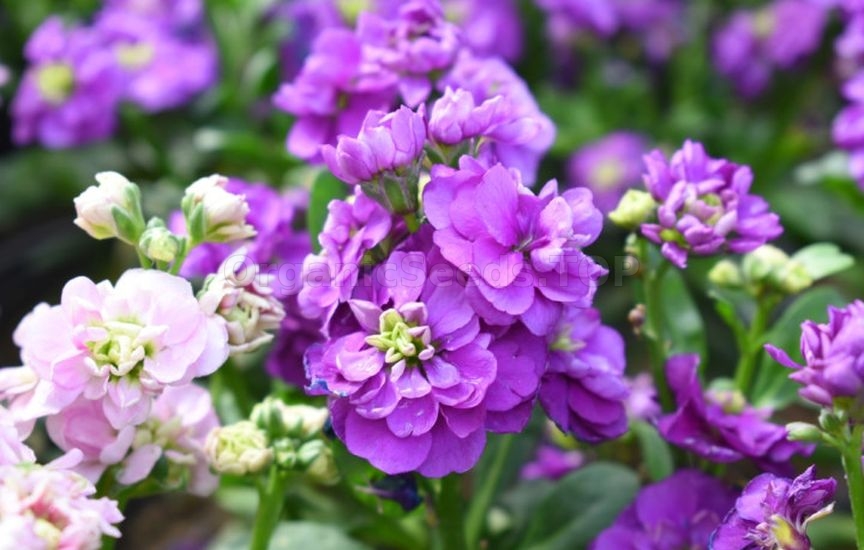 Matthiola, also known as stock, belongs to the Cruciferous family and includes more than 50 species of plants—annual, biennial, and perennial. In temperate climates, it is cultivated exclusively as an annual, as it cannot survive harsh winter frosts. These herbaceous flowers with straight or creeping shoots reach from 30 to 90 cm in height. Their leaves are lanceolate, with a smooth or toothed edge, and the inflorescences delight the eye with shades of white, lilac, crimson, and purple. At dusk, the plant becomes even more charming: the spectacular flowers begin to emit a rich pleasant aroma. Matthiola seedlings do not tolerate transplanting well, so the seeds are sown immediately in open ground. Sowing can be carried out already in late April—seedlings can withstand short-term temperature drops down to −5°C. For successful growth, the plant requires sunny areas protected from drafts, as well as well-drained loamy or sandy loam soil. Nasturtium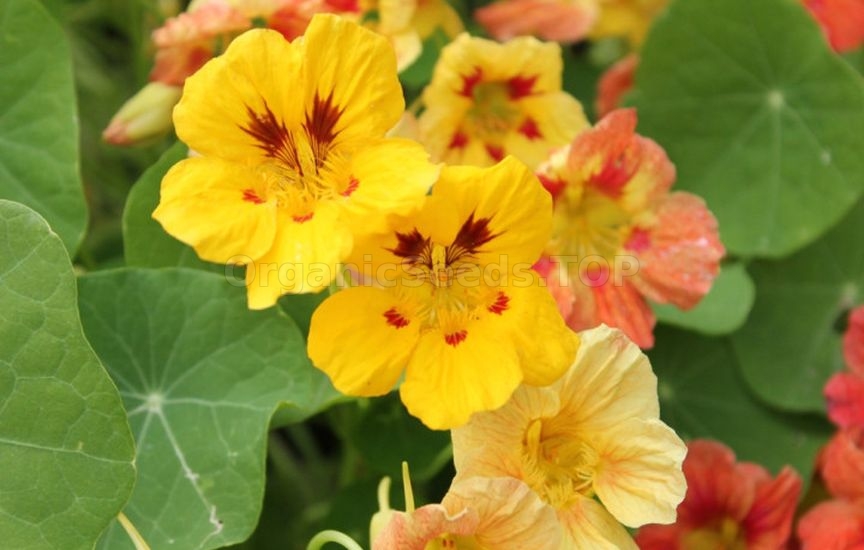 In its homeland, South America, nasturtium is a perennial plant, but in unstable temperate climates it is grown as an annual. Sowing is carried out directly into the ground after stable warm weather sets in May. Nasturtium is distinguished by a variety of forms. Among the species, there are upright bushes that can grow up to 70 cm in height, as well as vines whose shoots quickly entwine supports and reach up to 4 m in length. There are also ground-cover varieties with creeping shoots up to 2–3 m long. Among the advantages of nasturtium are unpretentious care, a rich palette of shades (including bicolor options), and undeniable benefits for neighboring vegetable plantings, as many insect pests prefer to stay away from this crop. Eschscholzia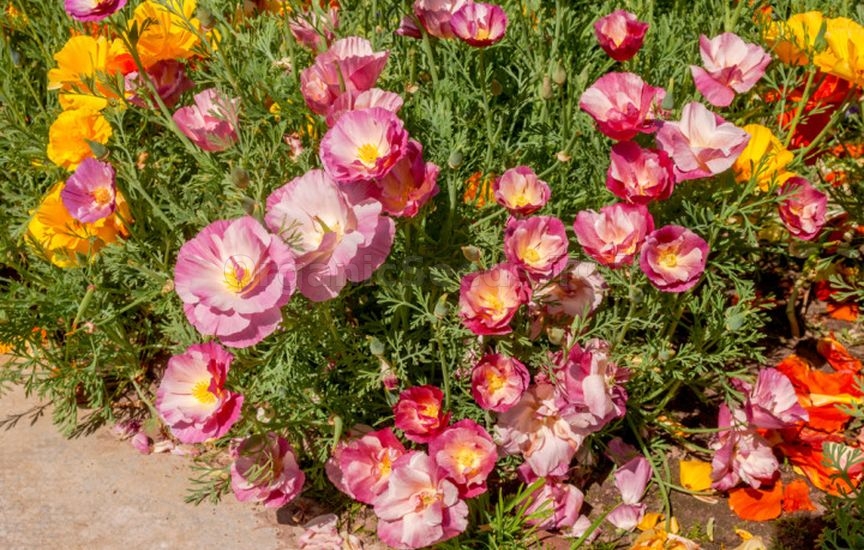 Eschscholzia californica is an elegant perennial herbaceous plant with a straight thin stem and delicate foliage. Large cup-shaped flowers, reaching 8–9 cm in diameter, stand out in the flower bed thanks to rich yellow, orange, and carmine shades of petals. There are also varieties with delicate cream and fancy bicolor coloring. Flowering lasts from early summer to mid-autumn. Despite its beauty, eschscholzia shows amazing unpretentiousness. Native to arid regions of the USA, the flower is perfectly adapted to difficult conditions: it grows well on sandy and rocky soils, does not require frequent watering, and loves sunny areas. The secret of the plant’s resilience lies in its long taproot, which penetrates deep into the soil and extracts moisture where other plants cannot reach. A feature of eschscholzia is its tendency to self-seed. Seeds easily germinate even in difficult weather conditions, thanks to which the plant renews itself year after year without gardener involvement. You may need:Annuals Flovers SeedsPerennials Flovers SeedsOrganic fertilizers |
|
|