


Shagbark Hickory Seeds (Carya Ovata)
3.00 €
Hickories are related to walnuts and have similar growing requirements. They prefer full sun to partial shade and grow best in soil that is deep, fertile, and moist but well-drained. Shagbark hickories produce a long taproot.
-
Shagbark Hickory / Carya Ovata
Native to eastern North America and some areas in Mexico. The Shagbark hickory gets its name from the large pieces of peeling bark that are characteristic on older trees.
Hickories are related to walnuts and have similar growing requirements. They prefer full sun to partial shade and grow best in soil that is deep, fertile, and moist but well-drained. Shagbark hickories produce a long taproot that makes transplanting very difficult. It is best therefore to transplant a seedling in the desired location and protect it until it gets established. Foliage consists of 5 alternate, pinnately compound leaflets on a central stock.
The leaves are green and paler underneath. The bark on young trees is smooth, but on older trees peels outward in vertical strips giving the tree its shaggy appearance. Nuts are nearly round 1 1/2 to 2 inches (3 to 4.5 cm) long, with a very thick husk. The nuts which are delicious, ripen in autumn and are popular with people and squirrels. Hickory wood is often used to cure or smoke meats because it leaves a distinctive savoury flavour. The wood is extremely hard and is used to make a variety of products, especially tool handles, gun stocks and furniture.
Products Viewed Before

Product code: 12404
1.14 €
Mid-season variety, plant up to 1,4 m. Fruits are orange-blue, with blue strips and spots. The flesh is orange in pink spots, weight is 600-800 grams. Some fruits grow to 1 kg or more. The taste is excellent, very fragrant, with exotic fruits.
Product code: 12305
1.50 €
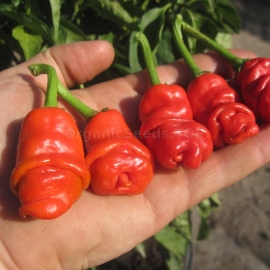
Peter peppers range from medium-hot to pretty darn fiery (reportedly in the 20,000 to 30,000 Scoville Units range and are good tasting (great for spicing up salsa as well as conversation).
Product code: 12301
1.39 €
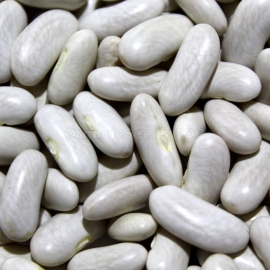
Broad Improved Long Pod beans are quite distinct from other beans, the upright plants bear 7" pods, containing 5 or 6 big flat oblong beans that are used in the green shell or dry stage. Cooked fresh or as a winter shell bean.