
 NEW
NEW


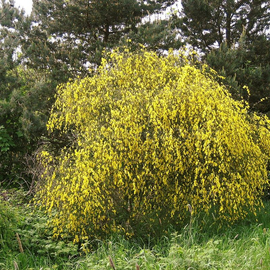
Organic Scotch broom Seeds (Cytisus scoparius)
1.14 €
It is a deciduous shrub used as an ornamental shrub for sunny flower beds, rockeries, mixed borders, dry slopes and embankments; its abundant flowering makes it a valuable honey-bearing element in plantings.
-
Scotch broom, or common broom / Cytisus scoparius
It is a deciduous shrub up to 2–3 m high with a dense, usually rounded crown and thin green shoots that retain their decorative effect after the leaves fall. Leaves are alternate, small, mostly trifoliate, towards the upper part of the shoots often reduced to a single leaflet.
In spring and early summer the shrub is covered with numerous light yellow papilionaceous flowers about 2 cm long, located singly or in pairs in the leaf axils. The fruit is a narrow flattened pod with several seeds. The plant is characterized by rapid growth at a young age, low maintenance requirements and the ability to persist for many years in one place. Flowering usually occurs in May–June and lasts several weeks with sufficient sunlight.
Scotch broom is used as an ornamental shrub for sunny flower beds, rock gardens, mixed borders, dry slopes and embankments. The plant is suitable for strengthening slopes and roadsides thanks to its branched root system and resistance to poor sandy soils. As a member of the legume family, Scotch broom participates in atmospheric nitrogen fixation and contributes to the gradual improvement of soil structure and fertility.
Abundant flowering makes it a valuable honey plant element in plantings aimed at attracting bees and other pollinators. The shrub is used in solitary and group plantings, in low hedges, in naturalistic and minimalist gardens where a stable decorative effect is required with moderate care. Parts of the plant are not considered edible for humans, which is taken into account when placing plantings in public spaces.
Frost resistance: USDA 5–8 (from -29 °C to -23 °C) (from -12 °C to -7 °C).
Cultivation. For growing Scotch broom, fully open sunny areas are optimal, where the plant receives direct light most of the day. With good lighting a compact crown is formed and maximum abundant flowering is achieved. In partial shade the shrub survives, but the intensity of flowering and overall decorative effect decrease. Preferred soils are light, well-drained, sandy or sandy loam, with low nutrient content.
Ordinary garden soil with a reaction of about 6.0–7.5 is acceptable provided there is no stagnant moisture. On heavy and wet sites it is recommended to provide drainage, raised beds or add coarse sand and loosening materials. Watering during the rooting period of young plants is carried out about once every 1–2 weeks in the absence of rainfall, allowing moisture to soak the root layer.
After establishment Scotch broom shows resistance to moisture deficit and requires only occasional watering during prolonged dry periods. Fertilization is used moderately. As a legume, Scotch broom forms a symbiosis with soil bacteria and can provide itself with nitrogen, therefore it does not require intensive fertilization.
If necessary, in early spring small doses of complex fertilizer are applied, avoiding excess nitrogen to maintain the balance between growth and flowering. The shrub is resistant to urban conditions, wind load and air dryness provided the soil is drained. Self-seeding is quite active, mature pods crack and scatter seeds around the mother shrub.
To control planting density it is sufficient to remove unwanted seedlings in time. Pruning is a key care technique. Immediately after flowering shoots are shortened to young wood, forming a dense crown and limiting height. This reduces the risk of lodging of old shoots, stimulates the formation of young growth and maintains uniform rejuvenation of the shrub.
It is used for planting in gardens and parks singly, in groups or in borders, on rock gardens, flowering early in spring used in forcing culture. When grown in containers, plants are formed as lush shrubs or standard trees.
With this product buy
Product code: 12443
1.14 €
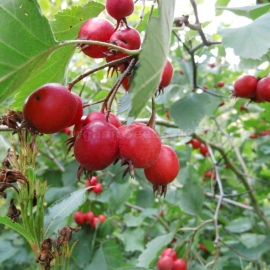
Tall shrub or small tree up to 6 m, spreading crown, gray-brown branches, long spines on the branches, leaves are large and thin.
Product code: 12460
1.14 €
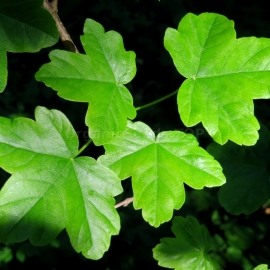
A short, up to 8m, tree with a tent-like crown, gray bark of the trunk and light brown young shoots with numerous whitish lenticels, in which the leaves are 3-lobed, leathery, shiny, glaucous-green and glabrous above.
Product code: 15023
3.00 €
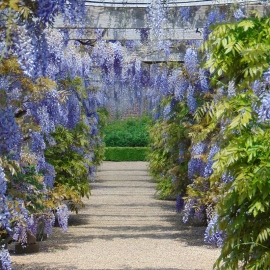
The most beautiful plant among perennial lianas, the height of the plant can reach 6-7 meters, the flowers of an unusual shape, light blue with a pale yellow neck, are collected in bunches, like grapes, 15 to 30 cm long, the flower is spectacular and frag
Product code: 15700
1.14 €
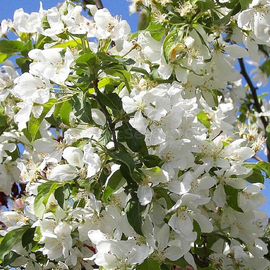
A species of early vegetative trees, 3.5–5 meters high, blooms and bears fruit profusely every year. Due to this, it is successful as an ornamental flora for the garden; the plant can withstand cold temperatures down to -55°C without damage.
Products Viewed Before
Product code: 16573
1.14 €
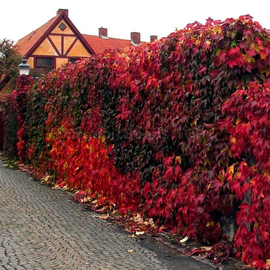
This hardy, vigorous plant, which boasts high frost resistance, is ideal for creating a reliable living hedge or screening walls; it grows rapidly, uses adhesive tendrils to scale any support, and does not need to be taken down for the winter.