
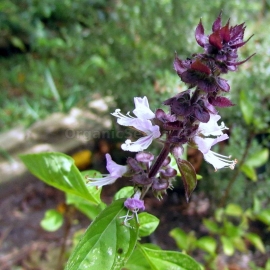
«Cinnamon» - Organic Basil Seeds
1.14 €
Cinnamon basil is a rare treat your garden should not be without. A distinctly different variety from the commonly grown species Ocimum basilicum, it is very easy to cultivate, delicious, and useful in the garden.
-
Organic Basil «Cinnamon»
Cinnamon basil is a rare treat your garden should not be without. A distinctly different variety from the commonly grown species Ocimum basilicum, it is very easy to cultivate, delicious, and useful in the garden.
Grow it for that irresistible spicy-sweet scent, those charming red stems and pink blooms, and/or the delectable flavor of the small, deep green leaves.
This basil gets its name because it contains the same ingredient as cinnamon: methyl cinnamate. But it also retains its traditional basil flavor, so the result is a spicy-sweet combination that works as well in basked goods as it does in pastas and salads. If you make your own jams, oils, or vinegars, be sure to grow some just for flavoring!
Cinnamon Basil reaches 3 feet high and wide in the garden, but can be kept much smaller for containers and tight spaces. It is quick-growing and distinctive, with a deep red central stem and small, toothy, dark green foliage. Often the red stem color blushes onto the veins of the leaves, too, adding to the ornamental appeal.
If you are growing Cinnamon Basil for its ornamental beauty or as a pest repellant in the vegetable garden (it does a particularly good job with tomatoes), you will also love its deep pink to purple blooms, which arise profusely. If you are growing it for culinary use, however, you will be pinching away those flower buds the minute you see them, to preserve the full force of the leaves' flavor!
How to Grow
Basil needs 6 to 8 hours of sun; in the South and Southwest, it benefits from afternoon shade. Set out plants at least 2 weeks after the last frost in spring; summer planting is okay, too. Space at the distance recommended on the label, which is generally 12 to 18 inches apart. Plants are very frost sensitive, so keep plants protected in case of a late cold spell. Basil likes rich, moist, but well-drained soil with a pH of 6 to 7. Because it is harvested continually for lots of leaves, it needs a little fertilizer. When planting, add plenty of organic nutrients from compost, blood meal, or cottonseed meal to the soil.
If planting in a container, use a large pot to keep the plants from drying out quickly in hot weather. You may also want to add mulch around the plants to help keep the soil moist and extend the time between waterings.
Products Viewed Before
Product code: 595
1.14 €
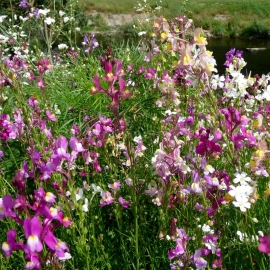
Native to Morocco, Linaria, also called Baby Snapdragon, is an upright, branching annual that typically grows to 9 - 18 inches tall. It features long-spurred, two-lipped, miniature snapdragon-like flowers and small lance-shaped fleshy blue green leaves.
Product code: 6748
1.14 €
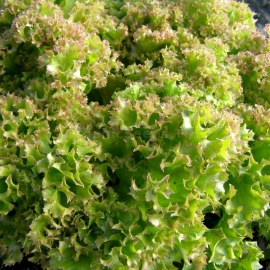
Delicate leaves, with a reddish-pink tinge, the leaves of this salad will serve as a decoration for any table. Early maturing, from sowing to harvesting - 55 days. For indoor and outdoor use, suitable for year-round cultivation. Resistant to stalking.
Product code: 577
1.14 €
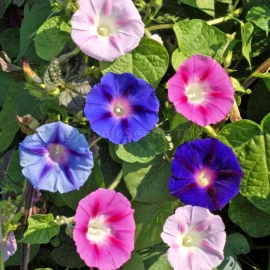
This is a mix of several Morning Glory varieties that range in colour from white to red to purple. It is an annual plant with sinuous stems that grow 250 to 350 centimetres in length. With a blooming period which lasts from July to late September.
Product code: 3665
1.14 €
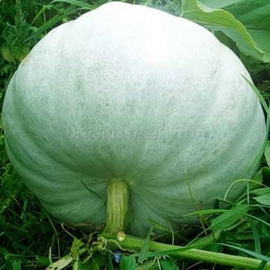
This is a ripening, large-fruited, cluster variety for mechanized harvesting, with a high yield of seeds. Ripens on the 108-125 day. The fruit is rounded, not cut, weighing 5-8kg, the surface is smooth, light gray in color.