
 NEW
NEW


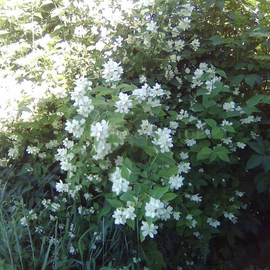
Organic Slender-leaved mock orange Seeds
1.14 €
A perennial deciduous shrub, often called jasmine for the pronounced sweet aroma of its large white flowers, it is simple and undemanding in care and can be pruned.
-
Slender-leaved mock orange / Philadelphus tenuifolius
A genus of shrubs from the family Hydrangeaceae. This shrub is often called jasmine because of the pronounced sweet fragrance of its flowers. The Latin name comes from Greek φιλέω (phileo) — to love and ἀδελφός (adelphos) — brother, which indicates the closely paired opposite shoots.
Deciduous, shrub, bark thin, usually gray, in many species on 1–2 year shoots brown, peeling. Wood is hard with a broad pith.
Leaves opposite, simple, usually 5–7 cm long, on short petioles. Leaf shape varies: ovate, elliptical or elongated, rarely and shallowly serrated or almost entire, wedge-shaped or rounded at the base and more or less pointed at the tips. The lower surface is usually slightly pubescent, the upper usually glabrous.
Inflorescence — a raceme consisting of 3–9 flowers. Inflorescences form at the ends of short young lateral shoots. In addition, inflorescences may form in the axils of the upper 1–2 pairs of leaves.
Flowers large (from 2.5 to 6–7 cm in diameter), very fragrant. Flowers white, creamy-white, or yellowish. Calyx cup-shaped, with 4, rarely 5 spreading, concave sepals. Corolla usually with 4, sometimes 5–6, large, pure white or creamy-white petals of various shapes — from linear giving a cross-shaped flower with wide gaps between petals. Pistil semi-inferior, with 3–5-locular ovary, with 3–5 fused styles. Stigmas simple, elongated. Fruit — 3–5-locular capsule with very small seeds (from 6000 to 10000 per gram).
Philadelphus is relatively undemanding, it can be grown both in open sunny areas and in partial shade. With insufficient light, flowering deteriorates.
Fertilization with mineral fertilizers is recommended at the beginning of vegetation and after flowering. Shrubs over the years become very dense and need thinning, otherwise flowering weakens. Pruning is recommended immediately after flowering.
Philadelphus is very easy to care for, winter-hardy and undemanding to growing conditions. This is one of the most suitable plants for a “low-maintenance garden.” And if you want to feel like a true plant collector, but you do not have time to care for roses or dahlias — grow philadelphus.
Philadelphus grows very quickly. Seedlings of vigorous varieties (for example, “Zoya Kosmodemyanskaya”) are able in just 3–5 years to turn into voluminous shrubs of regular shape, which can become both an accent in garden plantings and cover a secluded (or unsightly) corner from prying eyes.
This is a highly decorative, beautiful-flowering shrub, one of the symbols of the Russian garden.
In the garden philadelphus is very versatile: it is planted in hedges, as a specimen on the lawn, and as a companion to other plants in a mixed border.
Perhaps someday you will be able to smoke a pipe of your own making, because in old times stems of this shrub were used to make pipe stems, and that is exactly why it received its name.
Cultivation of mock orange
Mock oranges are sun-loving and light-loving. They prefer a sunny open place, and in the shade they may stop blooming.
Seeds can be sown in spring and stratification is not necessary. First, the seeds are pre-soaked in water for about three days. This is done as follows: take a gauze bag, place the seeds in it, then put the bag with seeds in water at room temperature of about twenty degrees, also do not forget to change the water to clean and warm.
After soaking, the seeds are mixed with sand and sown more sparsely from each other, in a previously prepared container or in a greenhouse. Then they are covered with humus on top and carefully moistened, but not flooded. The container is placed in a warm, shaded place and watered carefully, because the soil of mock orange seeds should not be dried out or heavily waterlogged. After the seedlings of mock orange have grown, they are pricked out into separate pots, watered regularly. By the end of the season the seedlings grow and strengthen.
In the second year the above-ground part of the mock orange is cut for better branching. Thanks to this pruning, strong shoots appear on the mock orange and by the end of autumn the mock orange is transplanted to a permanent place in open ground. For this, a planting pit is made and drainage (garden soil mixed with humus and sand) is laid in a layer of about fifteen centimeters. Also remember when planting a mock orange seedling the root collar should not be buried more than three centimeters. Water regularly, fertilize.
Mock oranges are planted taking into account their future growth at a distance of half a meter to two meters from each other or from other plants. If a hedge is laid from mock orange seedlings, the planting interval should be 0.5–0.6 m. Mock orange prefers fertile and well-drained soil. Therefore, on clay soils drainage (sand, broken brick, expanded clay) should be added to the planting pit, and on sandy soils – compost or vermicompost. The size of the planting pit is 60 by 60 cm, and according to generally accepted recommendations, peat, humus, sand and leaf soil should be added there in a ratio of 2:2:1:2.
Now, with the appearance of various ready-made soils on sale, you can use them, adding vermicompost or ready-made compost. If you transplant a plant from a pot, the planting pit can be made smaller, however after planting the seedlings should be well watered and mulched with peat, crushed bark or mowed grass.
Mock orange is very unpretentious, and will take care of itself perfectly. Care is reduced to loosening the soil in the near-trunk circles, watering (mock orange is moisture-loving) and weeding. Once a year mock orange is recommended to be fertilized with a solution of cow manure at the rate of 1 bucket per bush. In addition, after flowering it is very useful to add wood ash under the base of the bush. However, old bushes often grow by themselves without any fertilization at all.
Pruning mock orange also does not present any difficulties: in spring frozen shoots are cut or overly thickened ones are thinned out. To stimulate abundant flowering, in adult bushes every 2–3 years it is recommended to remove old shoots.
Mock orange is very plastic, and it is easy to shape. For example, if in spring strong branches are cut only slightly, and weak ones – strongly, then by autumn they will equalize in size, because strong pruning will cause the growth of annual shoots. As a result, the bush acquires a beautiful, even shape. Also old bushes, whose lower part becomes bare with age, can be “rejuvenated” by radical pruning. Early in spring it is recommended to saw almost the entire bush to the base, leaving only a few shoots, which are mercilessly shortened. Mock orange has a powerful root system, and during the summer new shoots will grow from the base of the bush. The following spring they are also thinned out, leaving the strongest branches, which will give new life to the old bush. It is important during this “rejuvenating” procedure to water and fertilize the bush regularly. In winter mock orange can be left uncovered.
With this product buy
Product code: 1568
1.14 €
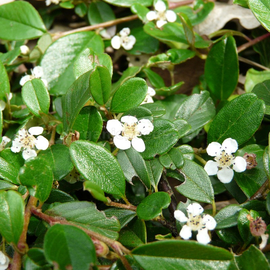
Decorative deciduous shrub with a low, very dense crown, spreads with branches lying on the ground, which take root over time, 15-20 cm in height, quickly grows in width, an ideal ground cover plant, leaves do not fall off in the winter.

Product code: 2403
2.00 €
The flowers rival orchids in beauty, consisting of four red petal-like segments with a “stem” and one larger upright petal adorned with yellow and white spots. Trees ablaze with these jewel-like blossoms present a breathtaking spectacle.

Product code: 6864
1.14 €
In beekeeping, birch is important as a pollen source, birch brooms are harvested as feed for livestock during the winter, and birch is used more often than other types of wood to prepare firewood.
Product code: 13654
1.14 €
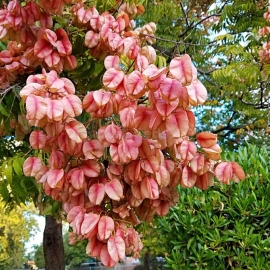
An ornamental tree 4-7 meters high with a spreading crown, leaves are graceful, feathery, large, about 40 cm long, blooms for a long time in July-September with golden yellow flowers in large inflorescences.
Products Viewed Before
Product code: 3163
1.14 €
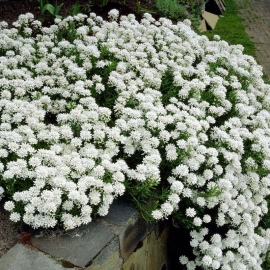
Start Candytuft seeds to grow this hardy perennial ground cover. Iberis Sempervirens Candytuft is a low, semi-woody, densely growing, upright-stemmed, spreading ground cover plant that reaches 10 inches tall.
Product code: 3165
1.14 €
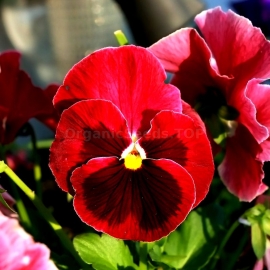
Large flowered garden pansy is one of the most popular and commonly planted flowers not only in our part of Europe, but worldwide. The variety of cultivars and colours are the most important assets of this species.