
«Holborn Glory» - Organic Sweet William Seeds
1.14 €
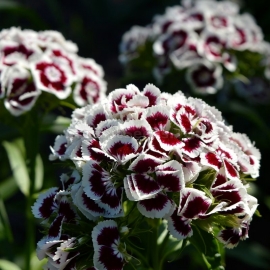
Sweet William ‘Holborn Glory’ is a very unusual, yet highly decorative variety. Similarly to other plants of this lovely family, this one is a biennial plant that grows around 50 centimetres in height.
-
Organic Sweet William «Holborn Glory» (Carnation, Dianthus)
Sweet William ‘Holborn Glory’ is a very unusual, yet highly decorative variety. Similarly to other plants of this lovely family, this one is a biennial plant that grows around 50 centimetres in height.
However, its flowers have petals in two gorgeous colours – white and red. The flowers, which display a distinctive detail in the form of a white centre surrounded by a red ring, together create very appealing umbellate inflorescences. Sweet William ‘Holborn Glory’ is suitable for a cut flower, borders and flower beds.
Growing: sow the seeds under cover from May to June. The seeds germinate in around 14 days at 16-18oC. Plant out into a permanent position in 30x30cm spacings in September. The plants flower from June to August; they tolerate any type of soil and thrive in sunny or semi-shaded positions.