
 NEW
NEW


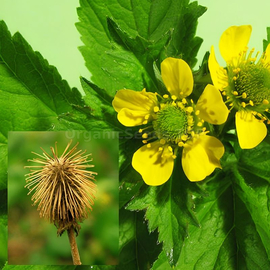
Organic Wood avens seeds / Geum urbanum
1.14 €
A perennial herb with a spicy clove-like aroma in its roots, valued for its astringent, antiseptic, and anti-inflammatory properties, as well as its rare culinary and ornamental uses.
-
Wood avens, also known as herb Bennet, colewort, clove root and St. Benedict's herb / Geum urbanum
This is a perennial herbaceous plant of the Rose family (Rosaceae), usually reaching a height of 30 to 60 centimeters, widely known in traditional medicine and cooking as "clove root." It received this name because of its thick reddish rhizome, which releases a distinct spicy clove fragrance when broken.
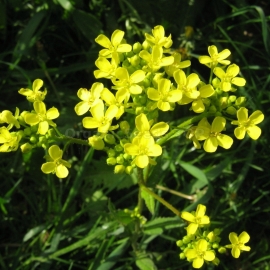
The plant is easily recognized by its clusters of small, bright yellow flowers, each with five petals, blooming from late spring to early autumn. The leaves are deeply lobed and have a slightly hairy texture. One of the most distinctive features of wood avens is its strong clove-like aroma, especially noticeable in the roots.
Historically, wood avens has been valued for its medicinal properties. In particular, the roots contain tannins, essential oils, and other compounds with astringent, anti-inflammatory, and antiseptic effects. Traditionally, it was used to treat a variety of ailments, including diarrhea, digestive disorders, sore throats, and skin infections. The plant was also used as a hemostatic agent and to strengthen the gums.
In addition to its medicinal uses, wood avens has also found a place in cooking and other applications. The roots can be dried and ground into a powder, which can be used as a spice or to flavor beverages, adding a warm clove-like aroma. Young leaves can be added to salads or cooked as a vegetable. In some regions, the roots were used in pickling and preserving as an aromatic ingredient. The plant was also used in the production of natural dyes and as a fixative in perfumery.
Today, although its medicinal use has declined, wood avens still holds value in gardening. Its cheerful yellow flowers and compact growth habit make it a suitable addition to wildflower meadows, woodland gardens, or informal borders. Moreover, its ability to attract pollinators such as bees and butterflies adds ecological importance. The plant is highly winter-hardy and undemanding, making it easy to grow in a wide range of climates.
In conclusion, wood avens is a versatile plant with a rich history of human use. Its medicinal properties, culinary applications, and ornamental value highlight its importance across different cultures. Although modern medicine has largely replaced its traditional uses, the plant continues to be appreciated for its ecological role and contribution to biodiversity. Its distinctive clove-like fragrance and bright yellow flowers make it a unique and valuable addition to any natural environment.
With this product buy
Product code: 877
1.14 €
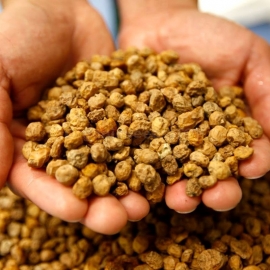
Chufa is the Spanish name for Earth Almond (Cyperus esculentus L.). In english the small nut like lumps are called Tiger Nuts. It is one of the plants which has been grown for the longest time in Egypt. There are proof of them being grown for over 6000y.
Product code: 10483
1.14 €
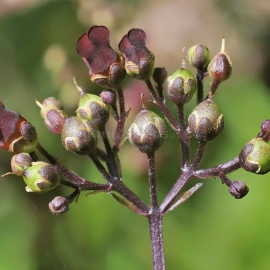
Called "Queen of the Herbs" in Ireland, where its tendency to grow under elder trees imbued it with elder’s magical reputation. In England it became a common treatment for "king’s evil," or scrofula (tuberculosis of the lymphatic glands).
Product code: 10485
1.14 €
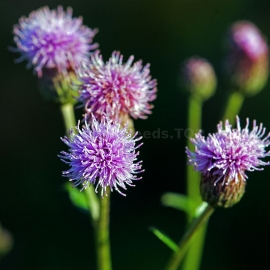
Thistles belong to the Thistle Subfamily of the Aster Family, along with artichokes. Compare an artichoke and a thistle, and notice that they are very similar, except in size. Like other members of the Aster Family, these are composite flowers.
Product code: 10487
1.14 €
A perennial herb, unpretentious to soils, does not overgrow with weeds, is not damaged by pests and diseases, in medicine it is used to restore intestinal microflora. Has a high honey productivity.